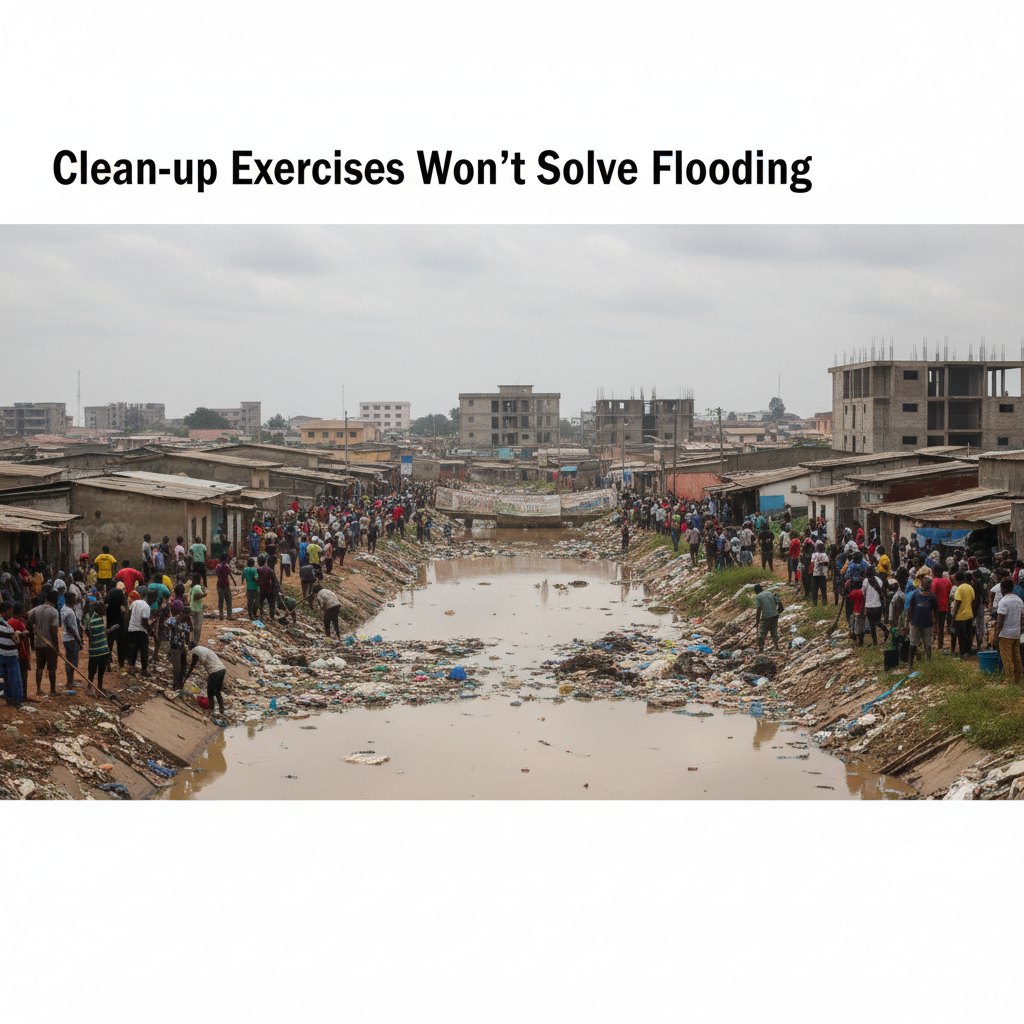
Periodic national clean-up exercises will not solve Accra's persistent flooding, according to environmental engineer Dr. Juliet Ohemeng-Ntiamoah. She argues that the focus should shift to fixing structural and engineering problems in the city.
Dr. Ohemeng-Ntiamoah's comments follow President John Mahama's announcement that the government is considering monthly nationwide clean-up exercises. The President believes the current two-day national exercise is not enough to tackle Ghana's sanitation issues. He made these remarks in Alajo, Accra, after joining senior government officials in the ongoing clean-up effort.
This discussion comes amid Ghana's recurring struggle with urban flooding, especially in Accra, which frequently disrupts economic activity and causes significant property damage. Data from the Ghana Meteorological Agency consistently shows increasing rainfall intensity, challenging existing urban planning and infrastructure. Previous government initiatives, including earlier clean-up drives, have largely failed to permanently mitigate the flood risk, pointing to deeper systemic issues.
Speaking on JoyNews' Newsfile on July 11, Dr. Ohemeng-Ntiamoah stated, "We all agree that this clean-up is not a solution at all." She explained that while communal labor builds community spirit, it does not address the core issues of waste management and flood control. Her analysis suggests that blaming indiscriminate waste disposal alone diverts attention from the real causes.
The major reasons for flooding, according to Dr. Ohemeng-Ntiamoah, include inadequate and outdated drainage systems. She also cited the growing volume of stormwater runoff from extensive concrete development, weak enforcement of wetland protection laws, and a lack of sufficient stormwater retention ponds. Many of Accra's primary drainage systems were designed for a 25-year flood event, which is no longer adequate for today's intense rainfall patterns.
Looking ahead, decision-makers must consider upgrading infrastructure to withstand more extreme weather. Dr. Ohemeng-Ntiamoah recommended designing future drainage systems for 100-year flood events. This engineering standard is becoming common in cities globally that face severe weather. Policymakers will likely need to balance the cost of such upgrades with the economic and social costs of continued flooding.
The government's proposed increase in clean-up days suggests a continued focus on citizen participation in sanitation efforts. However, experts like Dr. Ohemeng-Ntiamoah signal a critical need for a shift towards comprehensive infrastructure investment and stricter regulatory enforcement. The effectiveness of any future flood prevention strategy will depend on addressing these fundamental structural challenges.