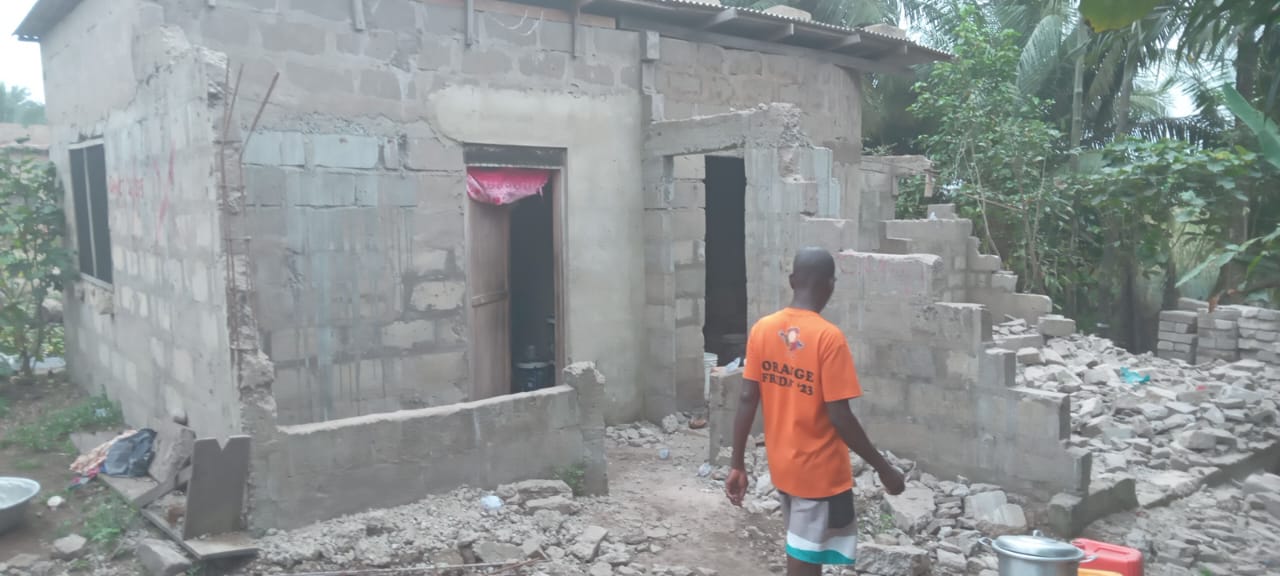
More than 500 homeowners in Cape Coast are demanding urgent and adequate compensation from the government. These residents are directly affected by demolitions for the Cape Coast–Takoradi Highway Big Push Road construction.
The affected residents, some living along the stretch for over 50 years, report being left without homes. They state the GHS 5,000 per room compensation offered is grossly inadequate. Many are now sleeping in the open, unable to afford new housing or rebuild their lives.
This situation highlights a recurring challenge in Ghana's infrastructure development, where large projects displace communities. Previous cases involving land acquisition for roads or mining have also faced similar compensation disputes. The government's ambitious infrastructure agenda often clashes with local community rights and economic stability. Data shows that rapid urbanisation and development projects frequently lead to such displacement issues across the country.
Mr. Wonder Adukpo, Secretary to Togbe Edward Kponorvi, the Chief of Abakam, confirmed the residents' concerns. He stated that officials' “lukewarm antics” on meaningful compensations have been disheartening. Mr. Adukpo emphasised that residents are not against the project but seek proper engagement and fair treatment.
The immediate implication is increased social unrest and potential delays in the highway project if these grievances are not addressed. Decision-makers must now balance infrastructure development with social responsibility. The government faces pressure to review its compensation policies to prevent further hardship and ensure equitable development. This situation could also influence future public sentiment towards large-scale government projects.
The Cape Coast–Takoradi Highway Big Push Road construction aims to improve connectivity and boost economic activity in the Western and Central Regions. However, its implementation has caused significant distress for local communities. Over 2,000 residents, including those whose homes were marked for demolition, face an uncertain future. Some homeowners even claimed their buildings were outside the designated highway buffer zone. Despite this, they were still forced to pull down their structures.
The current compensation of GHS 5,000 per room is widely criticised as insufficient. Residents argue this amount does not cover current construction costs or the value of their lost properties. Madam Beatrice Badu, whose compound housed three extended-family households, described the offer as “insultingly low.” She noted a lack of consultation and no social impact assessment shared with the community. Madam Monica Amekoafia, a homeowner in Okyeso, echoed these sentiments, stating she received no proper notice or fair valuation for her only asset.
Beyond housing, the project has severely impacted traditional livelihoods. A rocky sea-defence structure, built during earlier coastal protection works, has blocked access to the Atlantic Ocean. This has crippled centuries-old fishing activities for communities like Abakam. Mr. Adukpo explained that fishers can no longer launch canoes or harvest fish. This has led to job losses, hunger, rising debt, and school dropouts as families struggle to meet basic needs. Households dependent on fishing have reported about a 70 percent fall in earnings. This forces some into menial jobs or migration, increasing youth unemployment in the area. The loss of playgrounds, water contamination from construction dust, and greater flood risk due to inadequate drainage further compound daily life challenges.
Mr. Kwesi Amanor, a fisher from Manfi-Kumasi, described the demolitions as “inhumane.” He argued the exercise ignored the socio-economic and human rights of vulnerable residents. He stressed that the issue extends beyond buildings to people's lives and means of survival. This situation underscores the critical need for comprehensive social impact assessments before commencing major infrastructure projects. It also highlights the importance of fair and transparent compensation mechanisms. The government's response to these demands will be closely watched by affected communities and civil society organisations.