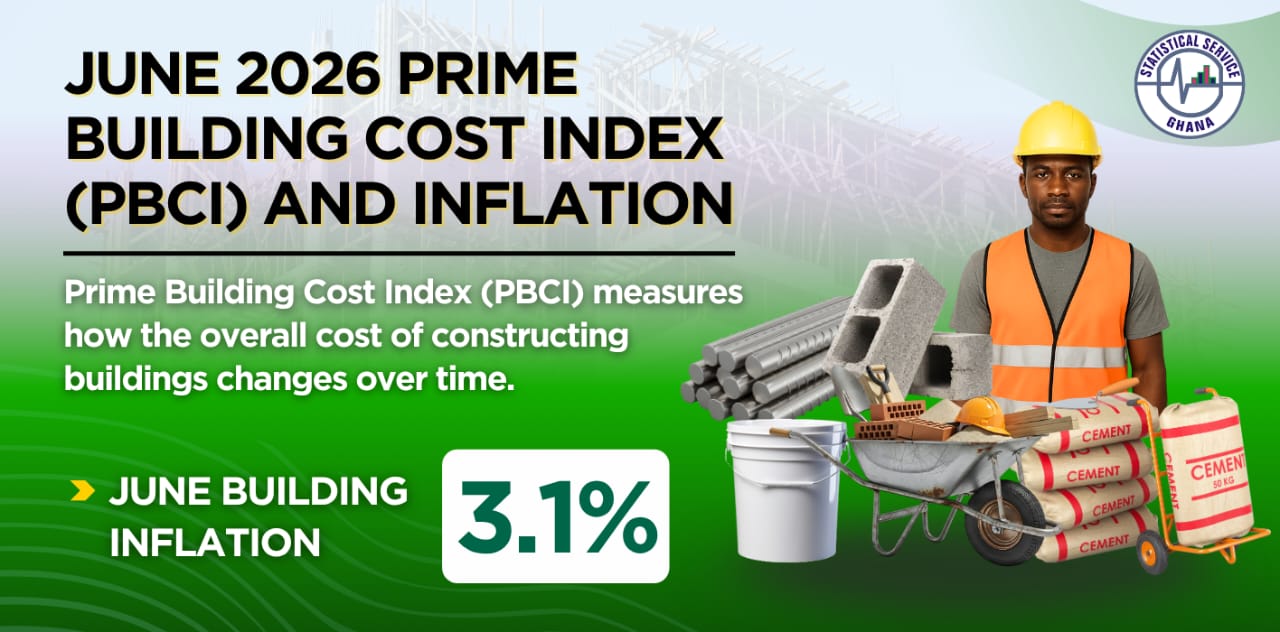
Ghana’s building-cost inflation increased for a second consecutive month in June 2026, reaching 3.10%. This rise was primarily driven by a sharp 16.00% surge in the cost of machinery, equipment, and selected installation materials. The Prime Building Cost Index, as reported by the Ghana Statistical Service, moved up from 2.70% in May.
The increase in building inflation occurred despite a significant easing in overall construction-input prices over the past year. The current 3.10% rate remains well below the 18.10% recorded in June 2025. However, the latest figures expose a widening divergence among the principal inputs used in residential, commercial, and public infrastructure projects.
This trend fits into Ghana's broader economic narrative of managing inflationary pressures while supporting growth in key sectors. The construction industry is a vital employer and contributor to the nation's Gross Domestic Product. Understanding these cost dynamics is crucial for developers, government infrastructure projects, and households planning construction.
Plant and equipment recorded an annual inflation of 16.00% in June, a sharp increase from 9.80% in May. Prices in this category rose by 5.10% in June alone, making machinery-related expenses the most significant emerging risk to the building-cost outlook. The Ghana Statistical Service confirmed these figures, noting that small tools saw 19.70% annual inflation, and equipment costs rose by 11.20%.
Materials, which constitute 76.50% of the building-cost basket, remained the largest overall driver, with inflation increasing to 3.90% from 3.50% in May. Plumbing materials recorded the fastest annual price increase at 23.90%, followed by roofing sheets at 21.40%. Electrical works made the largest upward contribution among materials at 57.00%.
Conversely, several essential structural materials became cheaper than a year earlier. Cement prices declined by 13.00%, and steel fell by 8.60%. Fine aggregate dropped by 5.10%, and timber prices decreased by 1.60%. These reductions provide some relief, particularly during the foundation and structural stages of construction projects.
Labour costs also helped offset the increases in materials and machinery. Overall labour inflation stood at negative 2.60%, compared with negative 2.00% in May. Skilled labour costs declined by 1.20%, while unskilled labour costs fell by 4.90%. This reduction in labour costs partially neutralised the increases recorded in materials and plant expenses.
The concentration of increases in installation and finishing components suggests that projects entering later construction phases may face greater cost pressure. This is particularly true for projects reliant on imported fittings, specialised equipment, and installation materials. A building could therefore become cheaper to start but remain expensive to complete.
The Ghana Statistical Service collects prices for 406 construction items from 489 outlets across 16 markets. This data forms the basis of the Prime Building Cost Index, which uses a 2023 base-year index of 100. This index provides a reliable basis for budgeting, contract pricing, and investment decisions for households, contractors, and government institutions.
The latest results suggest that while the broader construction environment has improved significantly from a year earlier, specific cost pressures persist. Decision-makers in the construction sector and government will need to monitor these diverging cost trends closely. This will ensure that infrastructure development remains affordable and sustainable across Ghana.