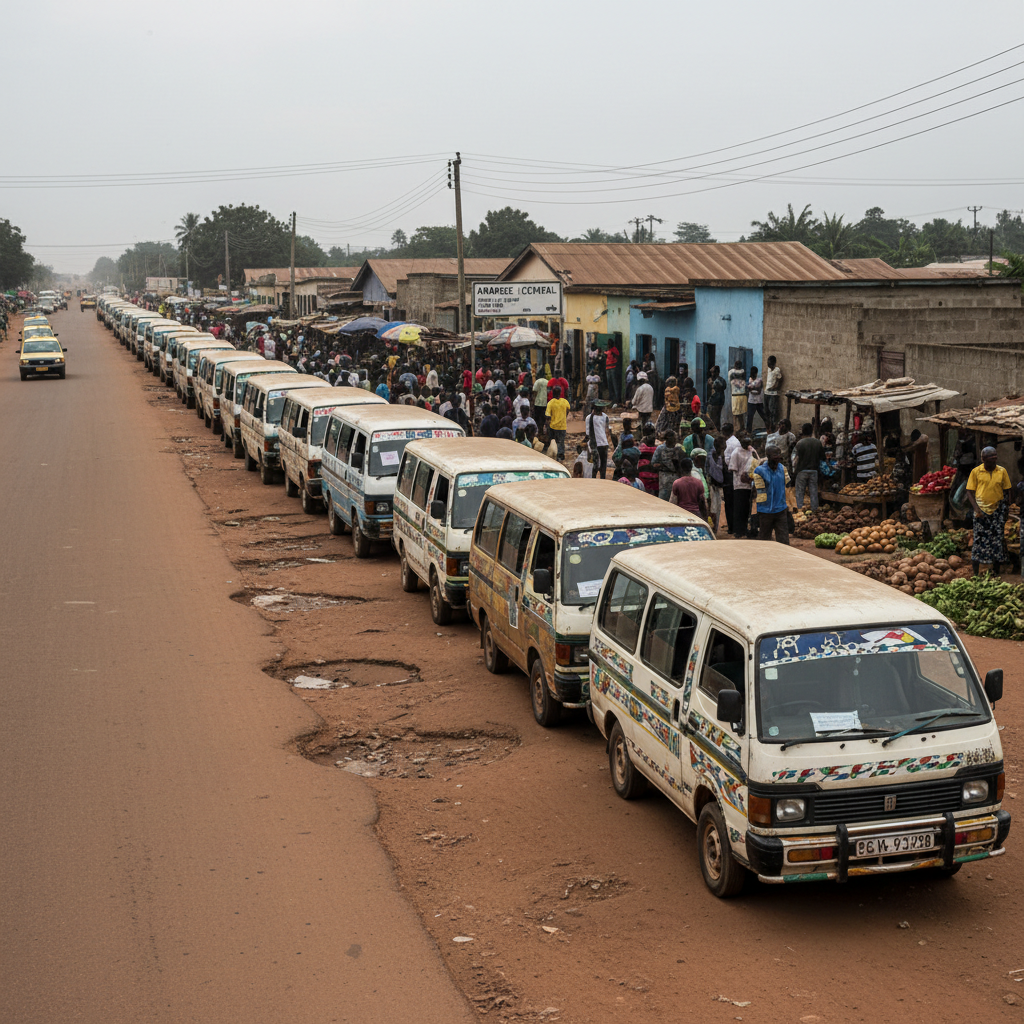
Commercial transport services in Ghana's Amansie Central District have come to a complete halt. Drivers began an indefinite strike on Monday, June 29, over deteriorating road conditions and a dispute with the District Assembly regarding unapproved fare increases. This action has left hundreds of commuters stranded across Jacobu, the district capital.
The drivers argue that the poor state of roads, specifically the Jacobu-Kumasi, Jacobu-Dunkwa, and Jacobu-Obuasi routes, has drastically increased their vehicle maintenance costs. They claim frequent breakdowns and damage to engines, suspensions, and tyres due to deep potholes and eroded road surfaces make fare adjustments necessary. These rising operating costs, they state, forced them to unilaterally increase fares.
This situation reflects a recurring challenge in many rural Ghanaian districts, where inadequate infrastructure hinders economic activity and creates tension between service providers and local authorities. Delays in road maintenance often lead to increased transport costs and reduced accessibility for goods and people. Data from the Ministry of Roads and Highways indicates a significant backlog in road rehabilitation projects nationwide, particularly in Ashanti Region's rural areas.
Kwabena Yaw, a striking driver, explained their position. He stated, "This whole issue stems from the fare dispute. The roads, especially the Jacobu–Afoako Junction stretch, are in a terrible condition. We increased the fare from GHS 8.50 to GHS 10 because our repair costs now exceed our weekly earnings. Instead of addressing the roads, the Assembly is arresting drivers and impounding vehicles." These arrests, he confirmed, triggered the industrial action.
The strike's continuation promises further disruption to local commerce and daily life. The Amansie Central District Assembly faces pressure to find a resolution, balancing enforcement of transport regulations with addressing valid driver concerns. Commuters will likely continue to rely on more expensive informal transport options, impacting household budgets and local trade. This situation could also prompt renewed calls for government investment in road infrastructure across Ghana.
District Chief Executive Emmanuel Obeng Agyemang confirmed six taxi drivers were arrested for charging unauthorised fares. He stated, "Following reports of unlawful fare increases, I directed the police to arrest any commercial driver found charging fares that have not been gazetted by the appropriate authority." Mr. Agyemang emphasised prosecuting the suspects to deter others. The District Chief Executive added that the Assembly is engaging the Ministry of Roads and Highways to speed up road rehabilitation.
Johnson Kwakye Francis, Chairman of the Odotobri Branch of the Ghana Private Road Transport Union (GPRTU), urged drivers to resume work. He acknowledged poor roads and rising costs but insisted on official approval for fare adjustments. Mr. Francis warned that drivers arrested for unapproved fares would face consequences without Union support. Meanwhile, fares for motorcycles (Okada) and tricycles (Pragya) have reportedly doubled, reflecting the acute transport shortage.