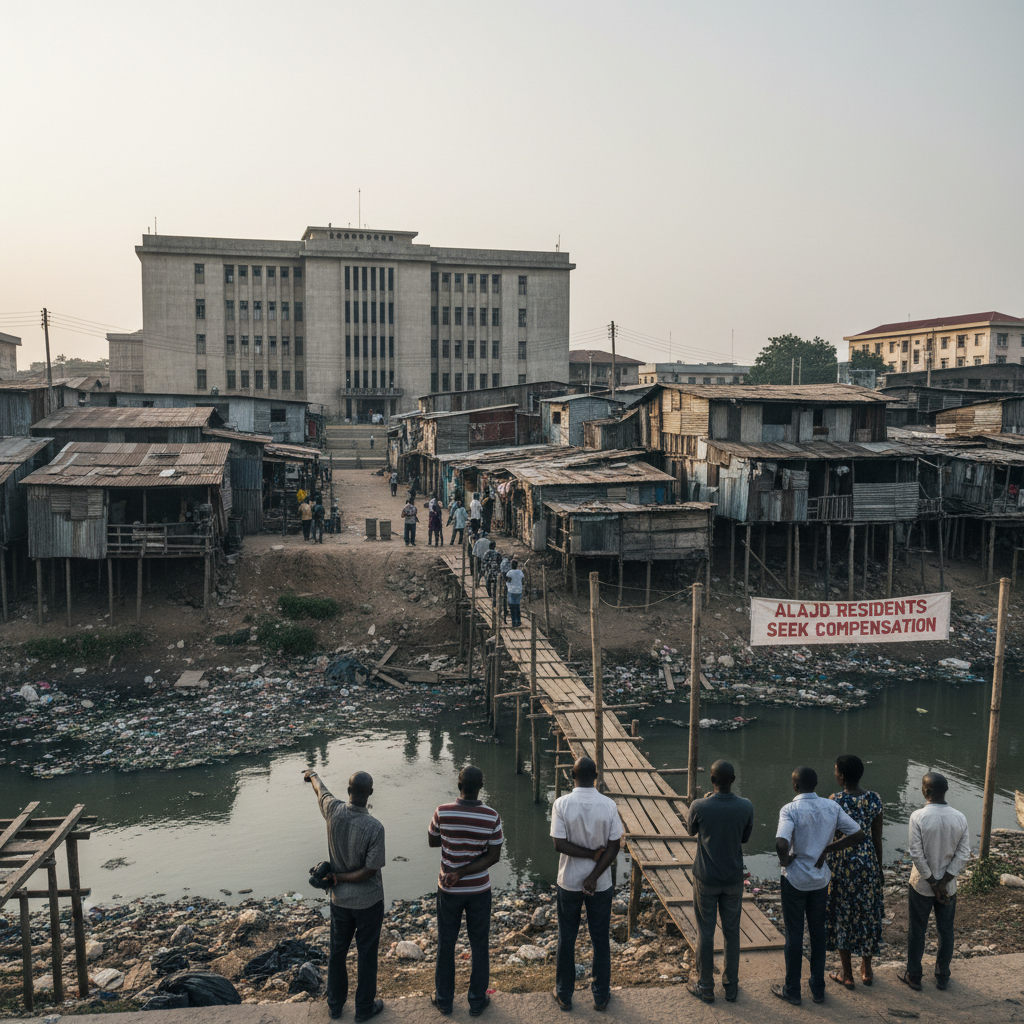
Residents of Alajo in Greater Accra have requested government support and compensation ahead of the planned demolition of structures situated along waterways. These demolitions, scheduled for July 2026, aim to mitigate severe flooding risks in the area and across the Greater Accra Region. The appeal highlights a significant socio-economic challenge for urban planning and public safety in Ghana.
This demand for compensation stems from residents' inability to afford relocation without financial assistance, despite acknowledging the dangers posed by their current housing. Frequent and intense floods in Ghana, particularly in Accra, have repeatedly caused damage and displaced thousands. These incidents underscore the urgent need for structural adjustments and better urban planning.
The removal of structures built on waterways is a critical component of Ghana's broader strategy to enhance flood resilience. Data from the National Disaster Management Organization (NADMO) consistently shows that encroachment on natural water channels exacerbates flood impacts. Past efforts to desilt drains and demolish illegal structures have often faced resistance due to the displacement of residents. This situation reflects a persistent challenge in balancing urban development with environmental protection and public welfare.
One resident stated, “If we had the money, we would have moved long time ago. We are leaving, but we need support.” This sentiment is widely shared, indicating that financial constraints, rather than opposition to safety measures, drive the call for compensation. The Municipal Chief Executive (MCE) has confirmed that authorities plan to begin desilting drains and demolishing structures on waterways. The MCE also added that “steps are also being taken to compensate affected residents as part of measures to address the flooding situation.”
The government’s response to these calls for compensation will be crucial in determining the smooth execution of the demolition exercise. A fair compensation package could accelerate the relocation process and prevent potential legal disputes and humanitarian issues. Conversely, a lack of adequate support could lead to increased social unrest and delays in critical infrastructure work. This situation could also impact the real estate market in affected areas.
Observers will watch how local authorities balance their infrastructure development goals with the immediate needs of affected citizens. The success of this demolition project and future similar initiatives depends heavily on transparent communication and equitable compensation strategies. This approach would ensure that public safety improvements do not come at an unbearable cost to vulnerable communities. Furthermore, consistent maintenance of cleared waterways after demolition will be essential to prevent future flooding problems.