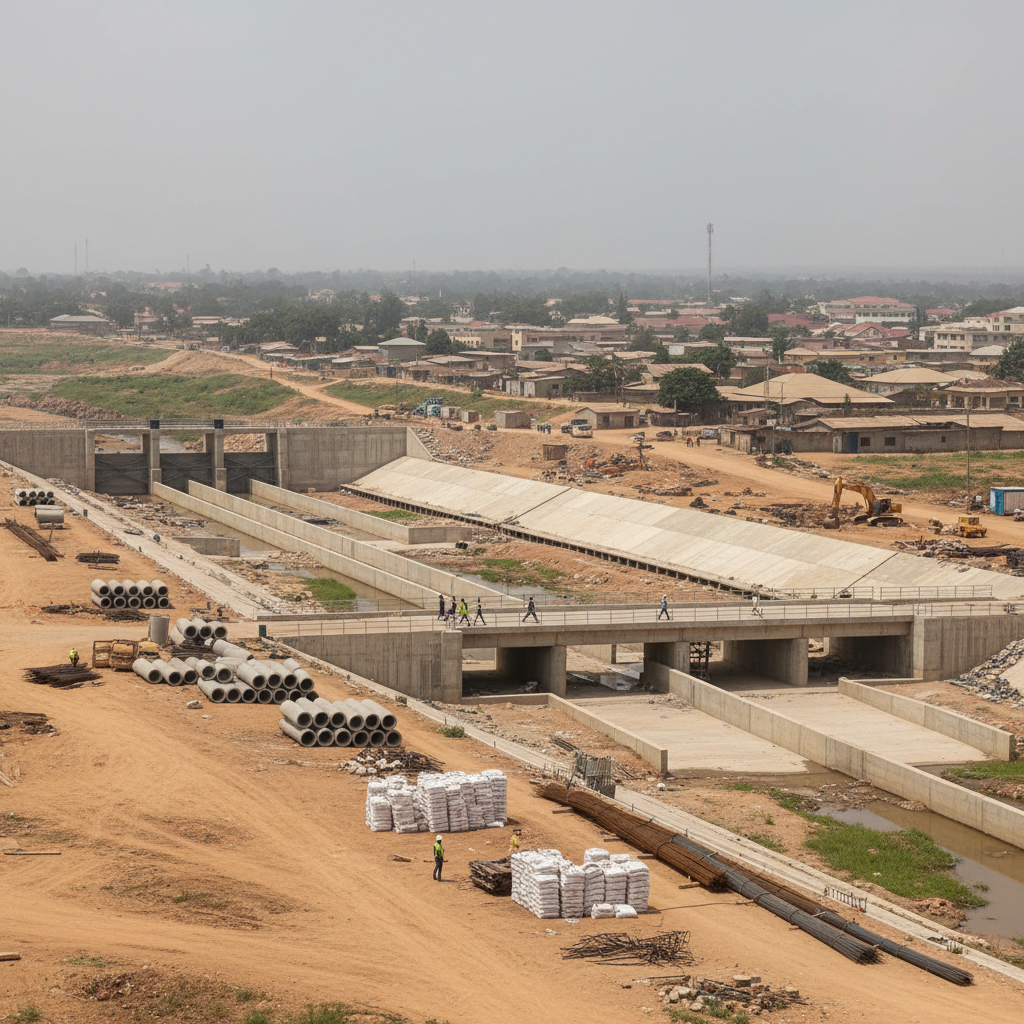
The Akufo-Addo government has allocated GHS 898 million for flood control interventions, according to Eugene Boakye Antwi, a hopeful for the New Patriotic Party (NPP) General Secretary position. Mr. Antwi stated this figure represents more investment in flood mitigation than any previous administration.
This substantial allocation includes GHS 450 million during the government's first term. In 2018, an additional GHS 198 million was specifically earmarked for national flood control initiatives. By 2020, GHS 250 million more went to the Ministry of Works and Housing for drain channels, desilting, and related work. These investments aim to combat the recurring flood challenges across Ghana, especially in vulnerable areas like Accra.
Ghana frequently experiences severe flooding, particularly during its rainy seasons, which impacts economic activity and displaces thousands. The capital city, Accra, due to its low-lying geography, is particularly susceptible to these events. Data shows consistent budgetary allocations are crucial for infrastructure upgrades and maintenance to protect livelihoods and property. Such consistent spending reflects a growing recognition of the economic costs of inaction.
Speaking on Asempa FM's Ekosii Sen show, Mr. Boakye Antwi highlighted the government's financial commitment. He stated, “If any government has tackled flooding in Ghana, it is Akufo-Addo.” Mr. Antwi emphasized that proactive planning is essential. He proposed establishing a dedicated contingency fund for the Ministry of Works and Housing. This fund would allow early desilting and drain construction to begin as early as January or February each year.
The implications of sustained investment in flood infrastructure are significant for Ghana's urban development and economic resilience. Markets will closely watch for the effective deployment of these funds and the tangible impact on flood frequency and severity. Decision-makers must ensure accountability and transparency in project execution. Addressing structures built on waterways through decisive action remains a critical challenge. The call for a contingency fund could streamline budget processes for flood prevention, enhancing Ghana's preparedness. Such long-term solutions are vital for protecting Ghana’s growing urban economy.