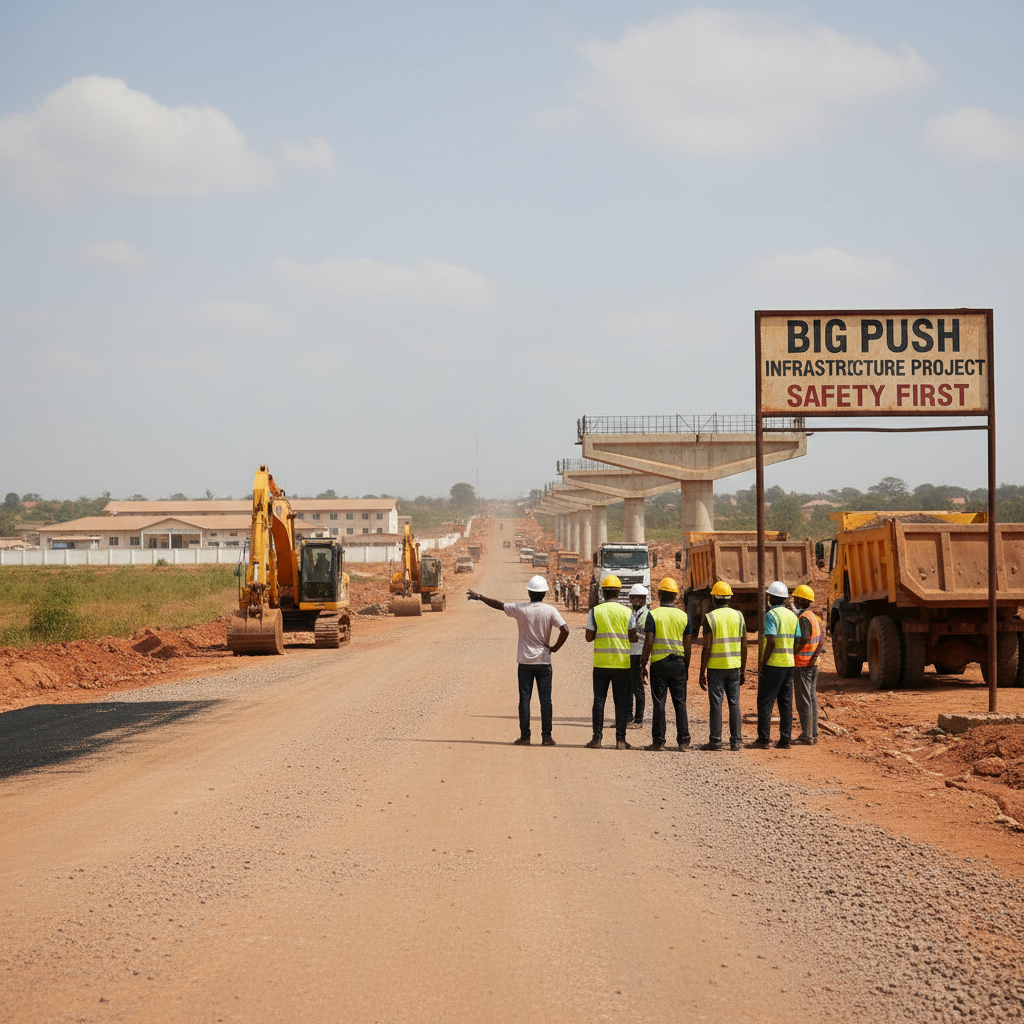
Minister for Roads and Highways, Governs Kwame Agbodza, has directed contractors on Ghana's Big Push road projects to incorporate all necessary safety measures. This directive aims to minimise accidents and protect road users, especially on highways. The Minister made this clear during an inspection in the Volta Region.
Mr. Agbodza highlighted that inadequate safety measures at construction sites often force residents to create their own protection. He said this practice creates additional risks for road users. The directive came during an inspection of the Anyirawase–Ho–Titrinu Road reconstruction on Thursday.
This initiative follows persistent concerns about road safety during infrastructure development across Ghana. Data from the National Road Safety Authority (NRSA) consistently shows high rates of road crashes, with construction zones often contributing to the problem due to poor signage or inadequate protection. Improving road infrastructure is a key component of Ghana's economic development plans, but safety remains a critical challenge. The Big Push program is a significant government investment in upgrading the country's transportation network, which is vital for trade and internal commerce.
Mr. Agbodza firmly stated that the government will not approve variations that increase the cost of projects. He said this applies specifically to the first phase of the Big Push programme. “Under the Big Push, no variation. We will not add anything that takes the cost of any project under the phase one cedi above the contract price,” he stated.
The Minister's stance on cost control directly impacts public finance and contractor profitability. Sticking to original budgets for infrastructure projects prevents cost overruns, which often burden the state. This strict financial discipline is crucial for maintaining economic stability. It signals to contractors that their initial bids must be accurate and comprehensive.
The emphasis on safety measures will likely lead to changes in contractor practices. Companies will need to allocate more resources to traffic management and site safety. This could involve using better signage, temporary barriers, and dedicated safety personnel. The government's firm position on project costs means contractors must manage these additional safety investments within their current budgets. This focus on both safety and fiscal responsibility is likely to reassure the public and financial stakeholders about the prudent management of the Big Push programme.