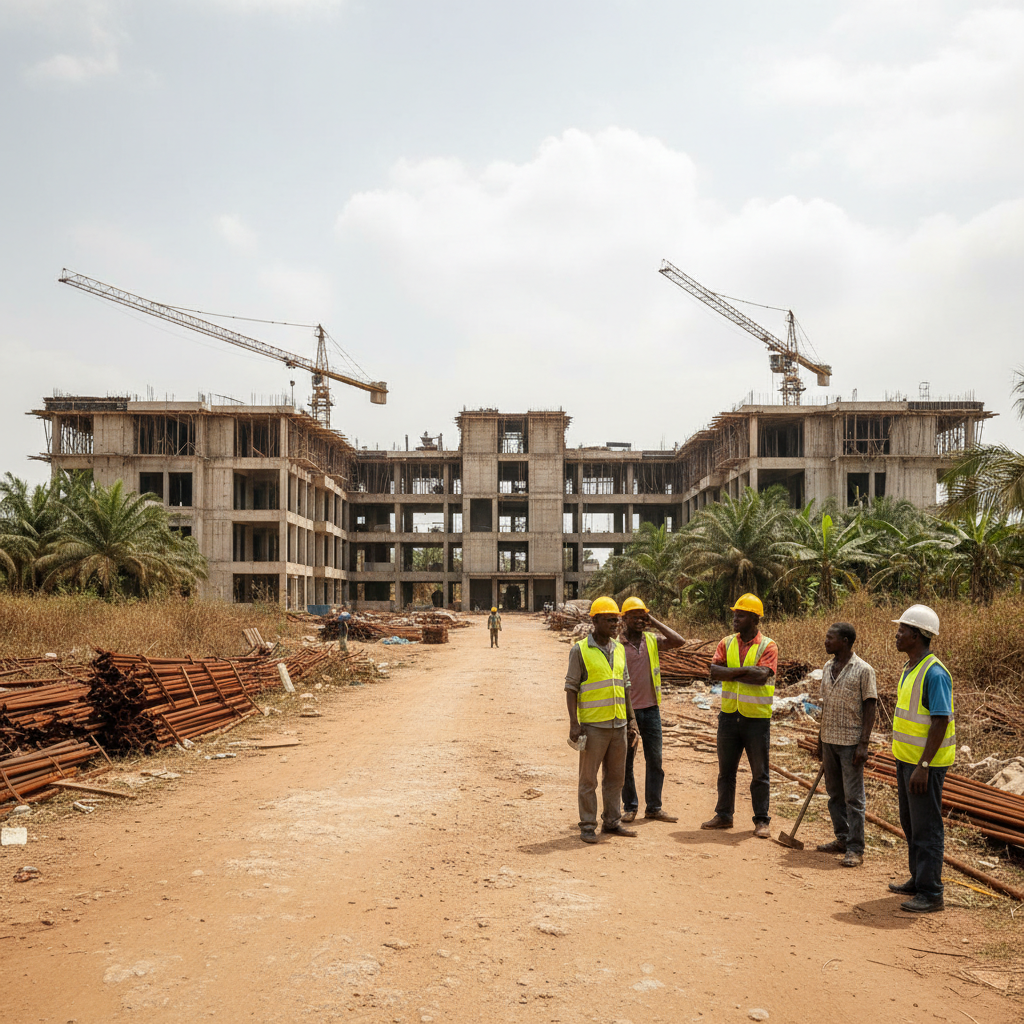
The Afari Military Hospital in Kumasi remains uncompleted due to a contractual dispute. This has left the 500-bed facility in ruins more than a decade after its construction began. Nana Ayew Afriyie, the Minority’s Ranking Member on Parliament’s Select Committee on Health, confirmed this reason. He stated that the previous government could not complete the hospital due to this disagreement.
Minority Members of Parliament (MPs) visited the abandoned site in the Ashanti Region. They observed the deteriorating state of the hospital, which is now overgrown with weeds. They found several bags of cement hardened and iron rods exposed to the weather. The MPs expressed concern that the facility serves as a home for reptiles. The Afari Military Hospital was designed to provide crucial healthcare services.
This situation highlights a recurring problem in Ghana: incomplete public infrastructure projects. The abandonment of large-scale projects like the Afari Military Hospital leads to significant financial losses. Assets like building materials and equipment decay, representing wasted public funds. This also delays access to essential services for citizens. The failure to operationalize such a large hospital impacts Ghana's healthcare delivery capacity. It raises questions about project planning and government continuity.
Mr. Afriyie explained the contractual dispute as the primary reason for the hold-up. He expressed disappointment over the facility's condition. During their visit, soldiers guarding the hospital challenged the MPs regarding their authorization to access the site. This incident further underscores the sensitive nature of the abandoned project. The Minority MPs are now urging President Mahama to prioritize finishing existing health facilities before starting new ones. They highlighted the government’s failure to operationalize projects started by the previous administration.
The lack of progress on the Afari Military Hospital has broad implications for public finance and healthcare access. The estimated cost of the hospital runs into many millions of Ghana cedis. These funds are now tied up in a decaying asset. Unresolved contractual disputes often lead to arbitration or litigation, incurring further costs for the state. The continued neglect also pressures existing health facilities, like the Komfo Anokye Teaching Hospital, which recently faced industrial action by doctors. This suggests a systemic issue concerning healthcare infrastructure management.
Policymakers must address the contractual dispute urgently to prevent further decay of the Afari Military Hospital. Resolving the matter could allow for completion and operationalization, providing essential health services. Delays in project completion create public distrust and represent inefficient use of taxpayer money. The government’s approach to completing such legacy projects will be a key indicator of its commitment to public welfare and financial prudence. Investors and citizens will watch how the administration handles these abandoned projects.