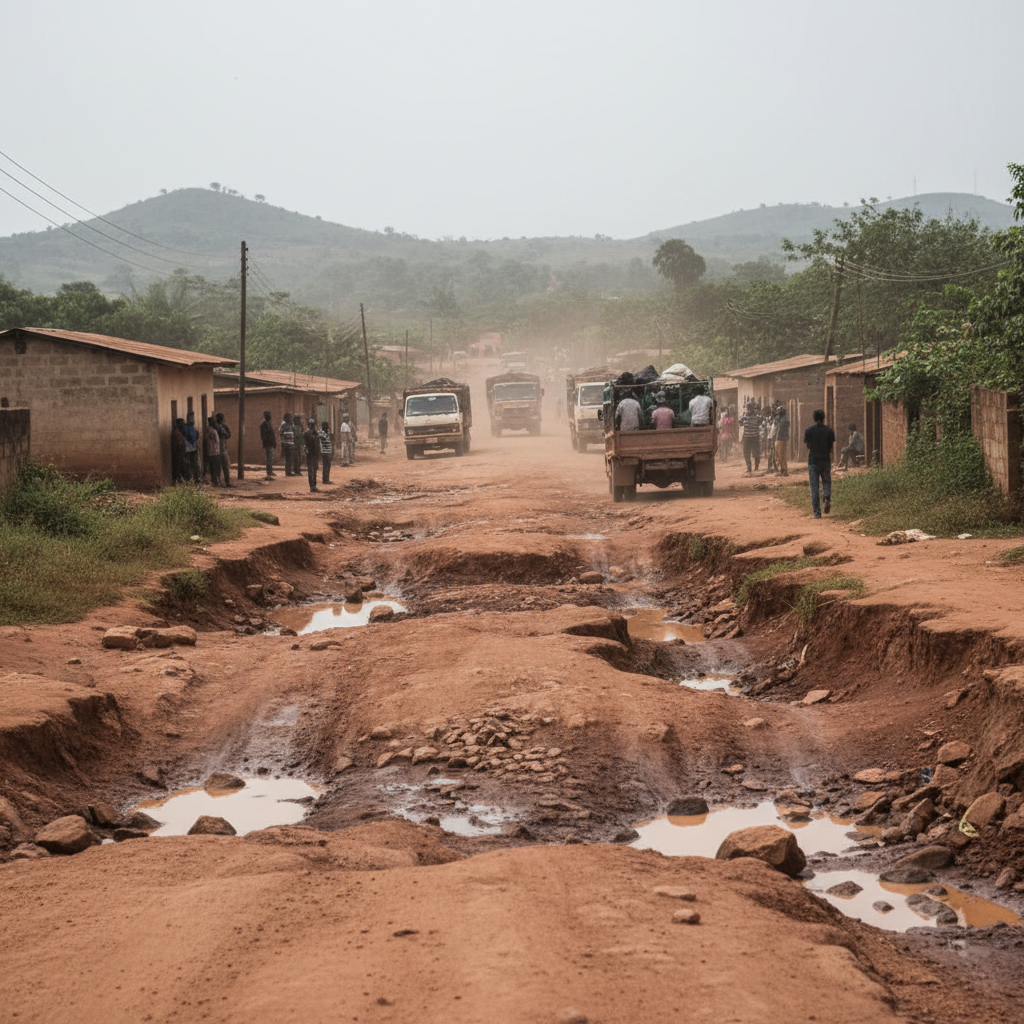
Taxi drivers and residents of Adjei-Kojo-Kanewu in Ashaiman are calling for the immediate rehabilitation of a 31.2-kilometre road. The poor condition of the road is damaging vehicles and increasing transport costs for commuters. This issue has led to frustration among both drivers and passengers.
The approximately 31.2-kilometre stretch has deep potholes and a severely deteriorating surface. This makes travel unsafe and uncomfortable for all road users. Drivers now face significant expenses for vehicle repairs and spare parts. This rising operational cost has directly led to increases in transport fares.
This situation reflects a broader challenge in Ghana's infrastructure development. Many communities struggle with inadequate road networks despite government initiatives. The state of local roads directly impacts economic activities and the cost of living for residents. This affects household budgets and local commerce.
One driver stated that the road's condition destroys their vehicles. They spend heavily on repairs, which forces them to increase fares to avoid operating at a loss. Passengers bear the burden of these fare increases. They also face difficulties accessing transport as some drivers avoid the deteriorated route entirely.
The issue of rising transport fares has immediate implications for household expenditures. It specifically impacts low-income earners who rely on public transport. Decision-makers will need to address road maintenance to stabilize transport costs. This could also improve the movement of goods and services.
Rehabilitating the Adjei-Kojo-Kanewu road would significantly reduce vehicle maintenance costs for drivers. It would also lower transport fares for passengers. Improved road conditions would make transport more accessible and reliable for the community. This would have a positive economic impact on the Ashaiman area.
The government's response to such local infrastructure demands is crucial. It often highlights the allocation of national resources for development. Persistent calls for road repairs across the country indicate a need for sustainable funding for road maintenance. This applies to both trunk roads and inner-city networks.
Prompt action on this road could set a precedent for other similar community requests. It would also alleviate economic pressure on residents. This particular situation mirrors ongoing national discussions about Ghana's road infrastructure deficit. This deficit has an estimated value often running into billions of GHS. The focus remains on improving the country's physical infrastructure.