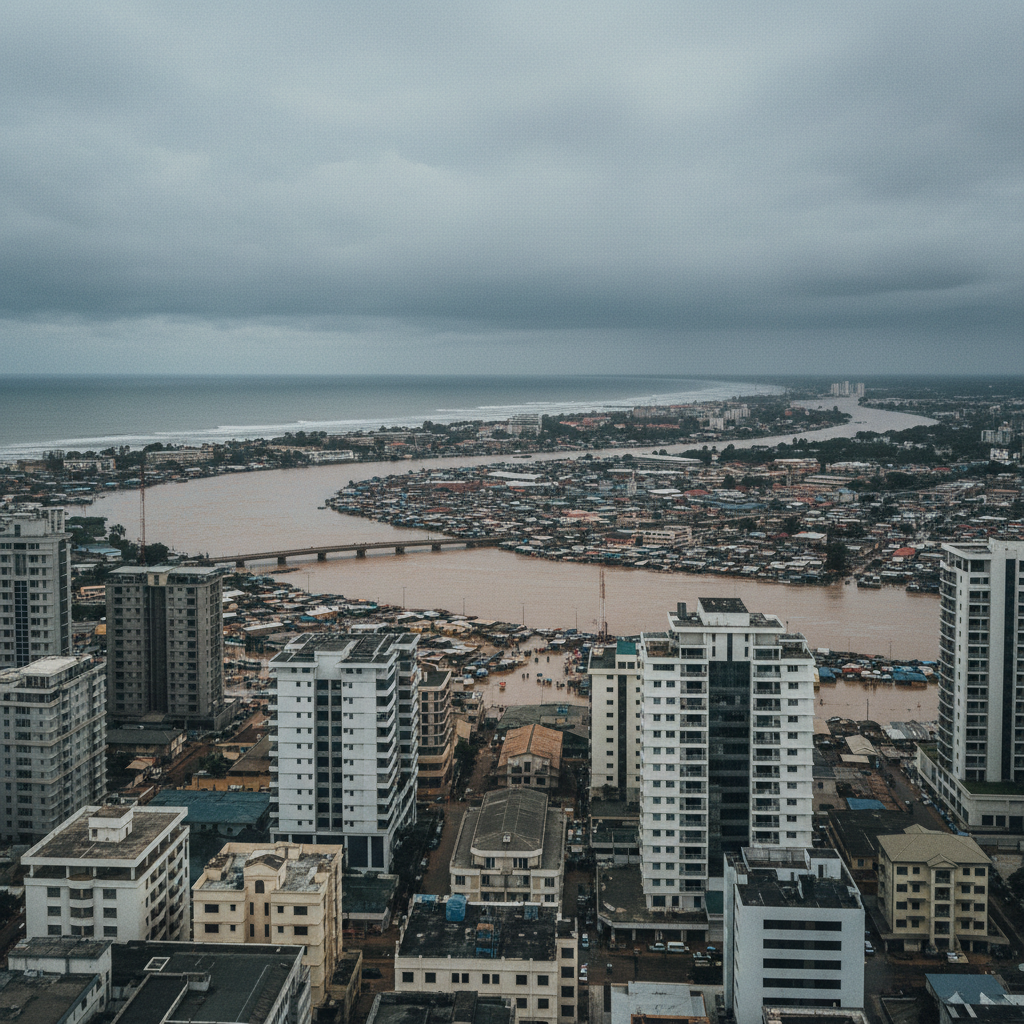
Devastating floods on June 29, 2026, submerged some of Accra’s most prestigious neighbourhoods, impacting properties valued at billions of GHS. Areas such as East Legon, Dzorwulu, Airport Residential Area, and Tse Addo experienced widespread inundation. This crisis exposes the increasing vulnerability of high-value real estate to severe weather events.
This flooding incident underscores a critical shift: an expensive location no longer guarantees a safe investment. Climate change, rapid urbanisation, weak planning enforcement, and unregulated development now significantly increase property risks. Homeowners, businesses, and investors in these prime locations face substantial financial losses and property damage.
The recurring flooding problem has become a major challenge for Ghana’s broader economic and urban development. Data suggests that billions of GHS have been invested in these premium residential areas over the past two decades. However, inadequate drainage and construction on natural waterways threaten this investment. This situation now poses a direct risk to the stability and future growth of Ghana’s real estate market.
Curtis Tetteh Djaba, also known as Nene Tetteh Nanor Odjidji II, stated that the floods serve as a painful reminder. He highlighted that Ghana’s flooding crisis now affects even high-income communities. Property buyers must now assess flood risk with the same seriousness they investigate land ownership, not just location or price.
This event means that urban planning and enforcement must undergo significant reforms. Property values in affected communities could decrease, and insurance costs will likely rise. Decision-makers must address the fundamental issues of land allocation and development practices in Ghana to prevent further economic losses and protect future investments. The market will closely watch how authorities respond to this escalating crisis.
The floods challenge the long-held assumption that prime locations inherently maintain value. Property damage includes structural issues, electrical failures, and loss of vehicles and household items. Rental incomes also disappear during repair periods, further impacting investors. Buyers are becoming hesitant to purchase in flood-prone areas, leading to reduced demand and lower resale values. Developers also face significant risks to their investments and reputation.
Ghana’s planning authorities have a critical role in enforcing existing laws. Buildings continue to appear on waterways and wetlands, often without proper oversight. This lack of enforcement allows unsuitable developments to proceed, making future corrections extremely expensive. Experts stress the urgent need for technical expertise in hydrology and drainage design during initial land planning. Many communities develop before formal government planning, leading to inadequate infrastructure. Correcting these errors post-construction is often impossible or prohibitively costly.
The June 29 floods serve as a turning point for real estate assessment in Ghana. Future property purchases must include thorough checks on historical flood data. Buyers should investigate the topography, existing drainage systems, and any encroachment on natural waterways. These considerations are now as important as traditional factors like schools and infrastructure access. Addressing these issues will safeguard Ghana’s significant real estate investments over the long term.