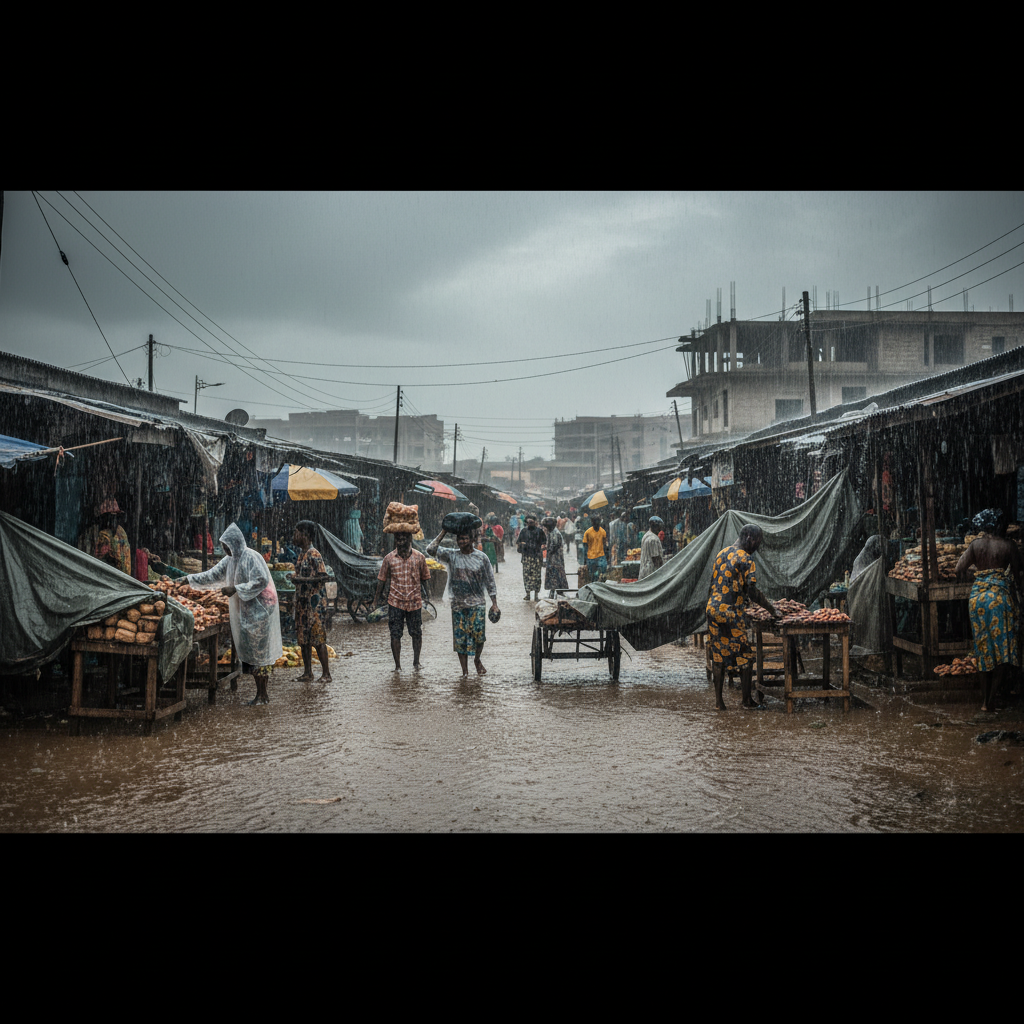
The Ghana Meteorological Agency (GMet) has warned that Accra faces a heightened flood risk this June. Rainfall totals are projected to reach between 100 and 150 millimetres across the Coastal Zone. This puts significant parts of the capital city at increased risk of inundation.
Accra's vulnerability to flooding has worsened over the years. As little as 30 millimetres of rainfall can now cause significant flooding. This is due to human activities that have severely reduced the city’s capacity to absorb and drain rainwater. Development has encroached upon natural flood retention areas, exacerbating the problem.
This situation fits into Ghana's broader economic and environmental challenges with rapid urbanization. Unplanned expansion often strains existing infrastructure and disregards natural flood plains. Accra, a major economic hub, has seen unchecked building on watercourses. This places financial burdens on disaster relief and infrastructure repairs after floods. Past events have caused significant economic disruption and property damage. Major roads in flood-prone areas, for example, have experienced severe traffic and accessibility issues.
Francisca Martey, Deputy Director and Head of Research and Applied Meteorology at the GMet, explained the underlying causes. She told Graphic Online, "When it rains in Accra, Accra's rains do not collect only in Accra. It counts Berekusu and other surrounding areas. All of them come to Accra." She further stated that areas naturally designed to collect rainwater have been built upon. "All those places are naturally made to collect rainwater. Now all those places have been built upon."
The current projections indicate that flooding could worsen this month. This will place further pressure on emergency services and local authorities. City planners and engineers are urged to implement long-term solutions. These solutions should address the rampant building on watercourses and inadequate drainage systems. The economic impact could include disruptions to commerce, damage to property, and increased public health risks. Businesses in affected areas often face significant operational downtime and repair costs. Such events also deter investment in flood-prone regions.
Urbanization has channeled stormwater into narrow drains that cannot handle heavy flows. "At first, the rain would spread over a broad area and gradually seep into the ground. Now we have brought all of it into narrow gutters," Mrs. Martey noted. Once water volume exceeds the drains' capacity, it spills out and floods surrounding areas. This highlights a critical need for upgraded and expanded drainage infrastructure. For example, the area around Bel Aqua in Tema, built on a watercourse, experiences severe flooding. This often causes extensive traffic delays and economic losses.
The GMet's warning is part of its June 2026 Rainfall Outlook. This outlook predicts predominantly wet conditions across most of Ghana. Other zones like the Forest Zone (Dunkwa, Kumasi) expect 200-400 millimetres of rain. The Transition Zone (Kintampo, Atebubu) forecasts 200-250 millimetres. This widespread rainfall underscores the national scope of flood preparedness needs. Disaster management institutions must strengthen emergency readiness. This includes improving early warning systems and evacuation plans. The overall economic impact of these floods could be substantial, affecting livelihoods and Ghana's gross domestic product.