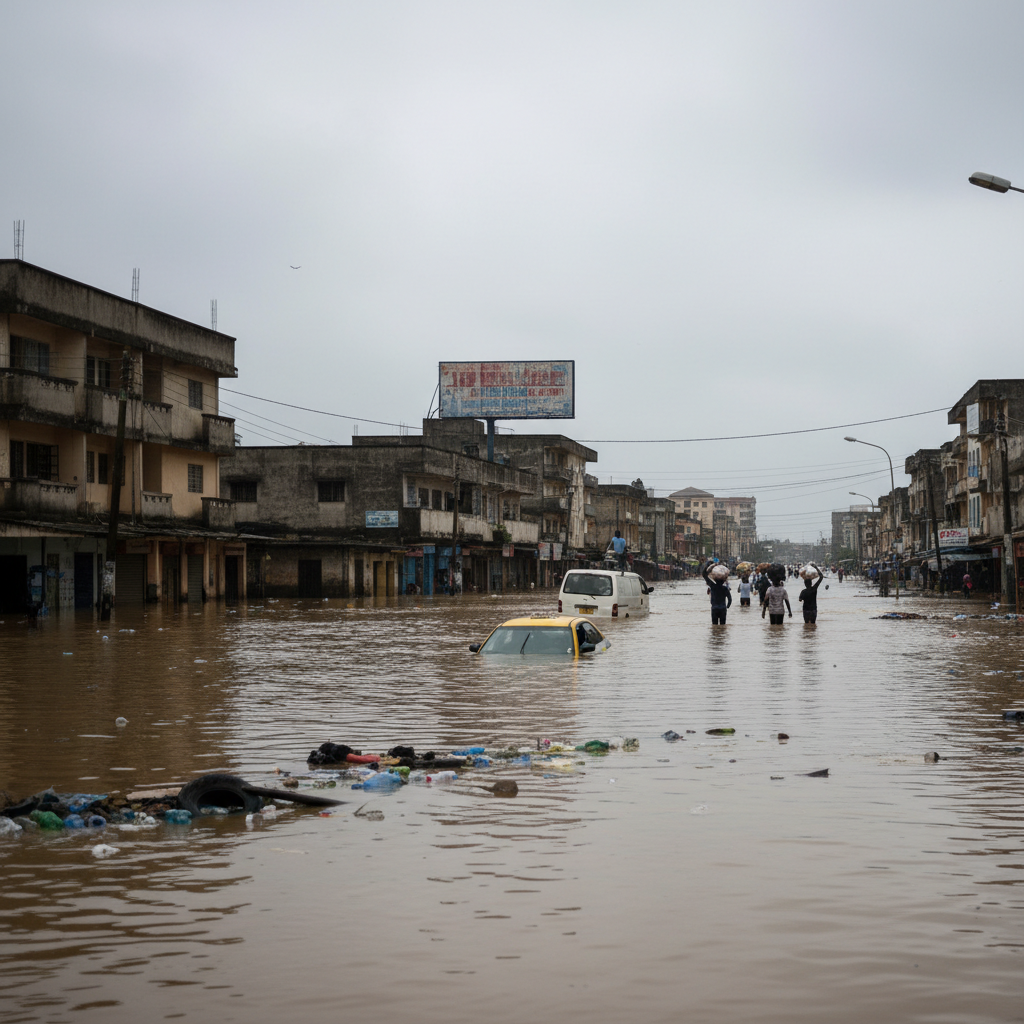
Two people have died following Monday's heavy rains and subsequent flooding in Accra. One victim, 25-year-old Michelle Ofori Tachie, a resident of Alajo, died from electrocution in a flood-affected area.
Authorities have confirmed a second flood-related fatality. An unnamed individual was swept away by fast-moving floodwaters. These incidents underscore the severe dangers posed by the ongoing flooding in the Greater Accra Region, affecting numerous communities.
These deaths add to a growing pattern of public safety concerns during Ghana's rainy seasons. Frequent flooding in Accra disrupts crucial transportation networks and severely impacts daily economic activities. This trend highlights the persistent challenges in urban planning and infrastructure development needed to mitigate flood risks effectively.
The National Disaster Management Organisation (NADMO) confirmed Michelle Ofori Tachie's electrocution. JoyNews correspondent Maxwell Agbagba reported the second fatality. Emergency officials continue to warn residents to avoid wading through floodwaters and to report hazards immediately.
The ongoing heavy rains mean decision-makers must urgently address infrastructure deficiencies. These include improving drainage systems and enhancing public awareness campaigns on flood safety. Markets and businesses in affected areas will continue to face disruptions, impacting local commerce and income generation. The Ghana Health Service has also issued warnings about increased risks of cholera, typhoid, and snakebites, further straining public health resources. The Presidency has issued an urgent flood safety advisory, signaling the government's concern over the escalating situation. The Electricity Company of Ghana (ECG) has begun phased power restoration to Accra after flood disruptions at key substations, indicating the scale of infrastructure damage. Further investment in resilient urban infrastructure is critical to protect lives and secure the city's economic stability.