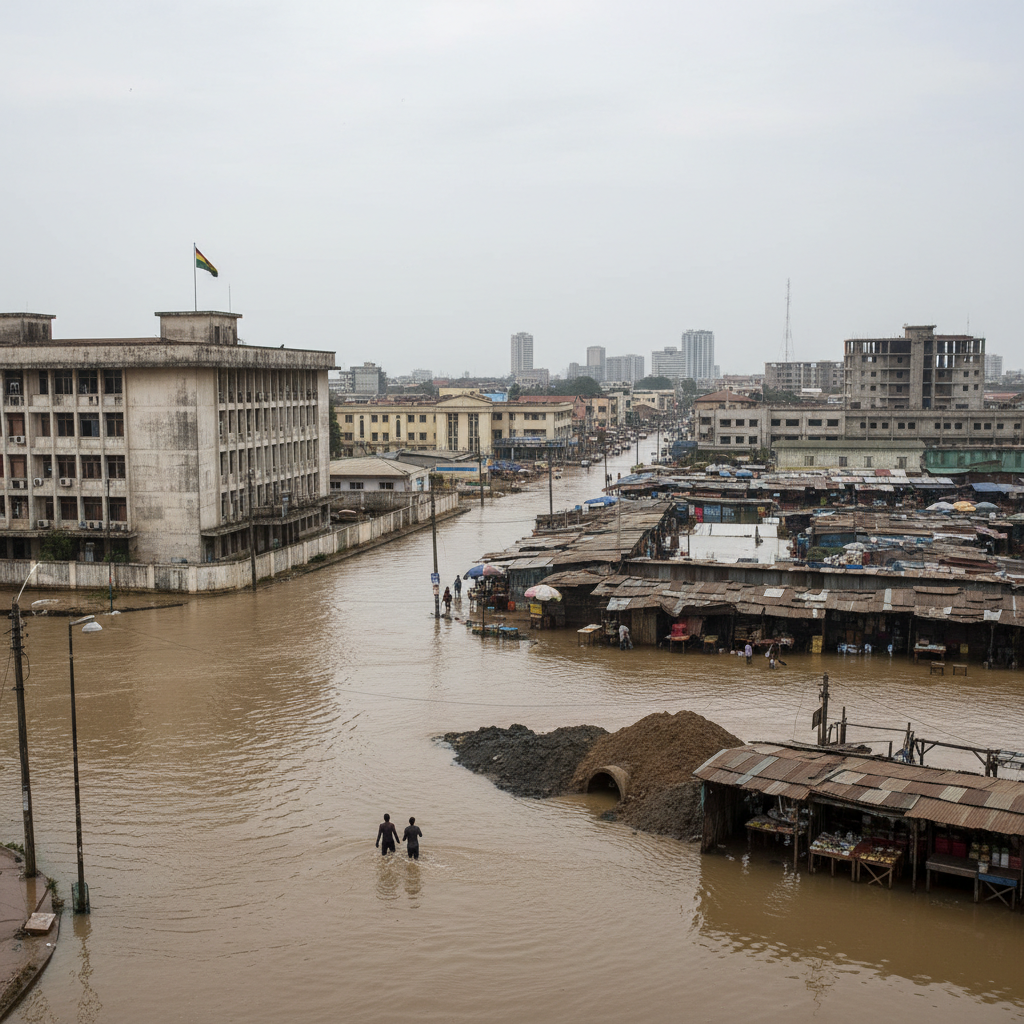
Accra's recurring floods stem more from inadequate drainage infrastructure and silted waterways than from indiscriminate littering. Environmental engineer Dr. Juliet Ohemeng-Ntiamoah emphasized this finding on JoyNews' Newsfile on Saturday, July 11.
Dr. Ohemeng-Ntiamoah stated that improper waste disposal contributes to blocked drains. However, she believes its role as the primary cause of flooding is overemphasized. This emphasis often distracts from deeper structural problems within the city's infrastructure. She identified five major contributors to the capital's flooding: poorly engineered drainage systems, increased stormwater runoff from extensive concrete development, weak enforcement of laws protecting wetlands, a lack of stormwater retention ponds, and choked drains.
This re-evaluation of flood causes offers a critical perspective for Ghana's urban development and public finance. The national debate often focuses on cleanup campaigns and waste management, which are important but do not address core infrastructure deficits. Ghana's rapid urbanization has led to significant concrete and asphalt development. This reduces the ground's ability to absorb rainwater, increasing runoff into already strained drainage systems. The government's significant investment in sanitation and waste management, such as the national clean-up campaigns, needs to be complemented by robust engineering solutions.
Dr. Ohemeng-Ntiamoah clarified her concern, stating, "When we list the contributing factors to flooding in Accra, I am concerned that we are elevating indiscriminate solid waste disposal as though it is the major cause of the flooding we are seeing. In my view, I don't think it is." She further highlighted that silt, not plastic waste, is the dominant obstruction in drains. "If you pay careful attention to the drains and what is choking them, you realise that it is silt primarily, before even waste. It is the silt that traps the plastic bottles and other debris," she explained. This silt accumulates from poorly planned urban development like untarred roads and bare lands.
Moving forward, policymakers must shift their attention to long-term engineering solutions. This includes designing drainage systems capable of handling 100-year flood events, a standard adopted by many global cities. There is an urgent need to invest in infrastructure that can manage increased rainfall intensity due to changing weather patterns. Decision-makers will also need to address laws protecting wetlands and the creation of stormwater retention ponds. Addressing silt accumulation through better urban planning and landscaping, especially along areas like the Odaw River, will be crucial. This shift in focus is essential for building real resilience against future flood events in Accra.