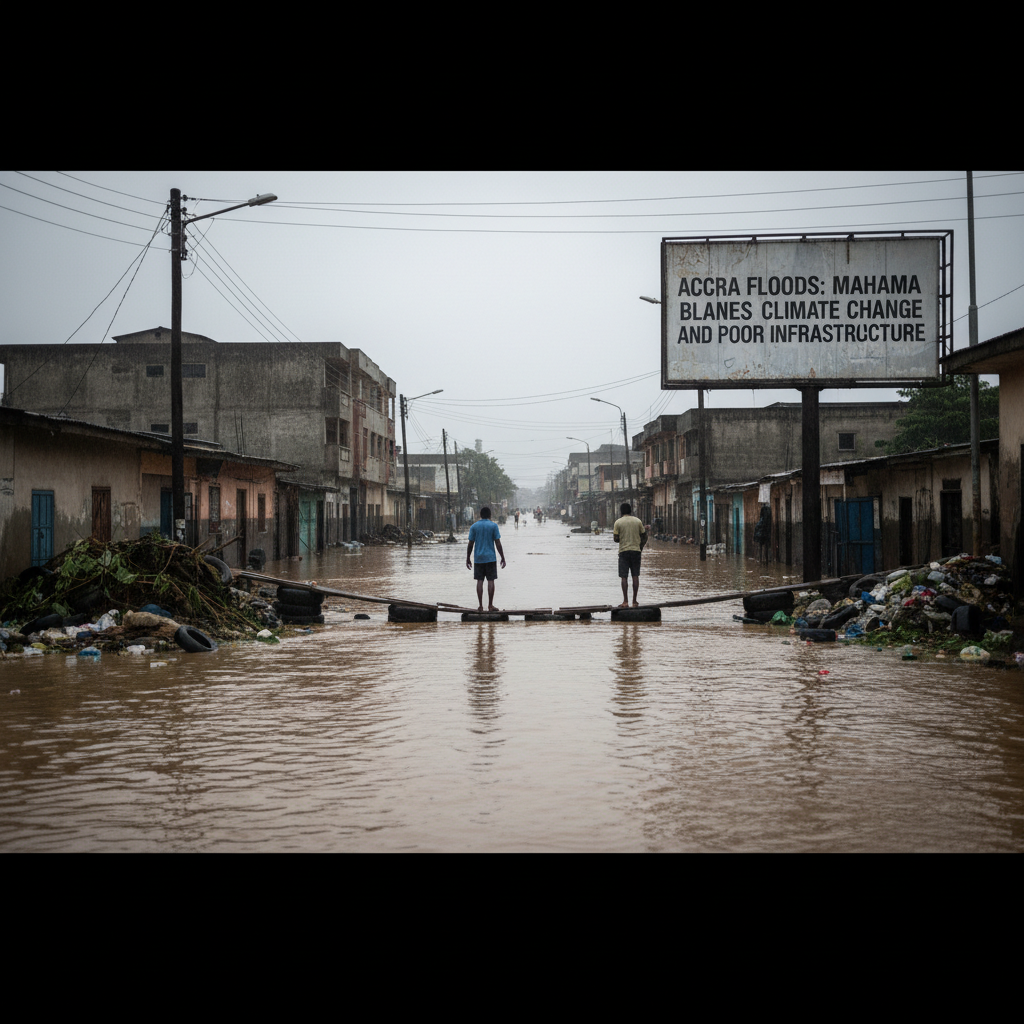
Accra Floods: Mahama Blames Climate Change and Poor Infrastructure

    Accra recorded 140 millimetres of rainfall in a single day, far exceeding previous years.

    1 min read2 min listen
    Accra Floods: Mahama Blames Climate Change and Poor Infrastructure
    Former President John Mahama has attributed Accra's recent devastating floods to a combination of intense rainfall, climate change, insufficient drainage, and human obstruction of natural waterways. The capital recorded approximately 140 millimetres of rainfall in a single day. This greatly surpasses the 56 millimetres observed during a heavy rainfall day in the same period last year. This extreme weather event has severely impacted numerous communities across Accra. The excessive rainfall prevented existing drainage systems from effectively channelling water away. This created widespread inundation and significant property damage. Accra's geographical location, nestled between the Akwapim mountain range and the Atlantic Ocean, makes it particularly vulnerable. This flooding directly impacts Ghana's economic infrastructure and public finance. Recurring floods disrupt commerce, damage public assets, and require significant state resources for relief and reconstruction. Data from the Ghana Meteorological Agency confirms a consistent rise in rainfall intensity. June rainfall increased from 85 millimetres in 2024 to 172 millimetres in 2025, reaching 333 millimetres in 2026. This trend highlights a growing climate risk for urban centres. President Mahama, speaking after an aerial assessment on June 29, described the flooding as one of the most severe in recent years. He stated that rapid urbanisation and unregulated construction have encroached upon natural watercourses. He also blamed the indiscriminate disposal of refuse into drains and the illegal filling of wetlands for further exacerbating the problem. These human activities significantly reduce the capacity of natural systems to handle heavy rainfall. The government now faces urgent pressure to develop comprehensive flood mitigation strategies. These efforts must address both climate adaptation and urban planning deficiencies. Policymakers will likely focus on enforcing building regulations, investing in robust drainage infrastructure, and launching public awareness campaigns. Failure to act could lead to greater economic losses and social disruption in future rainy seasons. The frequency of these events also raises concerns for the insurance and property markets.

    Comments

    More from StatsGH