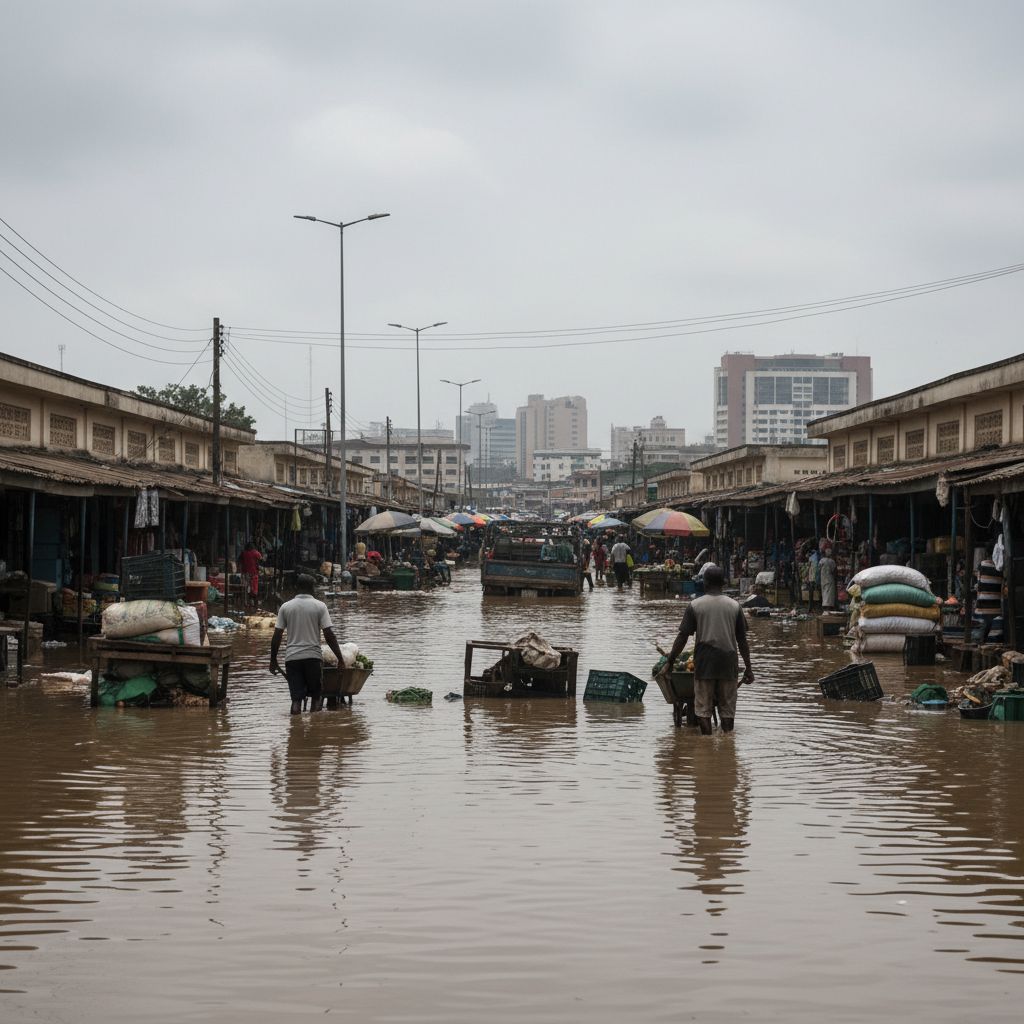
Torrential rains in the Greater Accra Region over the past two days have caused widespread flooding, claiming one life in Alajo and leaving thousands of residents stranded. The deceased individual was electrocuted during the floods in Alajo, one of the hardest-hit areas in the metropolis. This incident occurred on June 29, 2026, as reported by MyJoyOnline News.
Floodwaters engulfed homes, roads, and businesses in Alajo and several other parts of Accra, forcing many residents to seek safer ground. Motorists became stranded on major roads, making several routes impassable and worsening traffic congestion across the capital. Normal commercial activities faced significant disruption following the persistent rainfall.
This latest event underscores the recurring issue of perennial flooding in low-lying Accra communities during prolonged or intense rainfall. These floods consistently disrupt economic activity, affect public transport services, and leave thousands of commuters stranded. The situation mirrors past events in flood-prone areas like the Kwame Nkrumah Interchange, Kaneshie, Lapaz, and sections of Spintex Road.
Officials from the National Disaster Management Organisation (NADMO) confirmed the fatality, while emergency responders assess the damage. A JoyNews report by Fatawu Bayaga detailed the severity of the situation. Residents expressed frustration over the recurring nature of the problem, calling for long-term engineering solutions instead of emergency interventions.
The economic implications of such frequent flooding are substantial, impacting business operations, supply chains, and overall productivity in the capital. Companies face lost revenue due to closures and reduced consumer access. Infrastructure damage, including roads and utilities, requires significant public spending for repairs. These costs divert funds from other essential development projects.
To mitigate these effects, decision-makers will likely explore new infrastructure investments and improved urban planning strategies. The continuous calls from residents for permanent solutions indicate growing pressure on municipal authorities. Future actions will focus on enhancing drainage systems and implementing effective early warning systems to protect lives and livelihoods. The private sector also faces increasing pressure to incorporate flood resilience into their operations in Accra.
Long-term solutions could involve major investments in storm drains and urban planning changes to manage water runoff better. Without these measures, incidents like the one in Alajo will continue to pose significant risks to human life and the Ghanaian economy. The government must prioritize these infrastructure projects to prevent further economic losses and protect its citizens from future natural disasters.