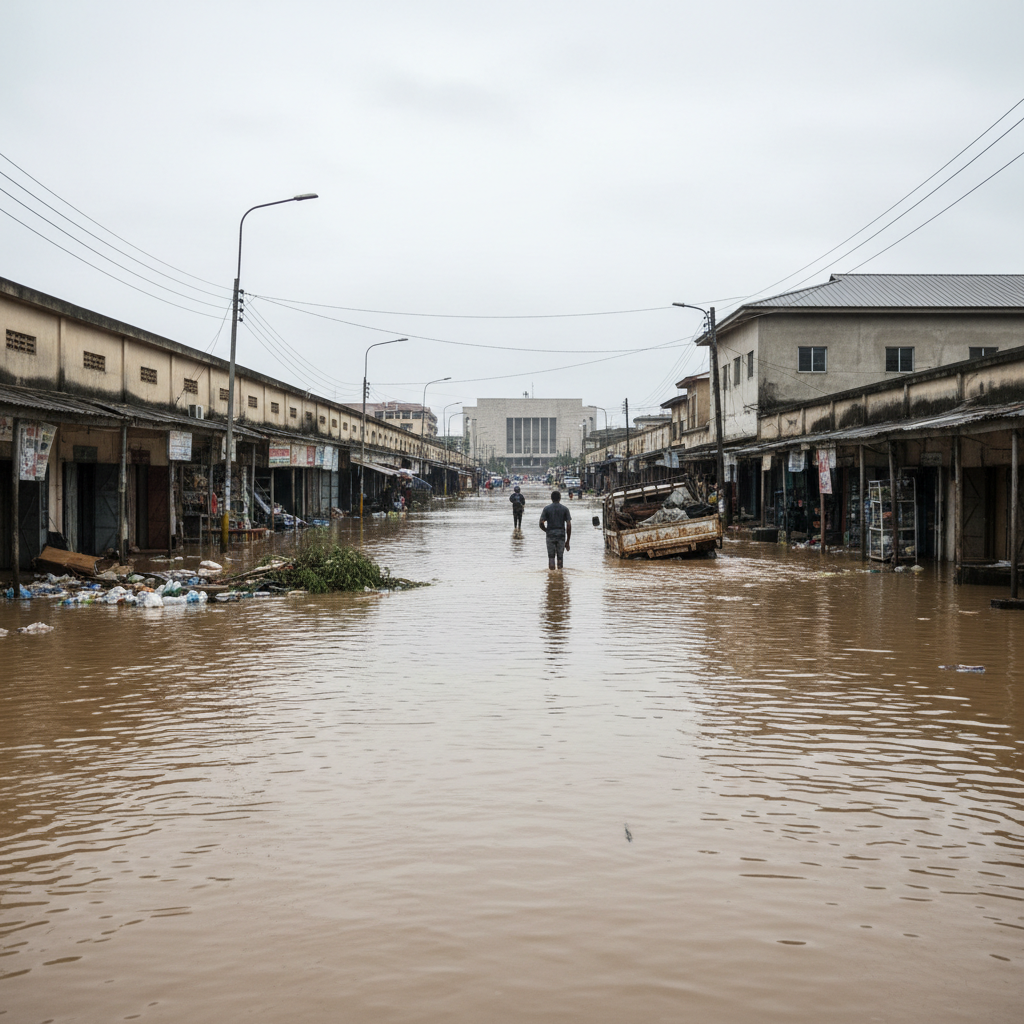
Heavy rainfall on Monday, June 29, transformed large parts of Accra into a landscape of submerged roads and flooded homes, bringing daily life to a standstill. At least three people died in the Alajo community due to suspected electrocutions. The floods caused significant property damage to homes, shops, and warehouses across the city.
This severe flooding was triggered by a week-to-moderate rainstorm moving along the Togo-Benin coastline, as forecasted by the Ghana Meteorological Agency. However, the expert consensus is that the disaster's scale points to deeper issues than just the rain itself. Commercial activity ground to a halt as major roads became impassable, stranding commuters for hours.
Accra's recurring floods are a direct result of chronic structural vulnerabilities intersecting with changing climate patterns. Rapid urban expansion over the past four decades has outpaced essential infrastructure development, such as drainage systems. The uncontrolled replacement of natural landscapes with concrete has severely reduced the ground's ability to absorb rainwater, overwhelming existing drains. The encroachment on wetlands and natural drainage channels, which once acted as natural reservoirs, has further diminished the city's flood protection capabilities.
Experts cited in the JoyNews Online report emphasize that enforcement of land-use regulations is critically weak. This lax enforcement allows unauthorized developments and informal settlements to proliferate in flood-prone areas, increasing the number of people and properties at risk. The city’s drainage network is often undersized, poorly connected, and suffers from inadequate maintenance. Indiscriminate waste disposal, with plastic and other refuse blocking drains, further exacerbates the problem. Climate variability is intensifying these issues, making rainfall more unpredictable and storms more intense, leading to more frequent flash flooding.
The Ministry of the Interior issued a public safety advisory, urging residents to avoid flooded roads and fast-moving water. Electricity supply was proactively disconnected in some areas to prevent additional electrocution incidents. Emergency response teams, including those from the National Disaster Management Organisation (NADMO) and the Ghana National Fire Service, deployed to rescue trapped residents. This event highlights the urgent need for Accra to shift from reactive disaster response to proactive climate resilience strategies. This will involve integrated urban planning, protection of vital ecosystems like wetlands, and significant investment in modern stormwater drainage infrastructure. Decision-makers must also address weak enforcement of planning regulations.