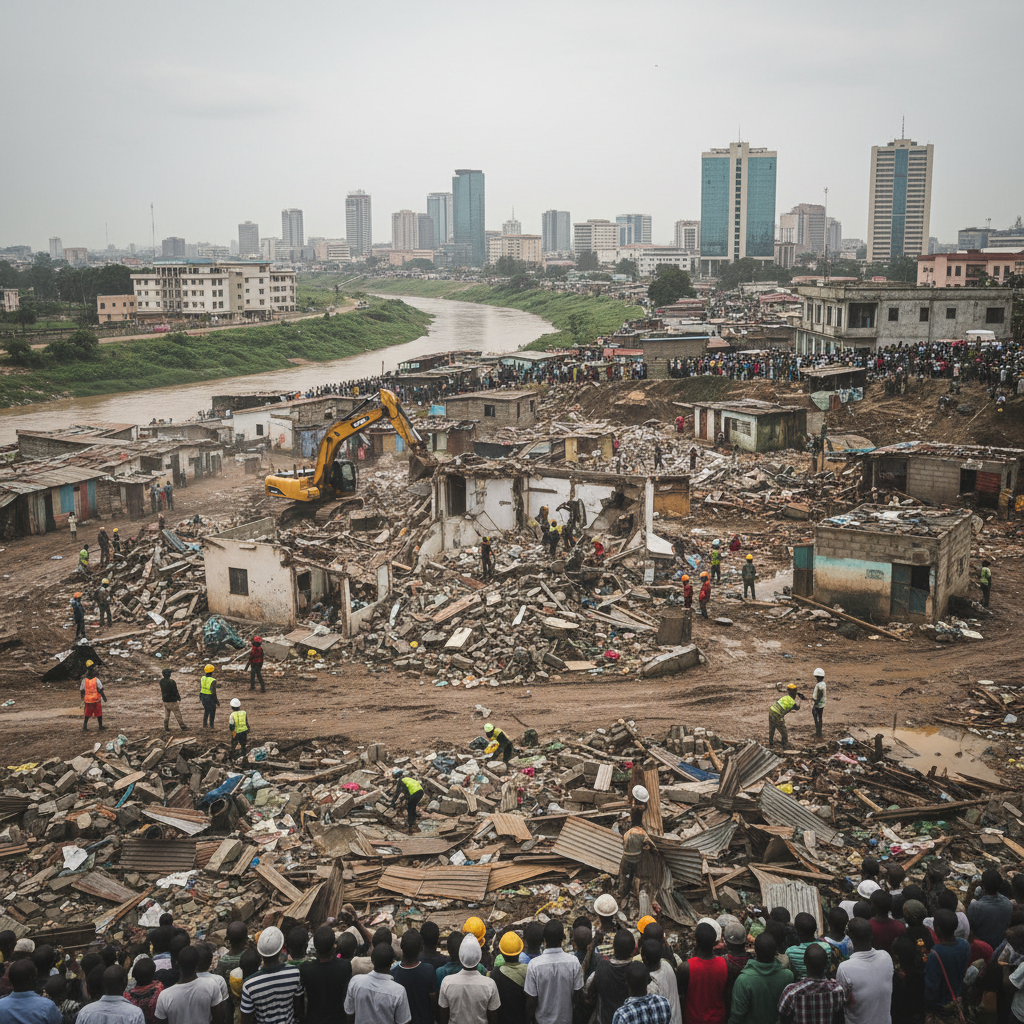
Ghana's Flood Mitigation Task Force has begun demolishing structures illegally erected on waterways in Accra. This decisive action aims to reduce the perennial flooding that devastates communities across the capital. The task force is also undertaking extensive dredging of drains and channels in flood-prone areas.
The exercise, coordinated by Brigadier General Forster Okae Yeboah, Head of the Flood Mitigation Task Force, directly addresses the severe impact of heavy rains. Unchecked encroachment has significantly narrowed natural watercourses, restricting water movement and increasing flood risks. This intervention seeks to restore the free flow of stormwater before the peak rainy season.
This initiative forms part of a broader government strategy to tackle Accra's persistent flooding issues. Previous efforts have often focused on post-disaster relief rather than preventative measures. The current approach combines enforcement against illegal developments with engineering interventions to improve drainage infrastructure. This comprehensive plan aims to safeguard lives and property during the rainy season.
Brigadier General Forster Okae Yeboah stated that the intervention is a comprehensive strategy to address the underlying causes of flooding. He explained that removing structures obstructing waterways and clearing silted drains will restore the natural flow of water. This will significantly reduce the vulnerability of communities to flooding.
The initial operational area is the Tesa Dam, located along Boundary Road in East Legon. Demolition teams have already moved in to remove structures constructed along the dam's banks. The task force indicated that similar operations will extend to other flood-prone communities across the Greater Accra Region. This ensures a widespread impact on flood mitigation efforts.
Accra's urban development has often outpaced its drainage infrastructure, leading to significant economic losses during flood events. The Ghana Meteorological Agency frequently issues flood warnings, highlighting the urgency of these interventions. The government's commitment to this long-term solution could reduce the GHS millions lost annually due to flood damage and disruption.
The ongoing demolition and dredging operations are crucial for improving the city's resilience to climate change impacts. Effective stormwater management is vital for public health and economic stability. This proactive stance marks a significant shift in how the government addresses environmental challenges in urban areas.
Stakeholders will closely monitor the task force's progress and the long-term effectiveness of these measures. The success of this initiative depends on sustained enforcement and public cooperation. Future urban planning must integrate robust drainage solutions to prevent a recurrence of these issues.
The government's commitment to clearing waterways signals a serious intent to protect citizens and infrastructure. This effort could set a precedent for other regions facing similar environmental challenges. The focus on both demolition and dredging provides a dual approach to a complex problem.