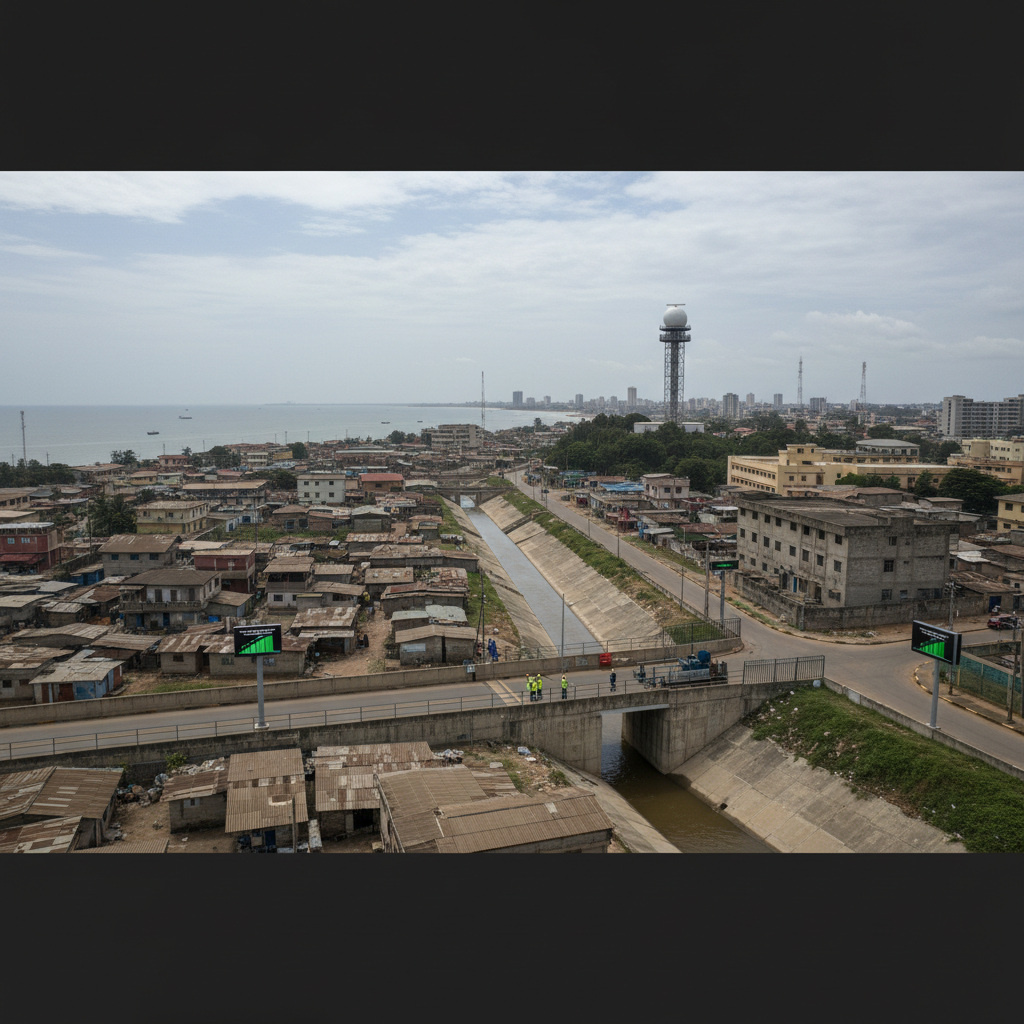
Ghana’s Flood Early Warning System for Accra (FEWS-Accra) is now operational. The system generates updated rainfall forecasts every 10 minutes. However, officials indicate the platform needs further validation before full reliance for flood response.
This system aims to improve emergency preparedness and reduce flood impacts across Accra. It forecasts rainfall with a two-kilometre resolution. The system provides a warning lead time of two to three hours. It uses satellite data from Meteosat Third Generation.
The FEWS-Accra project fits into Ghana's broader efforts to mitigate disaster risks. The devastating June 3, 2015 floods killed 159 people. This event highlighted the urgent need for robust flood forecasting. The Greater Accra Resilient Integrated Development (GARID) Project funds this initiative. This project addresses critical infrastructure gaps and climate change vulnerabilities. Ghana has experienced increasing frequency and intensity of floods in recent years. This trend underscores the importance of such early warning systems for communities.
The Ghana Hydrological Authority oversees the system's implementation. The Ghana Meteorological Agency, NADMO, and the Water Resources Commission collaborate on the project. Officials stated the system uses Delft-FEWS. This platform processes weather and hydrological data. It generates flood forecasts and issues automated alerts. So far, the results are promising, according to project officials.
Technical teams are conducting validation exercises before full implementation. These include threshold testing and sensor checks. Data transmission assessments and last-mile communication checks are also part of this process. Simulation and emergency response drills are underway. A limited simulation exercise occurred in May 2026 at the Ga East District Assembly. This tested NADMO's response to flood alerts. Project officials engaged media organisations in November 2025. They explored effective warning message dissemination. New communication channels are under review. These include automated push and pull SMS alert systems. This will improve notice speed and reach.
The system combines four key elements. These include satellite-based rainfall nowcasting and hydrological modelling. Neighbourhood-level risk communication and stakeholder coordination are also crucial. Additional automatic weather stations support the system. Telemetry rain gauges and ultrasonic water-level sensors have been installed. These are across the Greater Accra Region. Discussions are ongoing regarding the operational costs of the messaging platform. A decision on which implementing agency will absorb these costs is expected. This will occur after the World Bank-funded GARID Project concludes. Once fully validated, FEWS-Accra will provide critical advance warnings. This will allow emergency agencies and residents time to prepare and respond effectively.