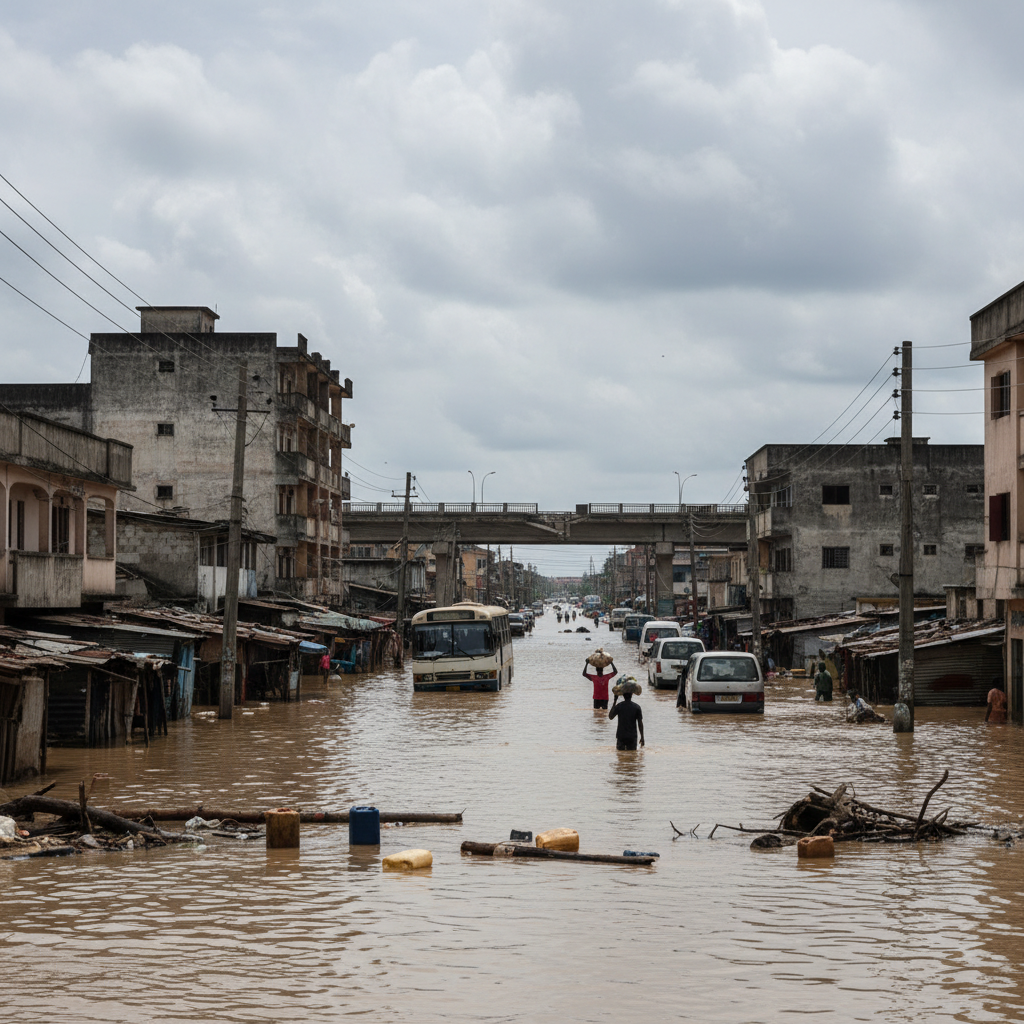
Torrential rains on June 29 submerged large sections of Accra, exposing widespread infrastructure failures across the city. This significant flooding impacted old city areas including Circle, Alajo, Kaneshie, Adabraka, Achimota, Weija, Madina, Adenta, Lapaz, and Spintex.
The scale of the inundation indicates a systemic citywide drainage problem, not merely isolated blockages. This event marks the most severe flood devastation in recent memory, prompting urgent calls for decisive action to prevent worse outcomes in the future.
This environmental challenge fits into a broader Ghanaian narrative of infrastructure strain amidst rapid urbanisation. Past administrations have struggled with the perennial flood issue, often treating it as a political football. The current situation demands a dual approach, addressing both immediate needs for the existing city and long-term development strategies.
President John Dramani Mahama has responded by announcing relief measures and proposing a new city project to decongest central Accra. This ambitious undertaking, intended to relocate government departments from the current Central Business District (CBD), is projected to take approximately 20 years. Technical designs are currently under development, with land demarcation phases still to come.
However, experts caution that this long-term vision must not overshadow the immediate requirement to modernise the existing capital. A new city cannot provide immediate relief to residents facing imminent flood risks. The Philippines' New Clark City project, for example, initiated in 2012, remains under construction with its road network only 40 percent complete after 14 years. This demonstrates the extended timelines required for such large-scale infrastructure developments.
The most immediate and consequential question for the new city project concerns its location. This decision will dictate transportation links, zoning, and the types of amenities required for daily life. A well-planned new CBD could add capacity, but planners must also consider the future of existing government buildings in central Accra once departments relocate.
Effective solutions require a concrete technical plan for Accra's existing infrastructure, executable significantly faster than a new city project. A fundamental challenge facing Accra's urban development is the discrepancy between the Lands Commission and the Town and Country Planning Department's records. Reconciling the land registry with an 'as-built' plan is crucial. This will help understand what structures exist and where, particularly concerning natural waterways. This is not simply an administrative inconvenience; it has led to buildings being constructed over vital natural water channels.
Decision-makers must concurrently pursue both a long-term vision for a new city and an urgent, short-term programme to fortify the existing capital. This parallel track approach will ensure residents receive immediate protection while also paving the way for sustainable urban growth. Failure to implement effective short-term flood mitigation will only compound future challenges. The continued cleanup from the June 29 floods provides a critical window for government to prepare a robust technical strategy for future rainy seasons.