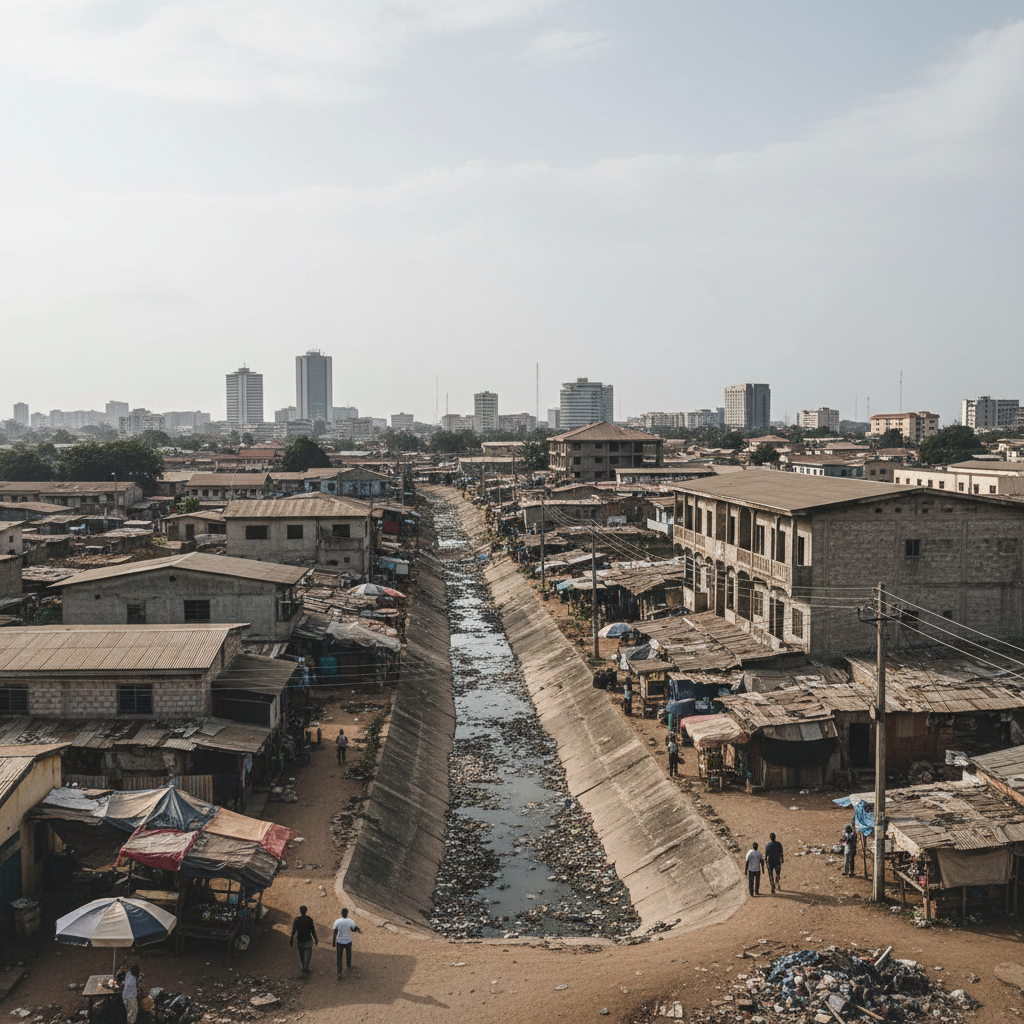
Accra's vital drainage buffer zones have lost 16% of their protected area due to illegal construction, according to a recent assessment by the Greater Accra Resilient and Integrated Development (GARID) Project. This significant encroachment, identified across 16 Metropolitan, Municipal and District Assemblies (MMDAs), directly impacts the city's ability to cope with heavy rainfall and prevent severe flooding.
The loss of these buffer zones, which are mandatory 25-meter setbacks along major drains, reduces the channels' capacity to carry stormwater. This directly contributes to increased flood risks. This problem comes to light after recent devastating floods displaced thousands and claimed lives in the capital.
This situation highlights Ghana's broader challenges in urban planning and enforcement. Urban areas frequently face issues with uncontrolled development, weak regulation enforcement, and poor waste management. These factors consistently worsen flooding in the capital city. The GARID assessment provides crucial data for addressing these longstanding problems.
Kojo Ohene Safo, Coordinator of the GARID Project and a member of the Post-Flood Mitigation Committee, presented these findings on July 3. He explained the study analyzed changes in development between 2022 and 2026. The review used geospatial data and physical inspections to track new structures within the protected zones. Mr. Ohene Safo stated that the number of illegal structures continues to rise despite existing planning regulations.
The encroachment has significant negative implications for Accra's public finance and disaster management efforts. The government will likely face increased costs for flood relief, recovery, and infrastructure repairs. Decision-makers must now consider stronger enforcement measures and improved collaboration between local authorities and planning institutions. Investing in resilient infrastructure and protecting these natural buffers will reduce future economic strain. Local authorities and residents must also heed warnings about development along waterways.
Several assemblies recorded substantial increases in illegal structures. In Ayawaso Central, structures within drainage buffers grew from 793 in 2022 to 801 in 2026. Ayawaso East saw a sharper rise from 337 to 494 over the same period. Ga Central added 54 structures between 2023 and 2025, bringing its total to 2,329. Krowor's structures increased from 178 to 295, and Okaikoi North from 596 to 729. Ablekuma West experienced a jump from 904 to 1,293. Ga North recorded an increase from 1,049 to 2,261 structures, while Ga South rose from 746 to 871. La Dade-Kotopon saw structures increase from 544 to 638, and Adentan from 171 to 214. A total of 10,497 structures were identified within protected buffer zones across the sampled assemblies.