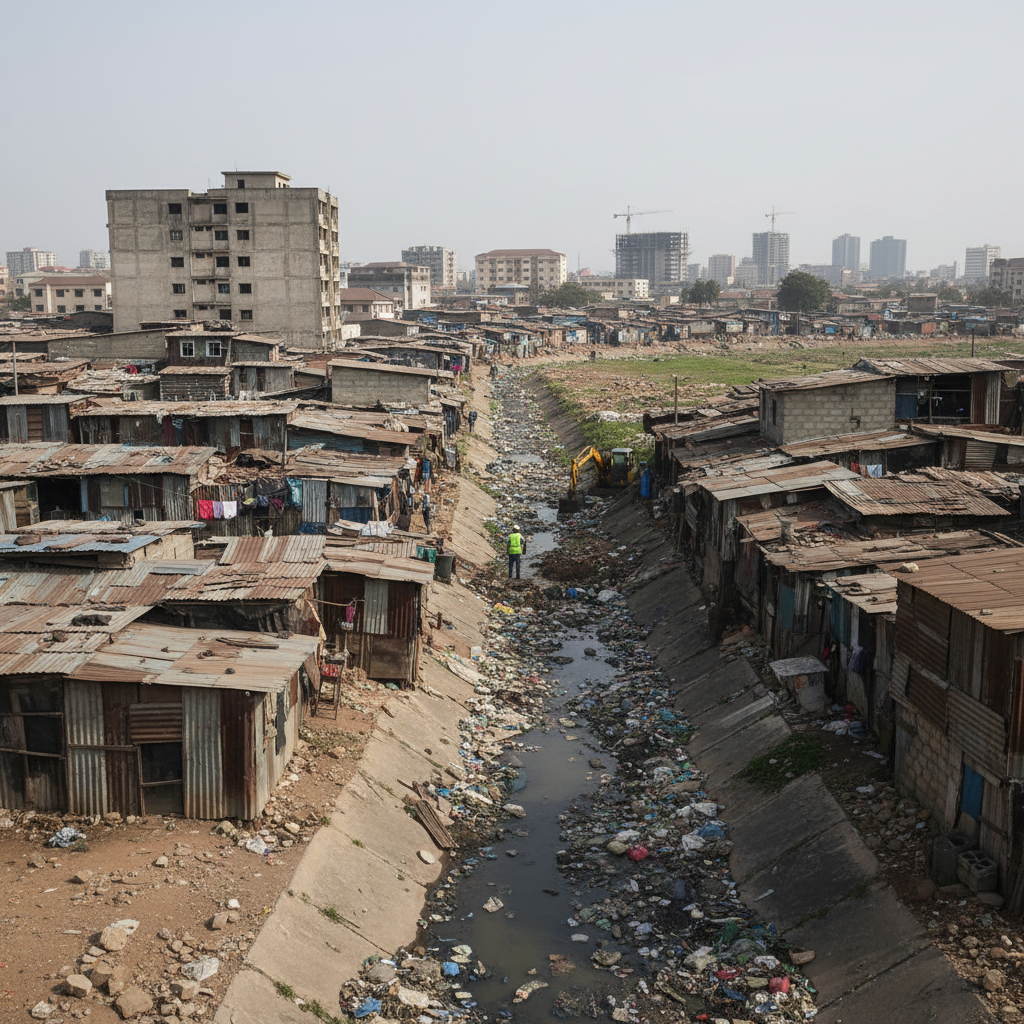
A new assessment by the Greater Accra Resilient and Integrated Development (GARID) Project confirms that 16% of Accra's designated 25-metre drainage buffer zones have been lost to encroachment. This represents a significant challenge to the city's infrastructure and flood mitigation efforts. The report highlights illegal construction within these vital areas, increasing flood vulnerability for many communities.
This widespread encroachment includes 10,497 structures built within these protective buffer zones. These illegal structures impede the flow of water and reduce the capacity of drainage systems. Unplanned development in these areas directly contributes to the perennial flooding experienced in Accra, displacing residents and causing economic losses. The compromised buffer zones make communities more susceptible to environmental hazards during heavy rainfall.
The loss of these drainage buffer zones comes amidst Ghana's ongoing efforts to enhance urban resilience and manage rapid urbanization. Accra's persistent flood issues have consistently hampered economic activity and public health. This data underscores the urgent need for stricter enforcement of planning regulations. It also reflects a broader challenge of balancing development pressures with environmental protection in Ghana's urban centers. Historical trends show that inadequate urban planning and weak enforcement often lead to such environmental and economic vulnerabilities.
The GARID Project Coordinator stated that the assessment covered selected assemblies within the Greater Accra Region. This finding aligns with public concerns about the continuous degradation of urban green spaces and water bodies. Experts emphasize that the integrity of drainage buffer zones is crucial for effective flood management. Breaching these zones means that rainfall runoff cannot be properly managed, leading to a higher incidence of impactful floods.
Going forward, decision-makers will need to address this serious issue with clear policy directives. Strict enforcement measures against future encroachment are essential. This data may also trigger discussions on potential demolition exercises or resettlement plans for affected structures. Investors and residents will closely watch how authorities respond to protect both property and lives from future flood disasters. The financial implications of neglecting these buffer zones, including costs of flood damage and mitigation, remain substantial.
Addressing the encroachment of drainage buffer zones can help Accra become more resilient to climate change impacts. The GARID Project's findings provide critical information for urban planners and local government agencies. Sustainable development in Accra depends on safeguarding these essential environmental protections. Failure to act risks further economic disruption and social displacement from future floods.