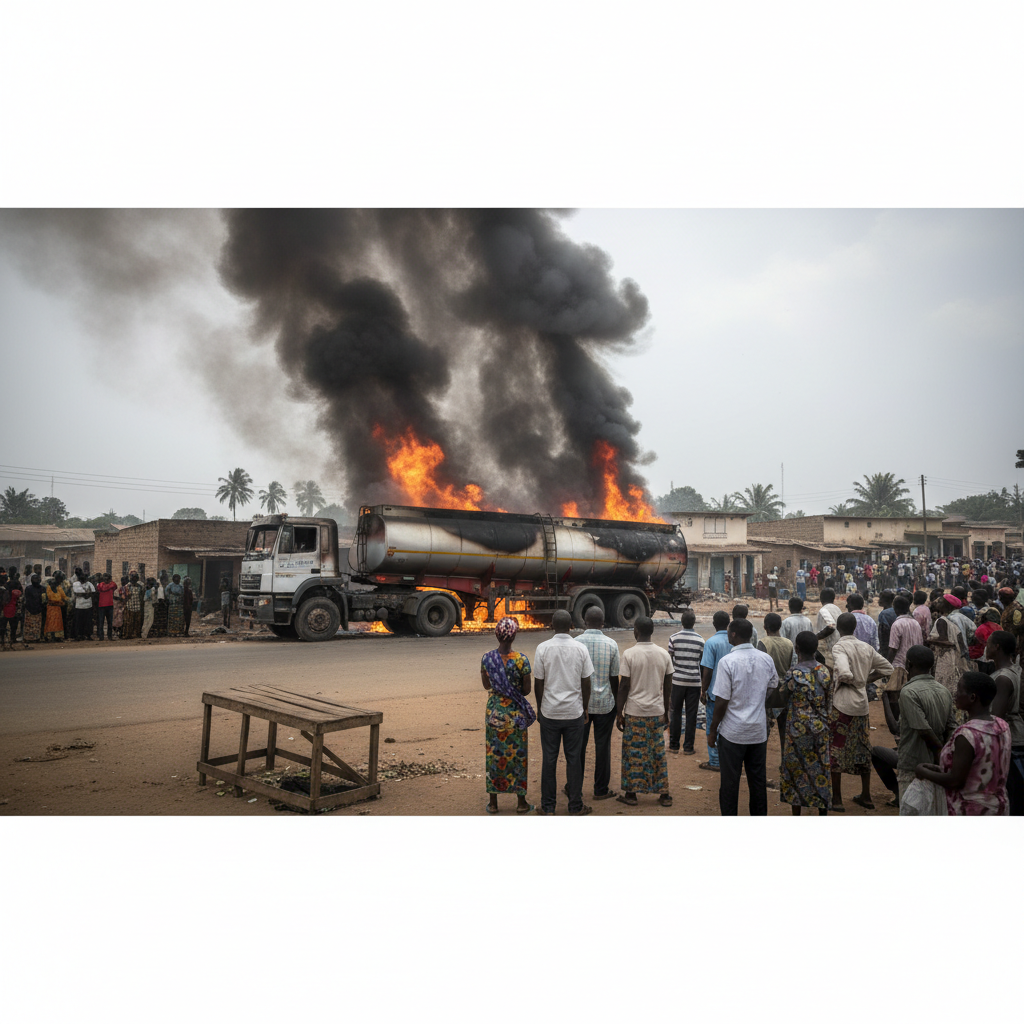
A fuel tanker carrying 54,000 litres of petrol caught fire at Kawanpe in the Kintampo North Municipality of the Bono East Region. The incident occurred on August 8, 2026, while the tanker was travelling from Tema to Buipe. Firefighters from the Buipe Fire Station quickly responded, successfully containing and extinguishing the blaze without any reported casualties.
The driver of the tanker reportedly heard a loud noise from the vehicle's rear axle. This was followed by smoke and flames, indicating a serious mechanical failure. The large volume of petrol onboard presented a significant risk of a major explosion and widespread fire.
This incident highlights the ongoing challenges in maintaining safety standards for fuel transportation across Ghana. The Tema-Buipe route is a critical artery for petroleum product distribution, connecting the south with the northern parts of the country. Disruptions on this route can impact fuel supply chains and local economies.
The Ghana National Fire Service (GNFS) confirmed the incident through a post on Facebook. They stated that their team used water and foam concentrate to control the fire. Their swift action prevented the incident from escalating into a larger fuel disaster, protecting both road users and the environment.
The successful intervention by the fire service ensured that the fire was contained before causing any reported casualties. After the fire was extinguished, the remaining petrol was safely transferred to another tanker. This replacement tanker then continued the journey to Buipe, ensuring the consignment reached its intended destination.
Such incidents can lead to significant economic losses, including damage to vehicles and potential delays in fuel delivery. The cost of replacing a specialized fuel tanker and the value of the lost fuel can be substantial. Furthermore, prolonged road closures due to such events can disrupt commercial activities and increase transportation costs for businesses.
The transportation of hazardous materials like petrol requires strict adherence to safety protocols. Regular maintenance of vehicles, especially those carrying large volumes of fuel, is crucial to prevent mechanical failures. Authorities must continue to enforce these regulations to safeguard lives and property.
This event underscores the importance of well-equipped and rapidly deployable emergency services. Their ability to respond effectively to such high-risk situations is vital for national safety and economic stability. The prompt transfer of the remaining fuel also minimized potential waste and ensured continuity of supply.
Going forward, stakeholders in the petroleum industry and transport sector will likely review safety measures. This includes examining vehicle inspection regimes and driver training programs. Ensuring robust safety practices is essential to prevent similar incidents and protect Ghana's critical infrastructure.