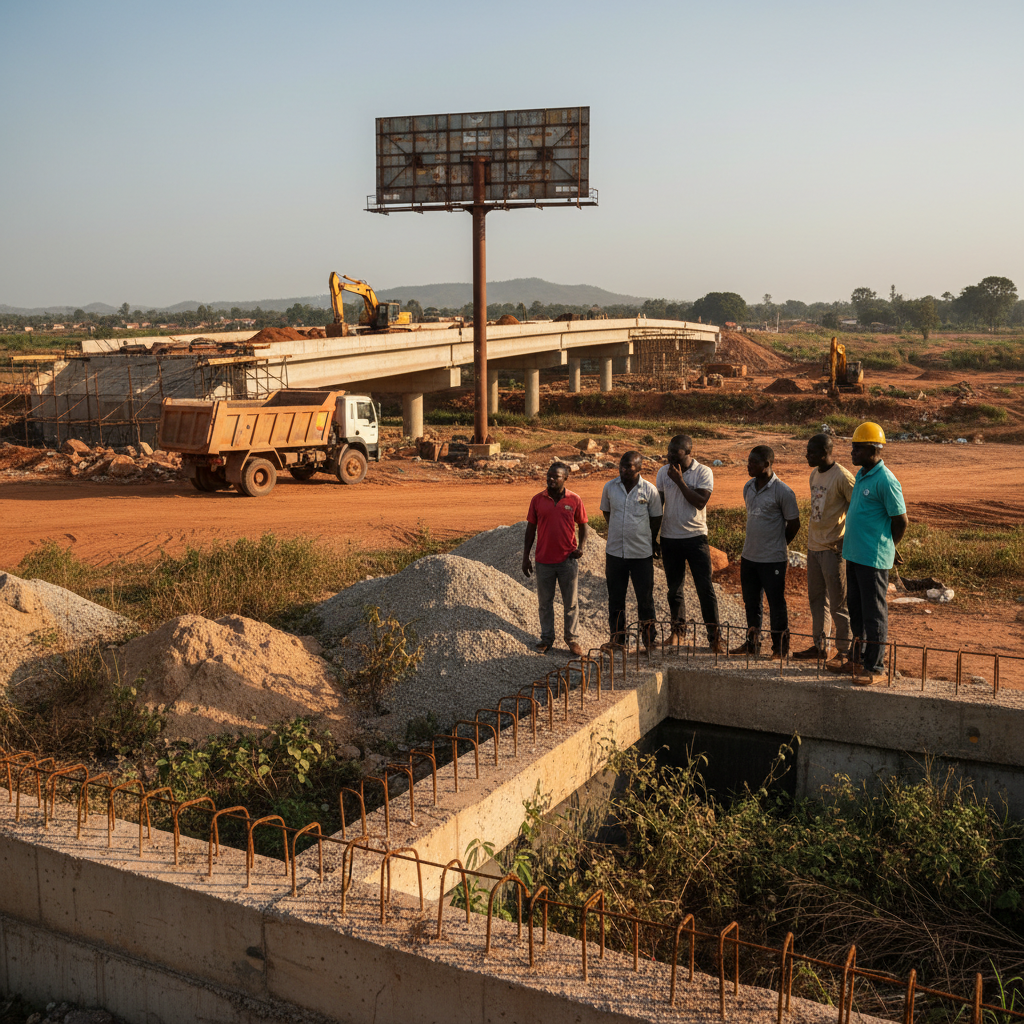
Ghana’s 2024 National Annual Progress Report shows 15 major road projects were suspended due to financial difficulties. Parliament's Economy and Development Committee reviewed this report. The suspension of these projects stemmed primarily from Ghana's debt restructuring programme.
The report also indicated that domestically financed capital expenditure fell short by GHS 3.3 billion against its revised budget target for 2024. Tano South MP Charles Asiedu noted several affected projects during the parliamentary review. These projects include 14 pedestrian bridges and the first phase of the Tema–Aflao Road Project. The Paa Grant Interchange in Sekondi and Takoradi, along with Eastern Corridor Road Lot One, were also among those halted. Other significant projects affected were a new bridge across the Volta River, the Accra Intelligent Traffic Management Project, and the rehabilitation of the Dome–Ketasi Road.
This situation fits into Ghana’s broader economic narrative of fiscal challenges and debt management efforts. The country has been navigating a complex financial landscape, including a major debt restructuring initiative. This initiative aimed to restore macroeconomic stability and debt sustainability. Previous government expenditures, especially in election years, have frequently come under scrutiny for their impact on public finances. The GHS 3.3 billion shortfall highlights the significant impact of these financial pressures on infrastructure development.
Deputy Minister for Finance Thomas Ampem Nyarko confirmed the debt restructuring programme caused these project suspensions. He stated, “Following the suspension of our debt servicing and subsequent debt restructuring, all those projects had to halt because we could not draw down.” Mr Nyarko explained ongoing negotiations with creditors. Parliament has approved discussions with 25 Official Creditor Committee (OCC) members. Bilateral agreements have been reached with 12 of them. This progress has allowed funding for some projects to resume.
Moving forward, the government anticipates a gradual resumption of these critical infrastructure projects. Markets and stakeholders will closely watch the pace of project completion. The successful implementation of debt restructuring agreements will dictate future financing availability. Lawmakers will also monitor whether newly implemented fiscal discipline measures prevent similar occurrences. A detailed update on specific project resumptions is expected from the Ministry of Finance. This will provide clarity on the timeline for completing these essential road networks.
The Deputy Minister further explained that Ghana’s main challenge in 2024 was not revenue generation. Revenue, in fact, exceeded its target for the year. He stated the primary issue was expenditure management. Mr Nyarko mentioned that limited commitment control led to many projects being awarded without dedicated funding. Some projects were awarded even without the Ministry of Finance's prior knowledge. This created a situation where available resources could not fund all awarded projects. Consequently, many developments stalled across the country. To prevent such issues, Finance Minister Dr Ato Forson amended the Public Procurement Act. This amendment now requires mandatory commitment authorisation from the Ministry of Finance before contracts are awarded. This new measure ensures that every procurement has a budget. It signals an improved fiscal discipline.