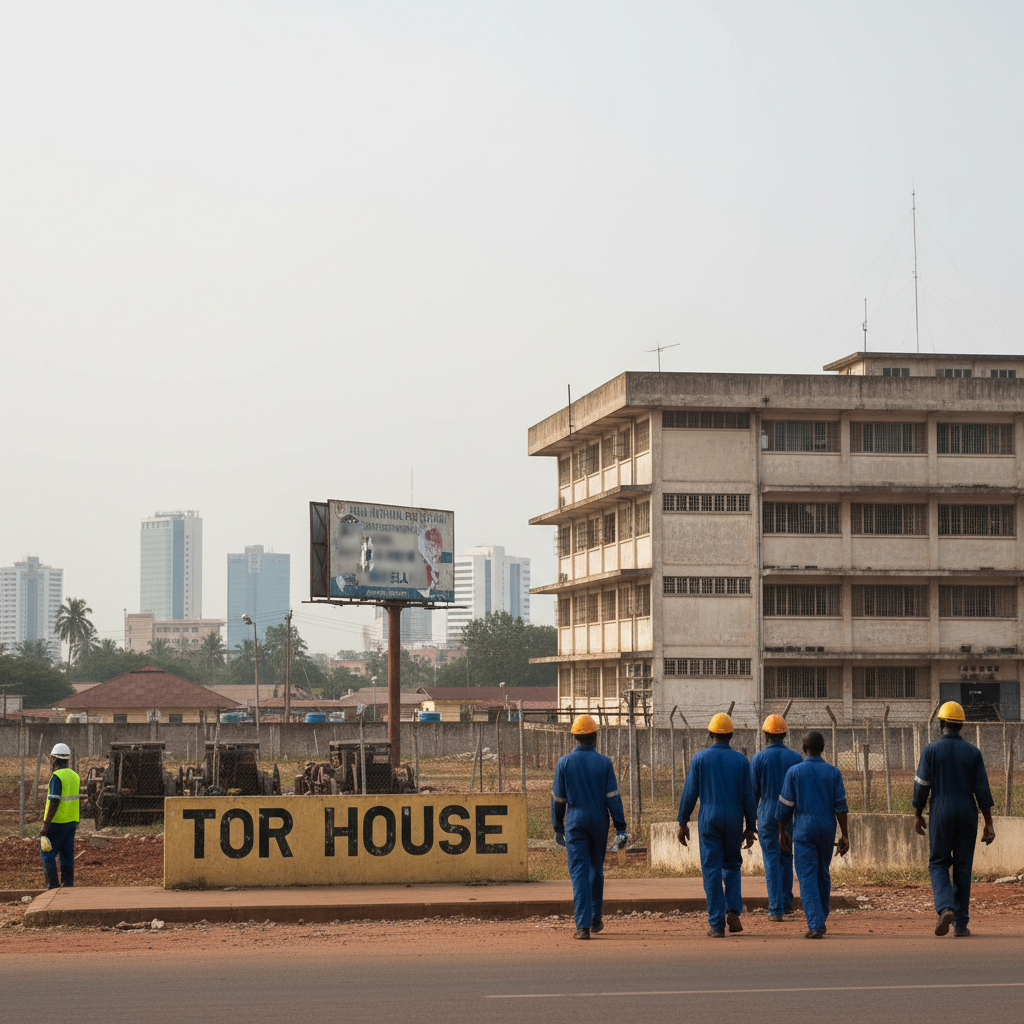
Tema Oil Refinery (TOR) is negotiating with the government to access at least GHS 1.6 billion from outstanding Energy Sector Levy Act (ESLA) receivables. This financial injection aims to recapitalise the state-owned refinery. TOR’s Managing Director, Edmond Kombat, confirmed these discussions during the company’s 18th annual general meeting.
The move is crucial for addressing TOR's accumulated deficit of GHS 7.869 billion and its negative equity position of GHS 4.53 billion. Releasing TOR’s share of ESLA funds is seen as a key mechanism to strengthen the company’s balance sheet. These discussions are part of a broader strategy for sustained profitability and ongoing debt restructuring.
This initiative fits into Ghana’s wider efforts to improve the financial health of state-owned enterprises, particularly in the energy sector. Many public utilities carry significant legacy debts, impacting their ability to operate efficiently. The Energy Sector Levy Act (ESLA) was introduced in 2015 to raise funds for various energy sector debts and power infrastructure projects. Its utilisation for TOR’s recapitalisation highlights the interconnectedness of energy sector finances.
Mr. Kombat stated, “Addressing this will require sustained profitability, continued debt restructuring, and dialogue with the Shareholder about mechanisms available to recapitalise the company’s balance sheet – especially with releasing TOR’s portion of the ESLA receivable. I have initiated those conversations and I am determined to see them through.” Board Chairman Nayon Bilijo supported this, noting that GHS 3.4 billion has been collected for TOR through ESLA, with GHS 1.47 billion already used to offset debt. Applying the remaining ESLA margin would significantly benefit TOR’s debt portfolio.
The government's commitment to auditing state energy sector agencies’ balance sheets also supports this. Energy and Green Transition Minister John Abdulai Jinapor indicated that such audits aim to identify and remove government-related debt. A cleaner balance sheet allows companies like TOR to seek commercial financing more easily. Potential access to the ESLA funds could therefore improve TOR's creditworthiness and operational capacity.
TOR has made some progress in reducing its debt. Total debt fell 13 percent in 2025 to GHS 2.33 billion. Long-term borrowings decreased by 27 percent to GHS 695.5 million. Trade and other payables also dropped by 22.5 percent to GHS 5.52 billion from GHS 7.12 billion. Mr. Kombat views this reduction as a sign of confidence from lenders. The company’s retained deficit narrowed from GHS 8.96 billion to GHS 7.87 billion by year-end, pointing to initial balance sheet repair.
Operational improvements also support TOR’s recovery efforts. The Crude Distillation Unit (CDU) resumed sustained operations in 2025. It processed approximately 600,000 barrels of crude oil in December alone. The Residue Fluid Catalytic Cracking (RFCC) unit, vital for profitability, is expected back online by July 2026. These operational successes provide tangible evidence of TOR’s capability when properly managed.
A successful recapitalisation, backed by ESLA funds, could stabilise TOR’s finances. It could also enhance Ghana’s energy security by ensuring a functional domestic refinery. This situation will be closely watched by investors and financial institutions. The restructuring could set a precedent for other struggling state-owned enterprises.