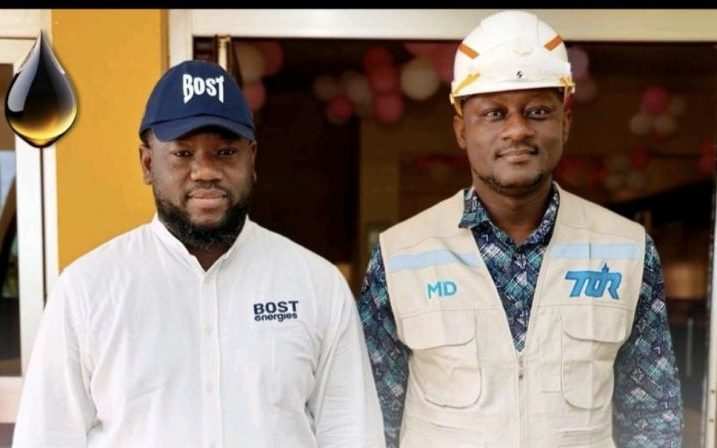
Tema Oil Refinery (TOR) and Ghana Oil Company Limited (GOIL) are exploring a deeper commercial partnership. This alliance aims to improve the reliability of Ghana's fuel supply.
This potential collaboration represents a significant step in Ghana's broader effort to rebuild domestic refining capabilities. It seeks to reduce the nation's dependence on imported petroleum products. The discussions involve two key state-linked companies operating at different stages of the petroleum supply chain.
This initiative fits into Ghana's larger economic strategy to retain more value from its petroleum industry. Reviving TOR is not just an industrial goal; it also addresses foreign exchange, energy security, and supply chain concerns. Ghana's economy remains vulnerable to global price changes and supply disruptions in refined product markets. Increasing local refining capacity could offer a partial hedge against these external shocks, shifting more economic activity domestically.
Energy and Green Transition Minister John Abdulai Jinapor stated in July that expanded operations at TOR and Sentuo Oil Refinery could eventually meet about 70% of Ghana’s refined petroleum product demand. This target highlights the government's ambition to significantly localize fuel production. For GOIL, a closer link with TOR could provide a more predictable source of locally refined products. This would improve supply planning across its extensive retail network.
For TOR, a strong commercial relationship with GOIL, one of Ghana’s largest indigenous oil marketing companies, could provide a dependable route to market for its refined output. This arrangement goes beyond a typical supplier-customer relationship. It addresses a long-standing weakness in Ghana’s petroleum economy: the limited integration between crude production, refining, storage, transport, distribution, and retail marketing.
The commercial logic is clear. A refinery operates efficiently with reliable crude access, sufficient working capital, and predictable product sales. An oil marketing company needs consistent access to competitively priced petroleum products to maintain supply and market share. Greater coordination between TOR and GOIL could reduce transaction and planning inefficiencies that arise from separate commercial systems.
However, local refining is not automatically cheaper. TOR will need access to competitively priced crude, reliable operations, adequate capital, and disciplined maintenance. This is crucial for producing fuel at costs competitive with imported alternatives. GOIL's role becomes strategically important here. The company has one of the largest retail footprints in Ghana and has strengthened its competitive position.
GOIL reported a sales volume increase of about 45.90% between January and April 2026. This was the highest year-to-date growth among major oil marketing companies during that period. This expansion makes GOIL a valuable anchor buyer for locally refined products, provided TOR can maintain reliable and competitively priced production. A structured off-take arrangement could give TOR better demand visibility. It would also allow GOIL to diversify its supply sources.
Such a partnership could also improve inventory planning and reduce uncertainty from relying heavily on international product markets. The commercial terms will be decisive. If locally refined products are consistently more expensive than imports, GOIL might bear the cost of supporting a national industrial policy. Conversely, if TOR must supply products below its true costs, it could accumulate losses again. Any partnership needs transparent pricing, clear supply obligations, and explicit risk allocation to avoid transferring inefficiencies between state-linked entities.