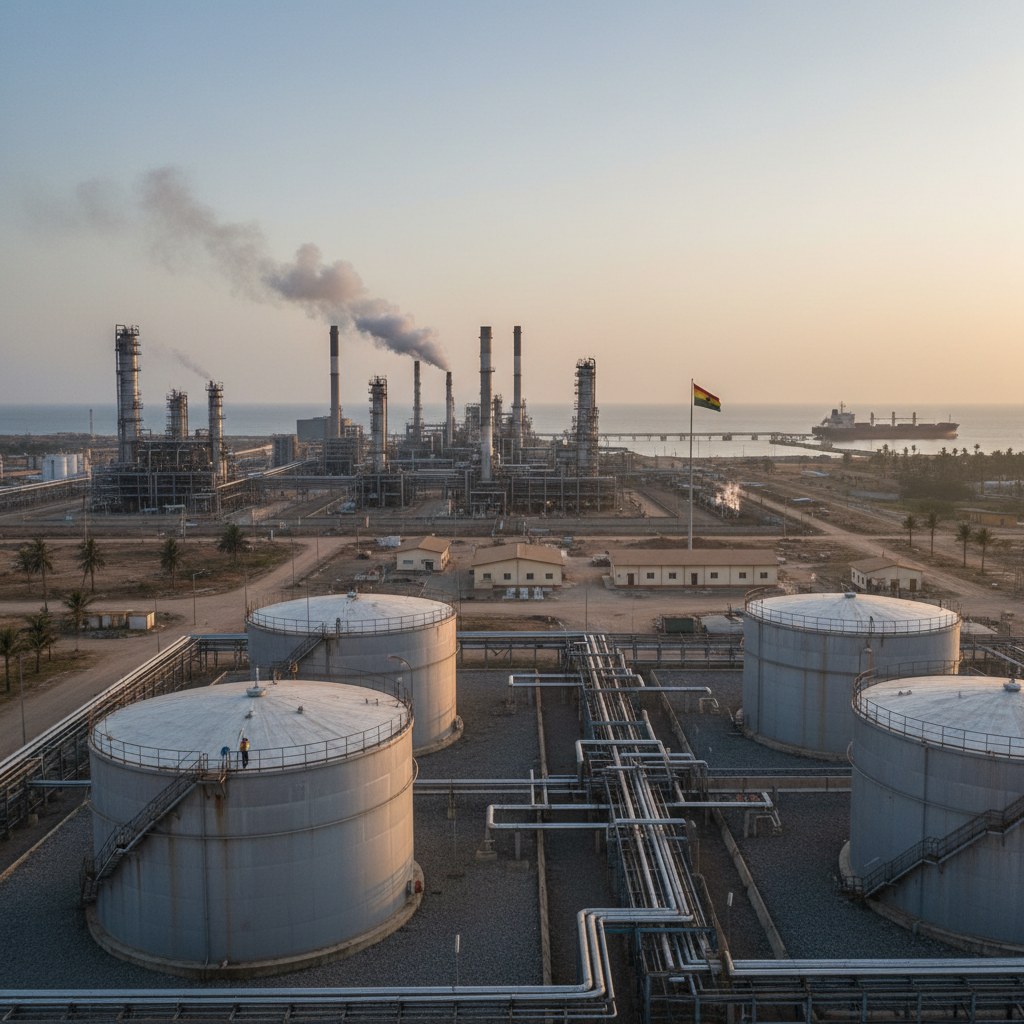
Ghana's Sentuo Oil Refinery will significantly increase its refining capacity following the completion of its second phase. The facility will boost its daily output from 40,000 barrels to 100,000 barrels. This expansion marks a major step towards strengthening Ghana's petroleum refining capabilities.
Energy and Green Transition Minister John Jinapor announced this development during the commissioning of the refinery's Phase II on June 25. The expansion is a transformative project designed to enhance Ghana’s ability to process its own crude oil. It aims to reduce the country’s reliance on imported refined petroleum products, securing its energy future.
This initiative fits into Ghana's larger economic strategy to add value to its natural resources. The government plans to strengthen the energy sector and achieve self-sufficiency in refined petroleum products. This echoes similar efforts to boost local production and reduce import bills, a consistent theme in Ghana's economic policy over recent years. Ghana’s state-owned Tema Oil Refinery, for instance, has also seen efforts to revive its operations after years of underperformance.
Minister Jinapor stated the expansion aligns with the President's vision for refining and adding value to Ghana's resources. He emphasized, "In line with His Excellency's vision of refining and adding value to our own products and resources, we are going to take the Sentuo Oil Refinery from a refining capacity of 40,000 barrels per day to 100,000 barrels per day upon completion." This direct quote highlights the strategic importance placed on local refining.
Industry experts have long pointed to the economic benefits of increased local refining capacity. Such projects create jobs, reduce foreign exchange spending on imports, and stabilize the supply of critical fuels. Once fully operational, the expanded Sentuo Refinery could position Ghana as a key refining hub in the West African sub-region. This would allow Ghana to export surplus refined products to neighboring countries.
The increased capacity will significantly contribute to national energy security, lessening Ghana’s vulnerability to global oil price volatilities. This move also aligns with forecasts of increased domestic crude oil production this year after a period of decline. The combination of higher local crude output and enhanced refining capacity creates a robust framework for Ghana's energy independence. Decision-makers will closely watch project timelines and financial implications.
Further strategic investments in energy infrastructure are expected to follow. The government's commitment to revitalizing existing refining infrastructure, alongside new projects like Sentuo's expansion, demonstrates a clear policy direction. This focus helps ensure a stable and affordable energy supply for Ghana's growing economy. These developments could also influence Ghana’s balance of payments and GHS currency stability by reducing the need for foreign currency to import fuel.
The successful completion of the Sentuo expansion, coupled with the improved performance of the state refinery producing 28,000 barrels per day, could transform Ghana's energy landscape. This strategic progress is a crucial indicator of Ghana's economic resilience. It also shows its commitment to long-term industrial growth and energy self-reliance. This expansion is expected to attract further investments in related petrochemical and industrial sectors.