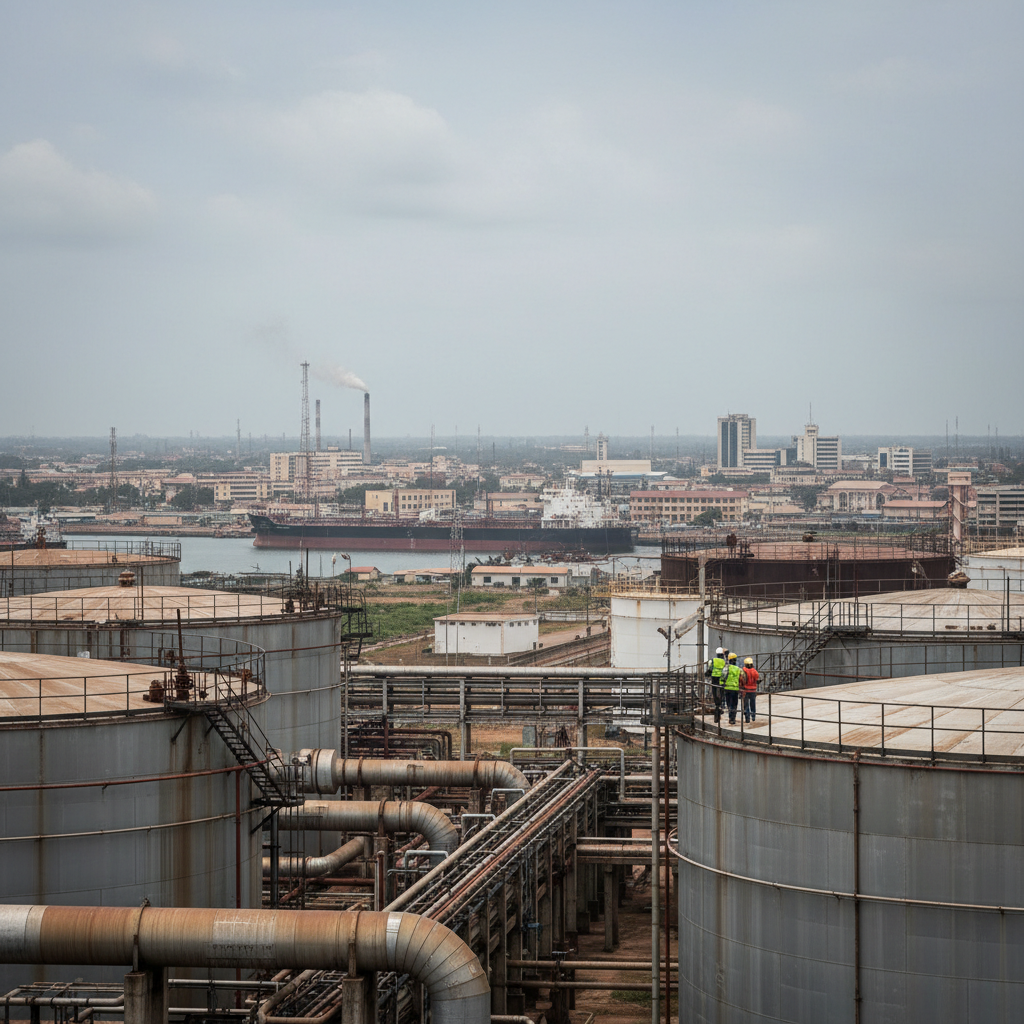
The Public Interest and Accountability Committee (PIAC) reports that adopting global energy transition policies without considering Ghana's unique needs poses a significant threat to its petroleum industry. Technical Director Mark Agyemang stated this during a lecture for the Africa Extractive Media Fellowship.
Mr. Agyemang stressed that the global shift towards cleaner energy remains one of the biggest threats to oil-producing nations like Ghana. He argued that energy transition strategies should not follow a one-size-fits-all approach. Countries have different development levels, energy demands, and economic reliance on fossil fuels.
This warning comes as Ghana has experienced a decline in crude oil production for four consecutive years. Data from PIAC indicates this trend, highlighting the sector's existing vulnerabilities. Ghana's economy relies significantly on oil revenues for development projects and national budget support.
Mark Agyemang, PIAC's Technical Director, explicitly stated, "Energy transition is the main threat to the industry. Adopting a global policy could be problematic because countries could differ in their approaches to implementation." He emphasized that Ghana must collaborate with other regional countries. This collaboration should develop coordinated strategies reflecting shared economic realities.
These strategies would help safeguard petroleum industries and strengthen energy security. Regional cooperation would also ensure the transition to cleaner energy does not hinder economic development. Furthermore, such collaboration would improve Ghana's negotiating position in international climate and energy discussions. This ensures Ghana's development priorities are part of global policy decisions.
Future implications include potential revenue shortfalls if global policies accelerate without Ghana's input. The government might need to diversify its economy more aggressively and seek new investment in alternative energy sources. Investors and policymakers will closely monitor Ghana's crude oil production figures and its engagement in regional energy dialogues. The success of Ghana's energy sector will depend on its ability to adapt and influence global energy transition frameworks. Failure to do so could impact national revenue and job creation within the petroleum industry.
Ghana's energy sector currently supports thousands of direct and indirect jobs. Any significant disruption could lead to economic instability and social challenges. The debate around energy transition highlights a critical balancing act for Ghana. It must pursue sustainable development while protecting current economic interests from global shifts.