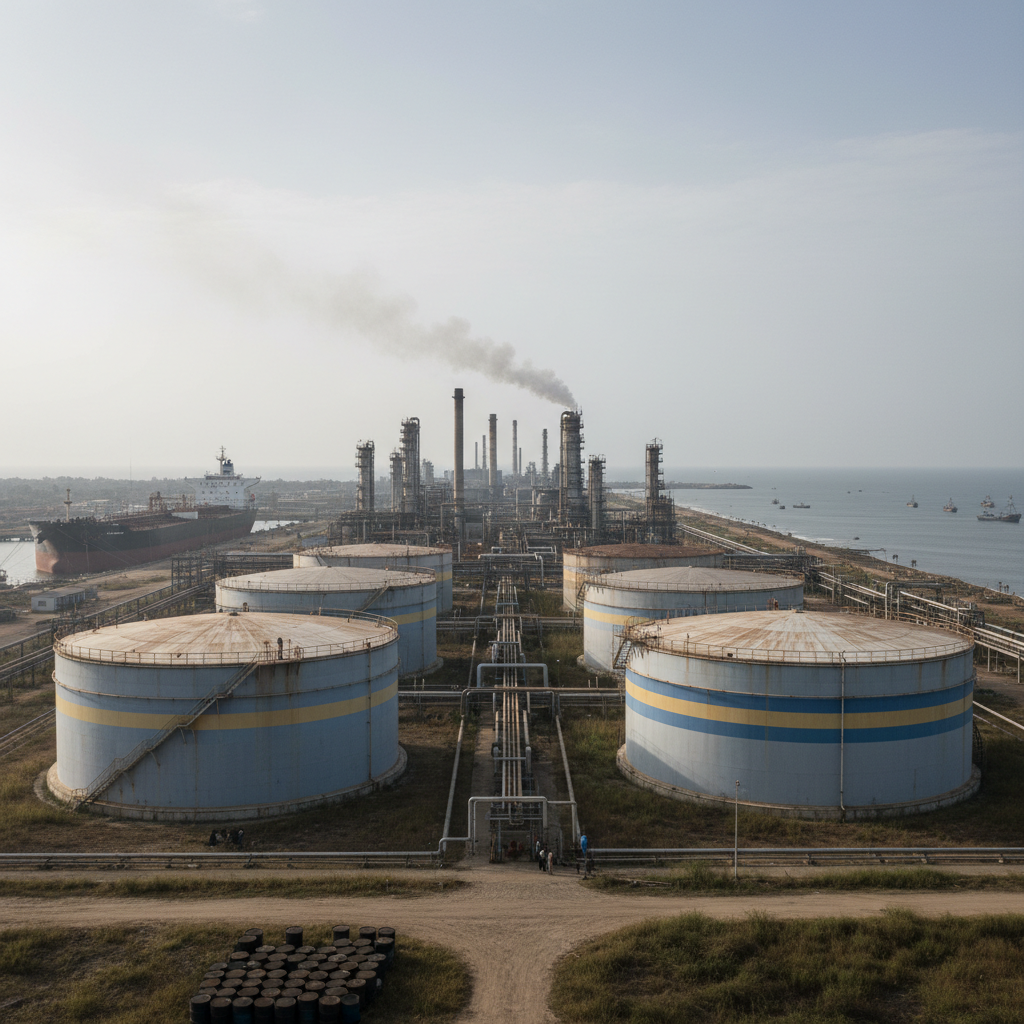
Global oil prices dropped by approximately 1% on Thursday, continuing a three-day downward trend. This decline followed reports from Qatar indicating progress in indirect talks between Iran and the United States. These discussions focused on the Strait of Hormuz, a vital waterway.
Brent futures lost 77 cents, or 1.1%, reaching $70.80 a barrel by 0256 GMT. U.S. West Texas Intermediate (WTI) crude fell 84 cents, or 1.2%, to $67.74 a barrel. Both benchmarks had already fallen by more than 1% in the previous session, hitting four-month lows. The positive movement in talks has increased expectations of greater crude oil flow through the Strait of Hormuz, a key shipping route.
This development affects Ghana's economic outlook despite recent falling oil prices in global markets. Ghana relies heavily on imported oil for its energy needs, so lower global prices could potentially reduce the cost of fuel and electricity. However, the Bank of Ghana Governor has previously cautioned that Ghana's economic risks are far from over, even with decreasing oil costs. Factors such as the cedi's stability and other import costs remain significant.
A Qatar Foreign Ministry spokesperson announced on X that the discussions produced “positive progress” on issues related to a memorandum that ceased hostilities in June. However, there was no indication that the two sides had advanced towards a lasting peace agreement. UBS, a global financial services company, cut its Brent price forecasts due to the U.S.-Iran understanding and expected increased oil shipping.
The market anticipates an oversupply of crude oil and increased competition for market share. Haitong Futures noted that these factors are pushing prices down. OPEC+ oil-producing countries will likely agree to increase their output targets from August. Sources on Wednesday confirmed this expectation ahead of their Sunday meeting. UBS now expects Brent to average $80 a barrel in the September quarter and $75 in 2027. They adjusted their September quarter average Brent forecast down by $25 and their December quarter forecast down by $10.
The ongoing US-Iran discussions represent a critical geopolitical factor for global oil markets. While the immediate effect is a price drop, analysts warn against assuming complete normalization. UBS stated that the price risk is skewed to the upside. They noted that inbound tankers to the Persian Gulf have lagged outbound tankers. The next meeting between Iranian and U.S. negotiators is scheduled for after July 9, following funeral processions for Iran's late Supreme Leader Ayatollah Ali Khamenei.