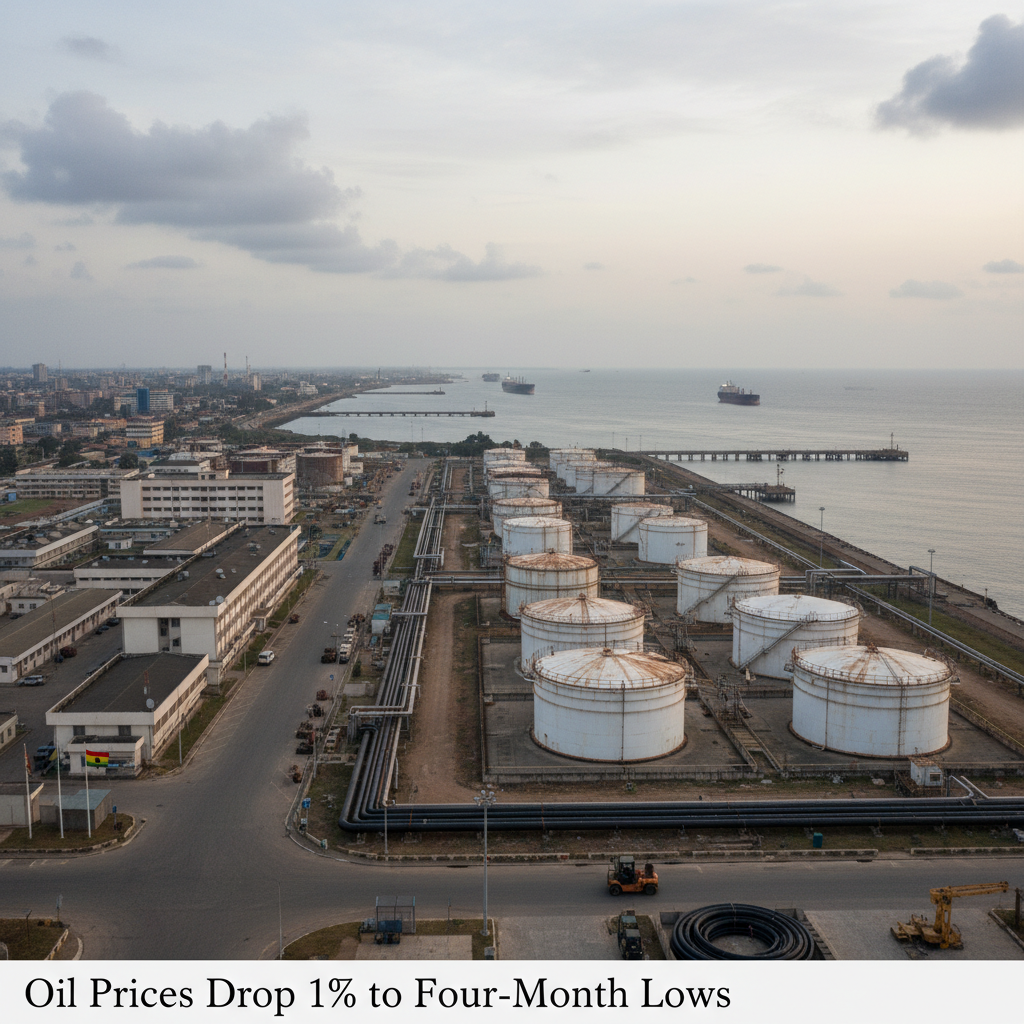
Global oil prices dropped over 1% on Wednesday, reaching their lowest point since March. This decline followed optimistic reports about ongoing US-Iran discussions, which eased concerns over global oil supply. Brent futures settled down $1.38, or 1.89%, at $71.57 a barrel. US West Texas Intermediate crude lost 92 cents, or 1.32%, closing at $68.58 a barrel. Both benchmarks recorded their lowest closing levels in four months.
Donald Trump stated on Wednesday that US-Iran talks in Qatar had progressed favorably. This diplomatic progress reassured markets that oil flows through the critical Strait of Hormuz would remain stable. Increased tanker traffic through the strait has begun to recover, with US Vice President JD Vance indicating a return to pre-conflict oil flow levels. These developments have significantly cooled fears of supply disruptions, which had kept prices elevated.
This drop in international oil prices provides a measure of relief for Ghana's economy. The nation imports almost all its refined petroleum products, making it highly vulnerable to global price fluctuations. Lower crude oil prices could reduce Ghana's import bill and temper inflationary pressures. The Bank of Ghana has previously highlighted the significant economic risks posed by volatile oil prices. This current trend, therefore, could positively influence the country's trade balance and consumer prices.
Saxo Bank analyst Ole Hansen remarked, "The negotiations that are currently taking place in Qatar are perceived as being positive, and that has allowed prices to drift further." He added, "There is a chance that we could see even lower prices." This sentiment suggests that the market anticipates continued stability, potentially leading to further price reductions.
Looking ahead, market participants will closely monitor the outcome of the US-Iran talks and any further statements from key officials. Additionally, OPEC+ oil-producing countries are expected to meet on Sunday and may agree on further increases in their output targets for August. An increase in supply, combined with easing geopolitical tensions, could continue to push oil prices downwards. This would benefit economies like Ghana, which rely heavily on imported oil to fuel industries and daily life. The market awaits a stronger signal regarding the long-term stability of oil supplies and prices.
In the US, crude inventories decreased by 3.8 million barrels last week to 408.4 million barrels. This marks the lowest inventory level since September 2018. The drop occurred as domestic refinery demand increased before the July 4 holiday weekend, according to the Energy Information Administration. Analysts had predicted a larger drop of 4.5 million barrels, indicating that supply remains relatively robust.
Following five consecutive months of increases, analysts have now reduced their 2026 oil price forecasts. This adjustment marks the first such cut since the US-Iran conflict began. Brent futures experienced a significant quarterly drop of approximately $45 a barrel. This was its largest quarterly decline since the global financial crisis in 2008. US crude futures also fell by around $31 a barrel, marking their largest quarterly decline since 2020. These declines were a direct result of progress toward resolving the Middle East conflict, which had previously caused sharp price gains in March.