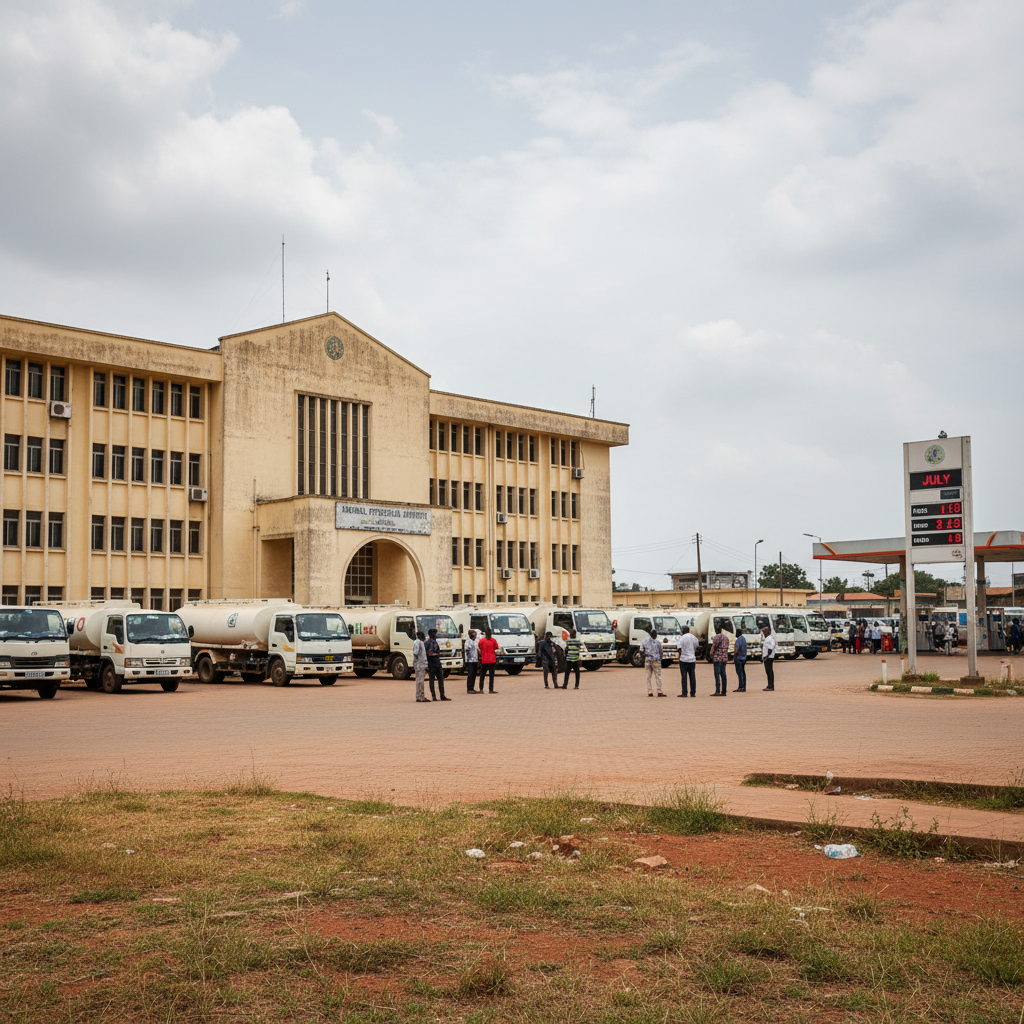
The National Petroleum Authority (NPA) has lowered the minimum price floors for petrol, diesel, and liquefied petroleum gas (LPG) for the first July pricing window. This decision is expected to result in cheaper fuel prices for consumers across Ghana.
Petrol's minimum price dropped by GHS 0.60 per litre, from GHS 13.39 to GHS 12.79. This 4.5% decrease means Oil Marketing Companies (OMCs) could sell petrol for less. Diesel saw the largest reduction among liquid fuels, falling by GHS 1.57 per litre, from GHS 15.11 to GHS 13.54. This represents a substantial 10.4% decline in its price floor. LPG also experienced a significant cut of GHS 3.12 per kilogram, moving from GHS 13.23 to GHS 10.11 per kilogram, a 23.6% reduction.
These adjustments are crucial for Ghana's economy, where fuel prices directly influence transport costs and overall inflation. The cost of fuel affects consumer purchasing power and the operational expenses of businesses. Prior trends have shown that fluctuating global oil prices quickly reflect at local pumps due to Ghana’s deregulated petroleum market. High fuel prices often contribute to increased cost of living, impacting most Ghanaian households.
The NPA explained that these published price floors are the minimum prices OMCs and LPG Marketing Companies (LPGMCs) can charge. These floors align with the Petroleum Products Pricing Guidelines (PPPG). The Authority indicated that these figures do not include other charges such as premiums from International Oil Trading Companies (IOTCs). They also exclude operating margins of Bulk Import, Distribution and Export Companies (BIDECs), marketers, and dealers. Actual retail prices at the pumps may therefore differ based on individual company pricing decisions.
These downward adjustments follow a decline in international crude oil prices. Global crude oil prices have fallen to around US$70 per barrel. This drop occurred after concerns about supply disruptions eased. These concerns were previously linked to recent conflicts in the Middle East. Ghana's economy is highly susceptible to global oil market fluctuations lacking significant domestic production capacity to meet its full demand.
Looking ahead, consumers should monitor local pump prices as OMCs begin to adjust their rates to reflect these new price floors. This reduction could offer some relief to households and businesses grappling with inflation. Decision-makers will be watching how these lower fuel prices impact transport costs and overall price stability. These developments could also influence budgetary allocations and fiscal planning in the coming months. The continued stability or further decline in international crude oil prices will be a key factor for Ghana's energy sector.