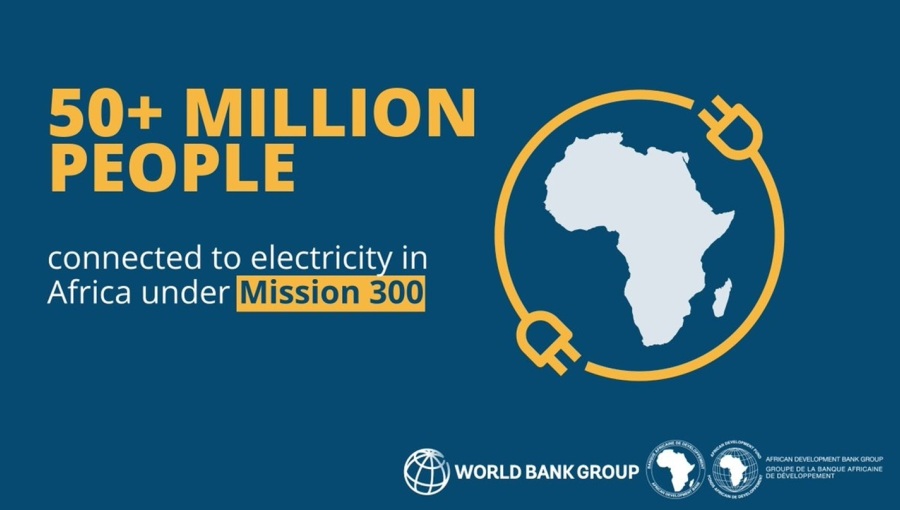
Mission 300, a joint initiative by the World Bank Group and the African Development Bank Group (AfDB), has connected 50 million people in Africa to electricity. This achievement marks a significant milestone towards the goal of connecting 300 million Africans to power by 2030.
This rapid increase in connections has brought electricity to homes, hospitals, schools, and small businesses across the continent. The new connections mean improved living conditions, better healthcare services through vaccine refrigeration, extended business operating hours, and enhanced educational opportunities for students.
The initiative plays a crucial role in Africa’s development landscape, directly impacting economic growth and social well-being. Ghana, like many African nations, stands to benefit from increased electrification. It aligns with broader efforts to improve infrastructure and boost productivity across the continent, tackling long-standing energy access disparities.
World Bank Group Director of Infrastructure for West Africa, Franz Drees-Gross, stated the initiative aims to change the pace of delivery. Wale Shonibare, AfDB Group Director for Energy Financial Solutions, Policy and Regulations, added the 50 million milestone shows genuine acceleration. Both emphasized that Mission 300 is designed to accelerate and align electricity access delivery.
Going forward, the success of Mission 300 will depend on continued coordination among partners and African governments. Decision-makers and investors will closely monitor the initiative's progress as it tackles persistent policy and regulatory hurdles. The initiative's impact on sustainable development across Africa will be a major focus.
Mission 300 is not a single project with one budget but a coordinated platform. It aims to accelerate and scale electricity access through new operations and existing investment portfolios. Policy reforms and country-level implementation plans are also key components of this strategy.
Connecting 300 million people by 2030 requires counting existing projects, not just new ones. The initiative tracks verified electricity-access gains from July 1, 2023, to December 31, 2030. This includes results from operations approved before Mission 300's formal launch.
Support for Mission 300 comes from a wide coalition of partners. This includes African governments, The Rockefeller Foundation, and the Global Energy Alliance for People and Planet. Sustainable Energy for All and other development partners also contribute to the effort.
Thirty-six countries involved in Mission 300 have adopted national energy compacts. These compacts address long-standing bottlenecks in the power sector. They also aim to speed up existing projects and create conditions for new investments.
Electricity access often faces constraints beyond just financing. Many African countries struggle with issues like policy, regulation, procurement, and utility management. Tariff structures, grid planning, and off-grid delivery also present challenges.
By addressing these multiple constraints, Mission 300 seeks to translate financing and reforms into actual household and community connections. This comprehensive approach is vital for achieving the ambitious 2030 target.
World Bank Group-financed projects are now connecting people to electricity at nearly twice the previous speed. From July 2023 to June 2024, World Bank projects connected 12 million people. By April of the current fiscal year alone, an additional 20 million people were connected.
The African Development Bank Group reports similar acceleration in its supported operations. AfDB-supported projects have reached 5.2 million people in less than two and a half years. This compares to 9.6 million people over the preceding eleven years.
The two institutions base these results on a common Mission 300 methodology. This methodology was jointly agreed upon by both development banks and other partners. Only verified household electricity connections delivered within the specified timeframe are counted.
Project implementation units, utilities, and private-sector operators supply the reported results. Government agencies responsible for delivering access outcomes also provide data. These figures undergo quality assurance and validation within both institutions' systems.
This harmonized methodology ensures credibility and comparability across countries, projects, and institutions. Transparency is also a fundamental aspect of Mission 300's design. This meticulous approach ensures accurate reporting of progress.