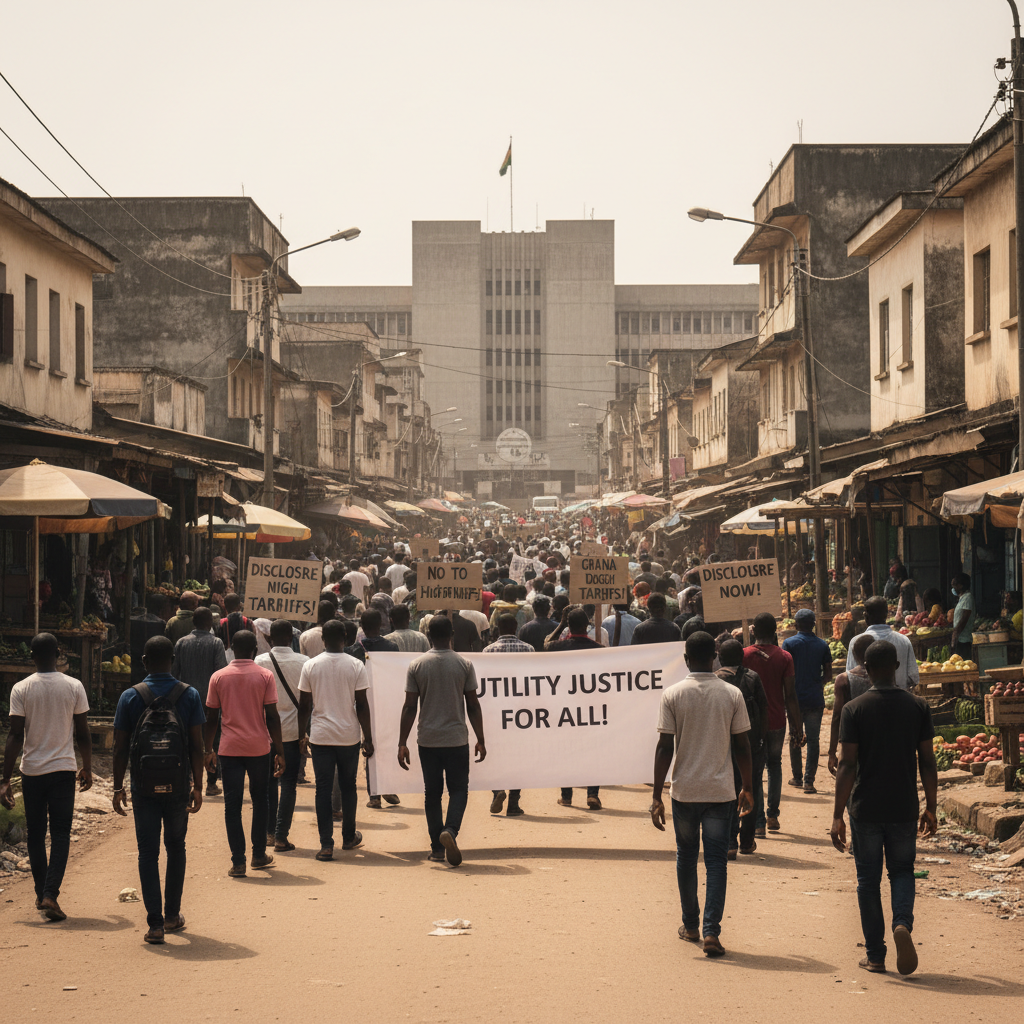
Ghana's Parliamentary Minority has demanded full disclosure from the Public Utilities Regulatory Commission (PURC) on the factors behind its latest tariff increases. Effective July 1, 2026, electricity tariffs will increase by 3.49%, and water tariffs will rise by 0.85%. This move contradicts the government's consistent claims of improving economic conditions.
These tariff adjustments directly affect every Ghanaian household and business that consumes electricity and water. The increases come despite recent government indicators suggesting a recovering economy, including a stronger cedi, lower inflation, and reduced interest rates. The Minority questions how utility costs can rise when key economic metrics point towards an improved financial landscape for the country.
This situation adds to a broader national debate about the tangible benefits of economic improvements for ordinary citizens. Ghana's economy has faced significant challenges in recent years, including high inflation and currency depreciation. Government reports have highlighted a recent appreciation of the cedi by nearly 40% against major foreign currencies. Declining inflation figures and easing interest rates have also been cited as evidence of economic stabilisation. However, the continuous upward trend in utility prices creates a disconnect between reported economic gains and the daily experiences of Ghanaians.
Collins Adomako Mensah, Deputy Ranking Member on the Energy Committee, stated, "If those gains are genuine, Ghanaians should be experiencing them in their daily lives." He pointed out that the electricity sector relies heavily on imported crude oil and natural gas, priced in foreign currencies. A significant appreciation of the cedi should reduce the domestic cost of these essential inputs. Falling inflation and lower interest rates should also ease operational costs for utility providers.
The increases imply that the claimed economic stability is not translating into reduced costs for consumers. Decision-makers in the government and at the PURC will likely face increased scrutiny regarding the transparency of their pricing mechanisms. Markets and businesses will watch closely for further explanations or adjustments, as rising utility costs can impact operational expenses and consumer spending power. The Minority has pledged continued oversight, urging transparency and accountability from both the government and the regulatory body.
The Minority's concerns extend to the very basis of the PURC's decision-making. They argue that the government, which appoints the PURC's leadership and sets policy, bears responsibility for the tariff regime. Mr. Adomako Mensah criticised the government for celebrating past tariff reductions while remaining silent on current increases. He stressed that a genuine economic improvement should ordinarily lead to lower utility tariffs. This suggests a potential inconsistency in how economic data is presented versus its real-world impact.
Furthermore, the Minority called for linking future tariff adjustments to measurable improvements in service delivery. They highlighted ongoing issues such as the prepaid meter depletion controversy and persistent power outages as critical concerns. Businesses, particularly those in manufacturing and services, rely on stable and affordable utility services. Unjustified increases can hinder economic growth and make Ghana less competitive. The public's demand for clear, evidence-based utility regulation is expected to intensify given these economic contradictions. Civil society groups and industry bodies are also being mobilised to advocate for greater transparency.