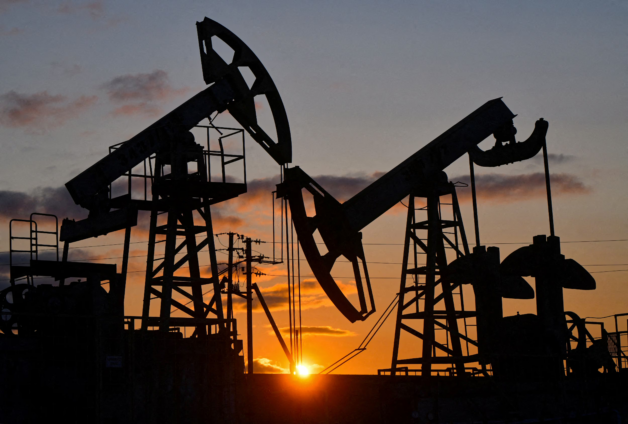
Global oil supply has experienced a significant disruption, creating a deficit of at least 10 million barrels daily due to escalating geopolitical conflicts. Brent crude oil prices have surged past $100 per barrel this week, reflecting the severe impact on international energy markets.
This critical shortage stems from multiple chokepoint blockages and export route suspensions. Houthi attacks on tankers in the Red Sea have effectively halted between 4 million and 5 million barrels daily of Saudi oil traffic through the Bab el-Mandeb Strait. Concurrently, Ukrainian drone strikes on the Novorossiysk port have forced Kazakhstan to suspend most of its 1.7 million barrels daily oil exports via the Caspian Pipeline System.
These disruptions follow earlier warnings of a potential crude oil glut, which quickly reversed as a U.S.-Iran ceasefire collapsed. The Strait of Hormuz, which typically handles 20 million barrels daily, has also seen its traffic reduced to a trickle. This confluence of events paints a grim picture for global oil availability and prices.
Ole Hansen, Saxo Bank’s head of commodity strategy, highlighted the particular severity of the refined products crisis. He stated, “Unlike crude oil, refined products face far fewer mitigation options.” Hansen noted that several Middle Eastern refineries remain affected by ongoing conflicts, and Russia’s diesel export restrictions further constrain global availability. Global refining capacity also remains limited, preventing quick increases in diesel and gasoline production.
The immediate implications are higher energy costs and a heightened risk of global economic contraction. The World Bank’s chief economist, Indermit Gill, indicated that the institution now expects the global economy to expand by only 1.3% this year, a sharp decline from 2.9% last year. This revised outlook underscores the significant economic headwinds created by the ongoing energy supply shocks.
The International Energy Agency (IEA) reported a nearly 5% drop in global crude oil demand during the second quarter of the year. This demand reduction is a direct consequence of the oil price spike caused by the Middle East conflict. In Europe, diesel consumption fell by 5.7% in May, while China saw a 10% decrease in diesel consumption and a 5% drop in gasoline demand during the same month.
Despite these demand reductions, global crude stocks are being depleted. Mick Strautmann, an analyst at Vortexa, warned that “The large strategic stock releases earlier in the conflict have meaningfully depleted the buffer available for any future disruption.” Fatih Birol, head of the IEA, acknowledged that IEA countries still hold over 1 billion barrels of government-controlled emergency stocks. However, he cautioned against complacency given the escalating hostilities and continued drawdown of commercial inventories.
The sustained nature of these conflicts, with little desire for peace, suggests that the energy supply chain disruptions will continue. This scenario makes the danger of a global recession very real. Businesses and consumers worldwide will likely face prolonged periods of elevated energy prices and economic uncertainty.