Ghana’s expanding petroleum refining capacity is not yet sufficient to shield consumers from international fuel-price shocks. This assessment comes from Benjamin Nsiah, Executive Director of the Centre for Environmental Management and Sustainable Energy (CEMSE). He argues that greater local processing must be supported by reliable crude supply, competitive refinery economics, and stronger strategic planning.
This warning emerges as the government pushes to increase domestic refining. Efforts include the revival of the state-owned Tema Oil Refinery (TOR) and the expansion of the privately owned Sentuo Oil Refinery. Energy Minister John Abdulai Jinapor has stated that these two facilities could eventually meet about 70% of Ghana’s domestic demand for refined petroleum products. This target is contingent on the completion of planned expansion programmes.
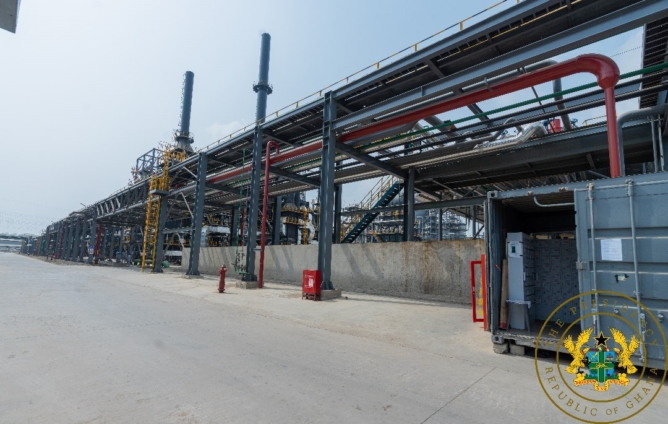
The Sentuo Oil Refinery currently operates at approximately 40,000 barrels per day. It is undergoing expansion to reach a planned capacity of 100,000 barrels per day. The government presents this investment as part of a broader strategy. This strategy aims to reduce dependence on imported finished petroleum products, strengthen energy security, and retain more value from Ghana’s crude oil resources.
Mr. Nsiah, however, clarifies that installed refining capacity should not be confused with insulation from global oil markets. Ghanaian refineries will still require crude oil priced largely against international benchmarks. This means movements in global crude prices can continue to feed into the cost of locally refined petrol, diesel, and other petroleum products. This distinction is crucial because public debate around refinery expansion often creates the impression that local production automatically translates into substantially cheaper and more stable pump prices.
Local refining can reduce freight costs, improve supply security, and retain more economic activity domestically. However, it does not eliminate the underlying commodity cost of crude oil. Ghana therefore faces two related but distinct objectives. The first is reducing dependence on imported finished products. The second is reducing exposure to international price volatility. Achieving the first objective does not automatically deliver the second.
Mr. Nsiah has previously advocated for a more reliable mechanism for supplying domestically produced crude to local refineries, especially TOR. In May, he called for changes to the petroleum framework. This would ensure a more consistent allocation of local crude. He warned that restoring refinery capacity without securing feedstock could leave facilities underutilised.
The government has since taken steps in this direction. TOR received one million barrels of Jubilee crude in July. This was part of efforts to restore consistent refinery operations and increase domestic petroleum production. Officials presented this allocation as an important step towards deeper local value addition.
The economic case for domestic refining remains substantial. Importing finished products means Ghana pays not only for crude oil but also for refining margins, shipping, and other costs embedded in the international supply chain. Domestic processing can potentially retain some of that value through employment, taxes, logistics, and associated industrial activity. It can also improve physical energy security. A country importing most of its refined fuel is vulnerable not only to prices but also to shipping disruptions, refinery outages abroad, and geopolitical events capable of interrupting international supply chains.
Yet, local refining introduces its own commercial risks. Refineries require consistent throughput to spread fixed costs efficiently. A plant with high nameplate capacity but irregular crude supply may struggle to compete with large international facilities operating at scale. TOR’s financial position therefore remains an important part of the equation. Mr. Nsiah has previously questioned whether the state refinery possesses sufficient cash-flow strength to finance large crude purchases independently. He suggests that simply restoring technical capacity will not resolve its underlying commercial challenges.
Sentuo presents a different model because it is privately operated. However, its success will similarly depend on crude availability, financing costs, operational efficiency, and the ability to sell products competitively into Ghana’s deregulated downstream market. The government’s ambition for TOR and Sentuo to meet about 70% of national demand is a capacity target. It is not a guarantee of actual output. Refineries must have crude, financing, and functioning equipment before installed capacity translates into physical barrels supplied.