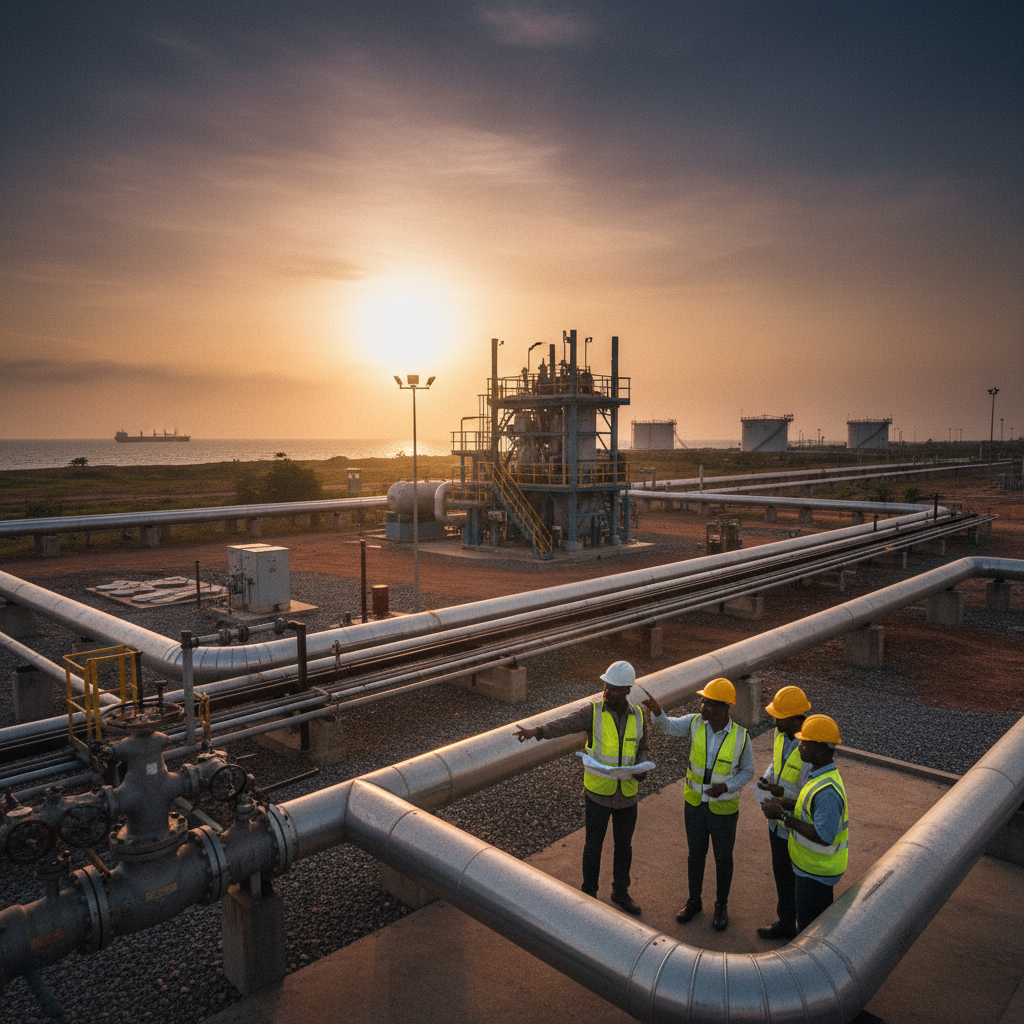
Ghana officially advocates for the expansion of the West African Gas Pipeline and other cross-border gas projects. This initiative aims to deepen regional energy integration, enhance energy security, and support economic growth across West Africa.
Deputy Minister for Energy and Green Transition, Richard Gyan-Mensah, made this proposal at the West African Gas Summit (WAGS) 2026 in Accra. He emphasized that additional investments are crucial to unlock the sub-region’s vast gas potential. The success of the current West African Gas Pipeline demonstrates the benefits of regional cooperation.
This push for gas infrastructure aligns with Ghana's broader economic goals of industrialisation and improved living standards. Ghana currently sources about 80 percent of its natural gas from domestic fields. This supply is vital for the country's power generation and industrial activities. Relying on domestic gas helps Ghana reduce electricity production costs and strengthens national energy security. Any disruption in gas supply forces a switch to more expensive liquid fuels, increasing power generation costs. This places additional pressure on the Ghanaian economy.
Deputy Minister Gyan-Mensah stated that integrated markets become more resilient and appealing. “The West African Gas Pipeline shows what is achievable,” he remarked. He highlighted that natural gas serves as a critical catalyst for industrialisation and job creation. Mr. Gyan-Mensah stressed that abundant resources alone are not sufficient without the right infrastructure, policies, and partnerships. “For West Africa, gas must be central, not just as an end in itself, but as a tool for industrialisation, economic transformation, and improved living standards,” he added.
The government actively seeks private sector participation to finance these significant gas infrastructure projects. Governments alone cannot meet the substantial investment required to transform the region's energy landscape. This approach aims to leverage private capital for essential energy development. Increased private investment would reduce the financial burden on state budgets. It would also accelerate project implementation within the West African region.
Policymakers, regulators, investors, and industry leaders gathered at the summit. The Gas Consortium and the West Africa Gas Pipeline Authority organised the event. Participants explored strategies for accelerating gas sector development. They also discussed enhancing regional energy integration. This collaborative effort signals a strong commitment to energy stability and economic growth in the sub-region. Future developments will depend on securing substantial private sector funding and continued regional cooperation.