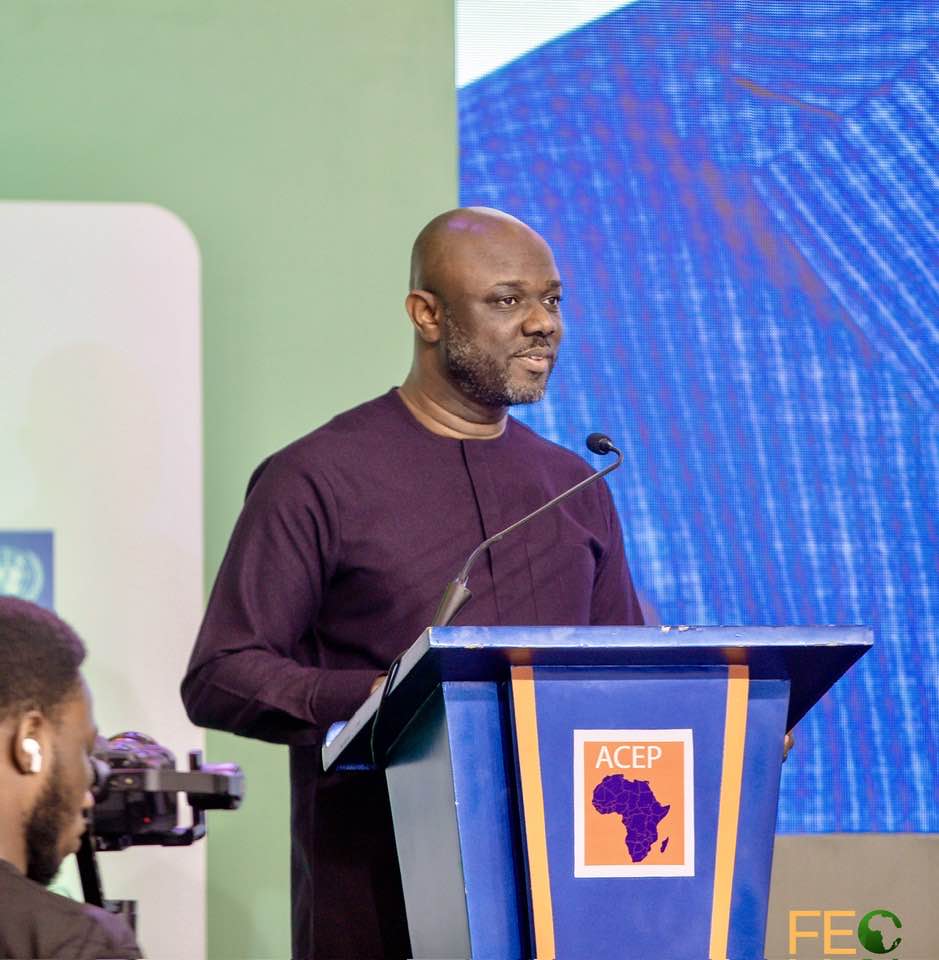
Ghana's renewed investigation into the Power Distribution Services (PDS) concession lacks a clearly established financial loss to the state. Ben Boakye, Executive Director of the Africa Centre for Energy Policy (ACEP), argues that authorities must first quantify any outstanding liability. This intervention raises questions about the basis for the ongoing probe into the terminated power distribution agreement.
Mr. Boakye emphasized that state institutions should act on fresh evidence of public resource loss. However, he stressed the need for investigators to identify the precise state interest involved. He highlighted the importance of establishing a reconciled financial claim against PDS. This clarity should precede any account freezes, arrests, or other coercive measures by state agencies.
This debate unfolds against a backdrop of Ghana's persistent challenges in its electricity sector. The country often grapples with financial leakages and inefficiencies within state-owned power entities. The PDS controversy itself reflects broader issues of governance and contract management in critical infrastructure. Previous attempts at private sector participation have faced significant hurdles, impacting investor confidence and sector stability.
“Somebody must tell you where the state interest is suffering for you to make that intervention,” Mr. Boakye stated. He questioned the varying figures, including GHS 800 million, GHS 850 million, and GHS 1 billion, circulating publicly as alleged losses. He called for the state to publish a reconciled balance if one exists, asserting that gross electricity collections do not automatically equate to money owed.
The renewed investigation follows an international arbitration ruling in November 2025. A London-seated tribunal largely rejected PDS's US$390 million claim against Ghana. The tribunal upheld the Electricity Company of Ghana’s (ECG) right to terminate the concession agreement. The Ministry of Energy subsequently indicated the government would pursue any amounts due to ECG.
Mr. Boakye argued that understanding the arbitration outcome is crucial before new enforcement actions. He pointed out that a distribution operator collects revenue but also incurs obligations to power generators and transmission companies. Therefore, the relevant figure for any loss must be a reconciled amount after all permitted payments and contractual obligations. He stressed that the state should be interested in a reconciled balance, not just gross collections.
The PDS episode risks diverting crucial political and institutional attention. Mr. Boakye warned that this focus could overshadow far larger weaknesses within ECG and the broader electricity value chain. These systemic issues continue to impose significant costs on the public purse. Addressing these underlying structural problems is essential for long-term energy sector stability and financial health.
The controversy also touches on legal representation and due process. A law firm linked to individuals questioned in the probe disputed allegations of an GHS 850 million transfer. They accused authorities of intimidating lawyers representing clients, claiming two lawyers were interrogated and arrested. These claims remain contested and are yet to be determined by a court. This aspect widens the debate beyond financial accountability to include concerns about investigative proportionality and legal rights.
Ghana's government and relevant agencies face pressure to clarify the financial basis of the PDS investigation. Transparency in quantifying alleged losses is paramount for public trust and effective resource management. Failure to do so risks prolonging a controversy that distracts from more pervasive challenges in the energy sector. Investors and citizens alike will watch closely for a clear, reconciled account of any state losses.