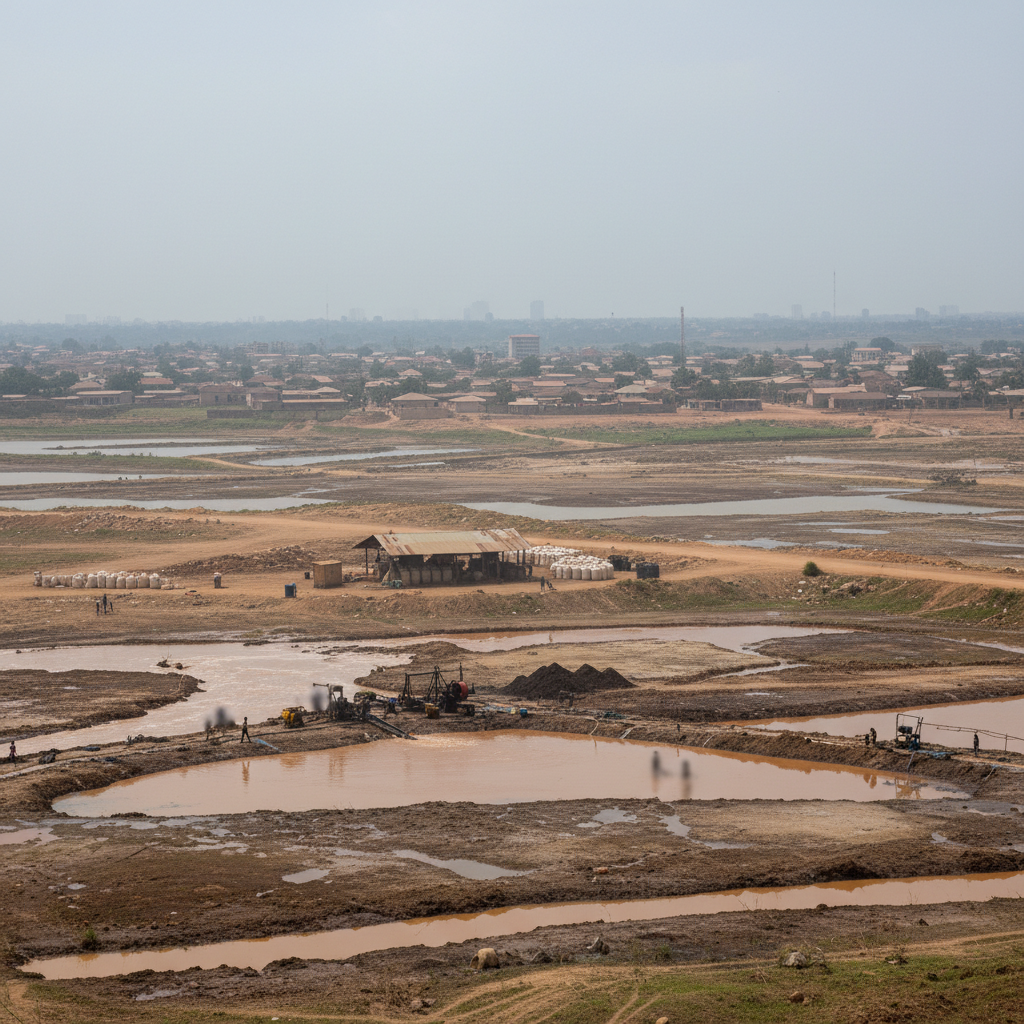
Ghana faces a silent, impending water crisis stemming from the widespread pollution of its underground water reserves, known as groundwater. This critical resource, which supplies drinking water to thousands of communities, is increasingly threatened by contaminants from illegal mining activities, commonly called 'galamsey'. The long-term implications of this unseen pollution could be more severe and harder to reverse than the visible damage to rivers.
While public attention focuses on the visible destruction of rivers and forests by illegal mining, a more insidious problem is unfolding beneath the surface. Heavy metals and other pollutants from mining operations are not confined to surface water; they slowly infiltrate the ground, contaminating the aquifers that serve as Ghana's primary source of potable water. This delayed contamination means that communities may unknowingly consume polluted water for years.
This emerging crisis fits into Ghana's broader environmental and economic narrative, where the fight against illegal mining has been a persistent challenge. Despite government efforts and public outrage over discoloured rivers, the interconnectedness of surface and groundwater systems means that river pollution inevitably impacts underground reserves. This situation highlights a critical gap in environmental monitoring and protection strategies, as the focus has largely remained on visible environmental degradation rather than the hidden threats.
Dr. Evans Manu, a source cited by MyJoyOnline News, emphasizes that the greatest long-term threat from river pollution may not be the rivers themselves, but Ghana's groundwater. He notes that while rivers are visibly affected, groundwater contamination is slow and often goes unnoticed until it is too late. This expert perspective underscores the urgency of addressing groundwater protection as a distinct and critical component of Ghana's water security strategy.
The implications of widespread groundwater contamination are profound, extending beyond environmental concerns to national development. Contaminated aquifers are extraordinarily difficult, and in some cases practically impossible, to clean, making prevention far cheaper than remediation. Decision-makers must shift their focus to comprehensive groundwater protection, including stricter enforcement against illegal mining and advanced monitoring systems. Failure to act decisively could lead to a public health crisis and undermine Ghana's sustainable development goals, as access to safe drinking water is fundamental for any nation's progress.
Groundwater provides roughly one-third of the world's freshwater supply and is the principal source for many Ghanaian communities. Unlike rivers, which are flushed by seasonal floods, aquifers retain contaminants, allowing heavy metals like mercury, arsenic, lead, and cadmium to persist for decades. These metals can transform into more toxic forms and enter the food chain, posing severe health risks. The delay in detection creates a dangerous illusion of safety, as boreholes may continue to supply seemingly clean water long after contamination has begun.
The economic cost of remediation for contaminated aquifers would be astronomical, far exceeding the investment required for preventative measures. This makes the current situation a significant economic threat, potentially diverting substantial public funds towards costly treatment technologies rather than productive development projects. Protecting groundwater is not merely an environmental issue; it is a critical economic and public health imperative for Ghana's future stability and growth.