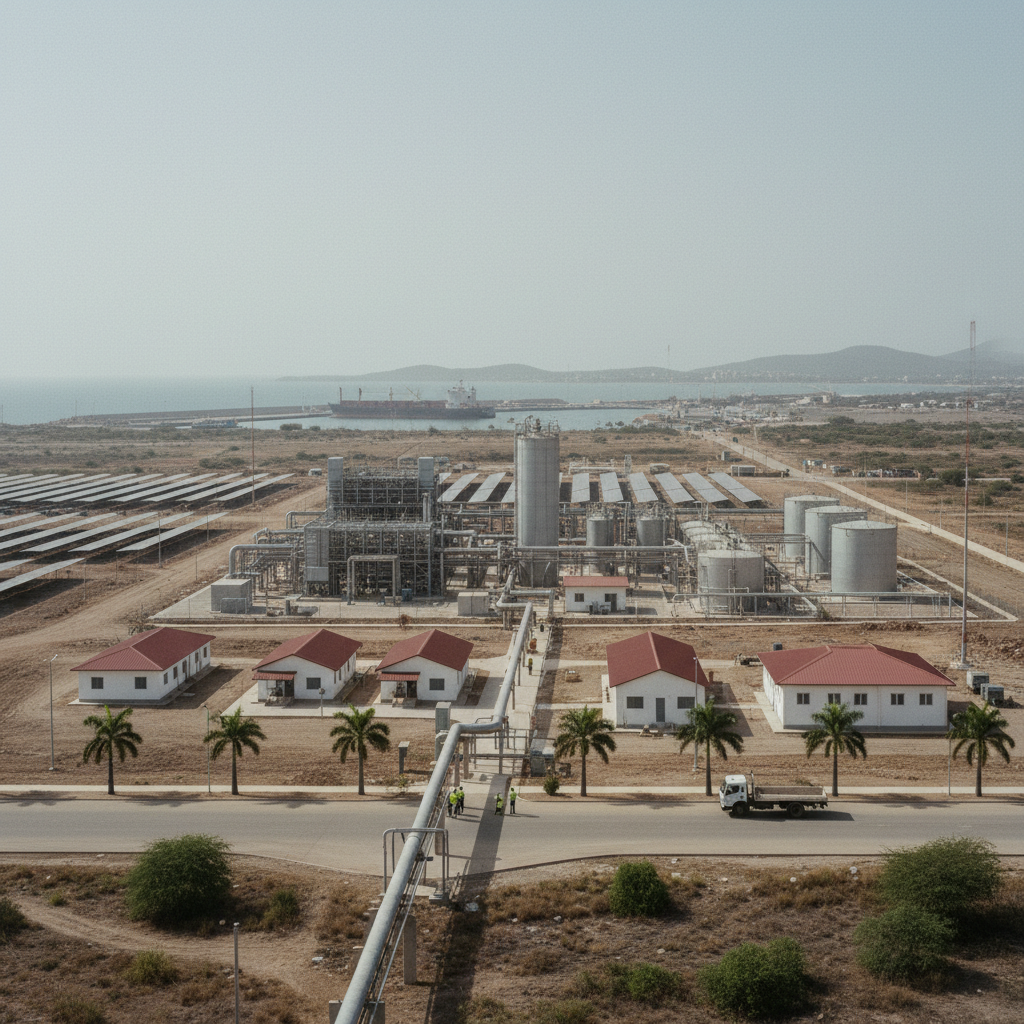
Ghana and Germany have deepened their collaboration on green hydrogen for sustainable industrial development. This commitment emerged from a virtual seminar involving researchers, policymakers, industry leaders, and development partners from both nations. The seminar underscored the importance of international cooperation in accelerating renewable energy innovation and technology transfer.
Professor Paul P. Bosu, Director-General of Ghana’s Council for Scientific and Industrial Research (CSIR), chaired the seminar. He emphasized that joint efforts are crucial for sustainable industrial growth. Ghana possesses significant renewable energy resources, making it a strong candidate for green hydrogen production. The country could produce approximately 14,196 million metric tons (Mt) of green hydrogen annually from solar energy. It could also generate 10,123 Mt annually from wind energy, creating new industrial and export opportunities.
This initiative fits into Ghana’s broader economic strategy for climate action and industrial decarbonization. Ghana aims to enhance its energy security and create new jobs through green technologies. Past efforts have focused on sustainable development goals. This partnership aligns with a global shift towards cleaner energy sources. It leverages Ghana’s abundant natural resources to drive economic diversification.
Ing. Dr. Latifatu Mohammed, the seminar’s Convener, highlighted the role of the TWAS-DFG Cooperation Visits Programme. This program strengthens scientific exchange between Ghana and Germany. Professor Johannes Gulden, Director of Germany’s Institute of Renewable Energy Systems (IRES), provided a keynote. He stressed that successful hydrogen economies need strong policies, regulatory frameworks, and investment mechanisms. Ghana must develop a comprehensive national hydrogen strategy. This plan should outline hydrogen production, utilization, infrastructure development, and market integration.
The collaboration will lead to pilot projects and joint research initiatives. These efforts will foster stronger engagement among academia, industry, government, and development partners. Decision-makers will watch for the development of Ghana’s national hydrogen strategy. This strategy is essential for attracting investment and aligning stakeholders. The market will respond to tangible progress in establishing green hydrogen infrastructure and export capabilities. This partnership represents a key step towards Ghana's energy transition and economic transformation.
The seminar also discussed green ammonia production and hydrogen-based energy storage. Participants addressed infrastructure development and financing opportunities. Industry representatives from the Association of Ghana Industries (AGI) and the German Chambers of Commerce Abroad (AHK) stressed the need for pilot projects. They also emphasized public-private partnerships. These initiatives will support future large-scale commercial deployments of green hydrogen. This commitment signals a long-term vision for sustainable growth.