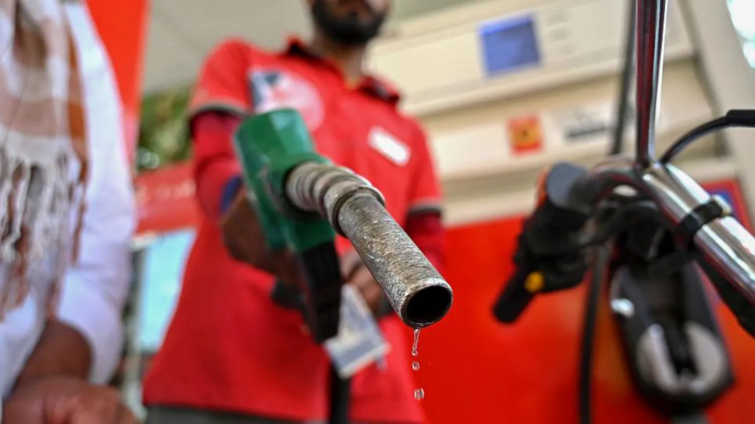
Ghanaian fuel dealers are facing significant revenue losses as global oil prices swing unpredictably. The Chief Executive Officer of the Chamber of Oil Marketing Companies (COMAC), Dr. Riverson Oppong, confirmed this impact.
Renewed tensions between the United States and Iran, following failed peace efforts, are shaking global oil markets. This instability exposes Ghana's fuel industry to sharp price changes. Dealers find it increasingly difficult to protect their revenues, especially during sudden price drops.
This situation fits into a broader pattern of global economic uncertainty affecting Ghana. Fluctuations in international commodity prices directly influence domestic market stability. Ghana's economy relies heavily on imported petroleum products, making it vulnerable to external oil market shocks. The Ghanaian cedi's stability and inflation rates are often tied to global oil price trends.
Dr. Oppong explained that constant uncertainty has led to volatile crude oil prices. This creates operational challenges for Oil Marketing Companies (OMCs) and Bulk Distribution Companies (BDCs). He stated, “As far as revenue is concerned, it is a bit easier when prices are moving up, but when prices are going down, it is a bit deadly, not only to the OMCs but to the BDCs as well.”
Fuel dealers often purchase products at higher prices, only to see market prices decline before they can sell their stock. This quickly reduces profit margins. Operators are left with inventory that must be sold at lower prices. Dr. Oppong mentioned, “Imagine going to buy at a higher price within a window, and you wake up, and the next window price has gone down. You’ve knocked your price.”
Hedging, a financial strategy to reduce risk from price changes, is impractical for Ghana's retail fuel business. Dr. Oppong noted, “We can talk about hedging and all that stuff. I mean, with the retail business, it’s a bit difficult to hedge.” His comments highlight the specific difficulties faced by local fuel distributors.
Decision-makers and market watchers will continue to monitor global energy markets. Further disruptions related to geopolitical events could trigger another round of sharp price movements. This uncertainty affects fuel pricing, inventory values, and the overall sustainability of Ghana's downstream petroleum sector. The government may need to consider policy interventions to stabilize domestic fuel prices and support dealers. The current situation places growing pressure on fuel dealers to navigate rapidly changing international oil prices while maintaining thin margins in the domestic market.