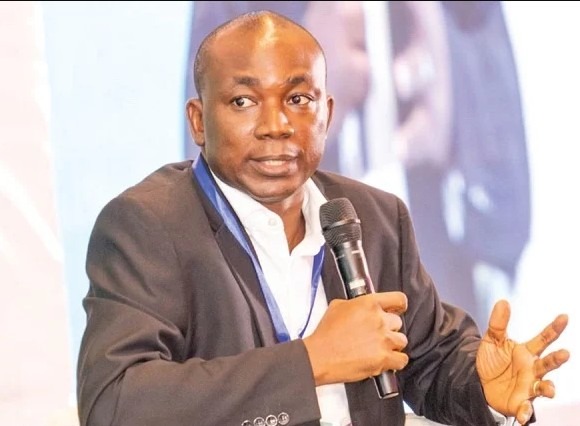
Economist Professor Godfred Bokpin has warned that Ghana is showing signs of becoming a failed state. He points to prolonged power outages and persistent infrastructure deficits as evidence of weakening state capacity. These challenges are increasing the cost of doing business and eroding investor confidence.
Professor Bokpin's remarks followed a widespread power outage that affected parts of Accra on Wednesday, July 29, 2026. He described the lengthy blackout in the national capital as unacceptable. An unreliable electricity supply makes it difficult for businesses to plan and discourages potential investors.
This situation fits into Ghana's broader economic narrative of struggling to maintain essential public services. The nation has faced intermittent power supply issues, locally known as 'dumsor', for several years. These power challenges directly impact economic productivity and foreign direct investment.
Professor Bokpin questioned Ghana’s readiness to deal with such disruptions. He stated, “We are becoming a failed state. Can you imagine in a serious country, your capital has been without power for almost six hours? That is not something we should talk about as theory. That is serious.” He emphasized that the state must provide reliable power as a fundamental responsibility.
When the state fails to provide essential public services like electricity, water, healthcare, and education, the private sector is forced to step in. This intervention comes at a much higher cost, placing additional financial pressure on businesses and households. Professor Bokpin argued that the state's failure in these areas undermines its conceptual role as a tax state.
He also called for increased investment in infrastructure to bridge the existing gap. Professor Bokpin estimates that Ghana needs to invest at least US$10 billion annually over the next decade. He urged the government to rely more on public-private partnerships (PPPs) to finance major infrastructure projects. This approach would reduce dependence solely on public funds.
The implications of continued power instability are severe for Ghana's economic outlook. Businesses will face higher operational costs, potentially leading to reduced profitability and job losses. Investor confidence, already fragile, could further decline, hindering economic growth and development. Decision-makers must prioritize sustainable solutions for energy and infrastructure to avert further economic deterioration.
The government's ability to attract and retain foreign investment hinges on providing a stable and predictable operating environment. Addressing the power crisis and infrastructure deficits is crucial for Ghana to maintain its economic trajectory. Failure to do so risks long-term economic stagnation and increased social unrest.
The call for public-private partnerships highlights a potential path forward for infrastructure development. Leveraging private capital can accelerate project delivery and reduce the financial burden on the state. This strategy is vital for Ghana to meet its infrastructure needs and support economic expansion.