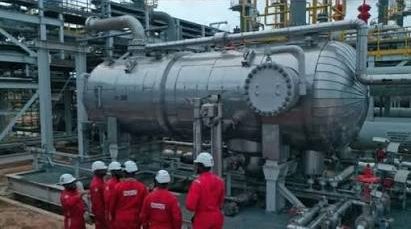
Ghana is advancing plans to construct a 1,200-megawatt state-owned combined-cycle gas-fired power plant in the Central Region. This initiative aims to significantly lower electricity generation costs, reduce consumer tariffs by 10% to 20%, and strengthen Ghana's long-term energy security.
Finance Minister Dr. Cassiel Ato Forson announced the project during the 2026 Mid-Year Fiscal Policy Review presentation to Parliament. He stated the plant is part of a broader government effort to modernize the country's energy infrastructure. The new facility is also expected to create 2,000 jobs, providing a boost to local employment.
This development fits into Ghana's ongoing efforts to address power sector liabilities and improve fiscal discipline. The country has historically faced challenges with high electricity costs and an unstable power supply. This new plant represents a strategic shift towards state-owned generation assets designed for efficiency and lower unit costs, potentially reshaping the electricity supply structure.
Dr. Forson confirmed that feasibility studies have validated the project's commercial and technical viability. Environmental assessments, engineering designs, and regulatory permitting are currently progressing. The government plans to commission the first 600MW phase of the plant in 2028, with the remaining capacity to be developed in a subsequent phase.
The plant will be located at Kafodzidzi-Abrobeano in the Komenda-Edina-Eguafo-Abrem Municipality. This location positions the Central Region as a key area for Ghana's future thermal power generation. The government's strategy involves using combined-cycle gas technology, which is more efficient than traditional thermal generation. This technology captures waste heat to produce additional electricity, leading to lower generation costs.
To further reduce expenses, the government has opted to procure gas turbines directly from GE Vernova, bypassing intermediaries. This direct procurement strategy is projected to yield cost savings of between 35.00% and 45.00% compared to conventional third-party arrangements. Industry analysts will closely monitor this claim, given past concerns about procurement costs in Ghana's power sector.
If these projected savings materialize, the direct procurement model could establish a new standard for major energy infrastructure projects in Ghana. Lower electricity tariffs, estimated at 10.00% to 20.00%, would be economically and politically significant. Reduced electricity costs could improve household disposable incomes and lower operating expenses for businesses. This would enhance Ghana's competitiveness and support industrial expansion and investment attraction.
However, the realization of these tariff reductions depends on several factors. These include the final project cost, the financing structure, gas supply agreements, and exchange-rate stability. Plant efficiency, grid integration, and the financial health of the broader power sector will also play crucial roles. Ghana's power sector has long grappled with issues such as legacy debts, distribution losses, and high capacity payments. Any new state-owned generation asset must therefore deliver not only installed capacity but also affordable, reliable, and financially sustainable electricity.
The government's investment in this large, efficient, gas-fired plant aims to reduce reliance on more expensive generation methods. It also seeks to give policymakers greater control over the future energy mix. Natural gas is being positioned as a transitional fuel, balancing reliability, affordability, and climate obligations for Ghana.