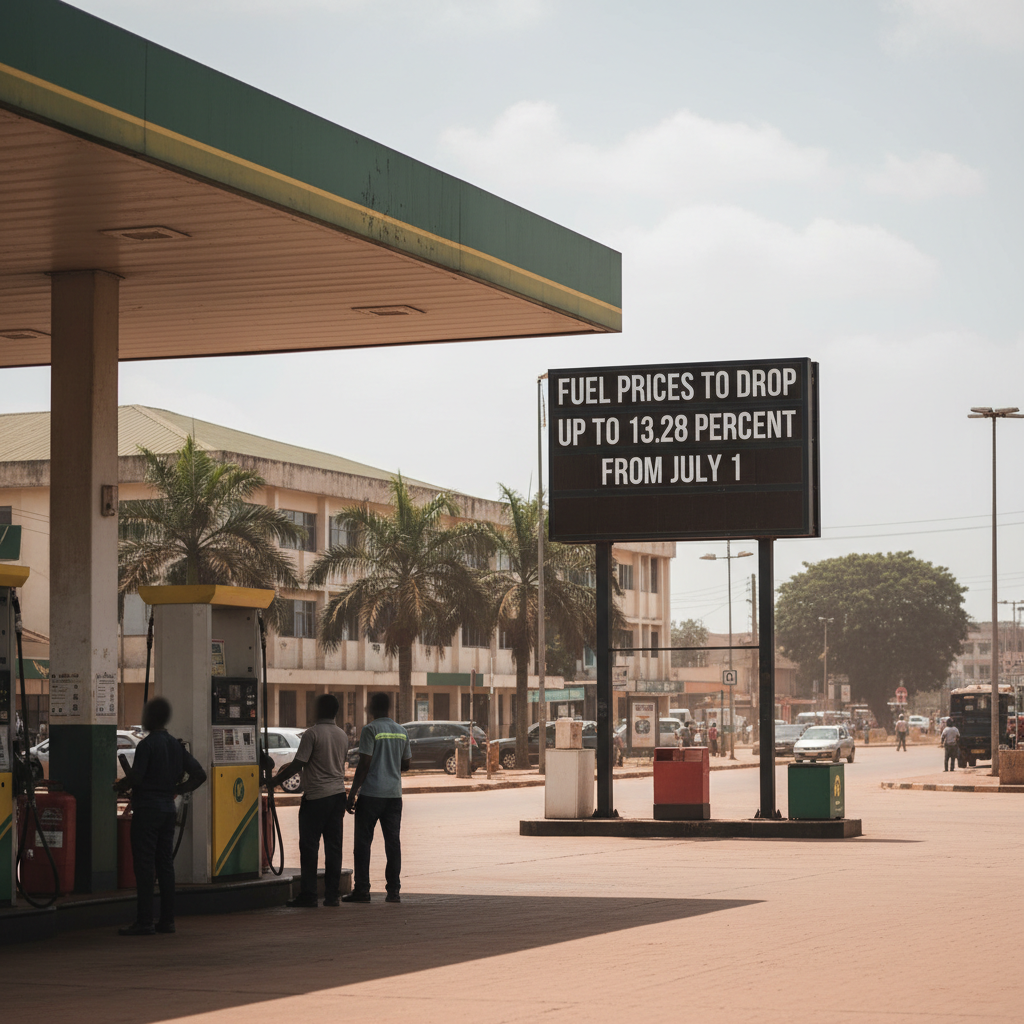
Ghana will experience a drop in fuel prices, including petrol, diesel, and liquefied petroleum gas (LPG), starting July 1, 2024. The Chamber of Petroleum Consumers (COPEC) projects a significant 13.28 percent reduction for diesel prices.
This anticipated price decrease is due to two main factors. Global crude oil prices decreased by 19.69 percent, falling from US$97.32 to US$78.16 per barrel during the last pricing window. Also, the Ghana cedi strengthened by 3.14 percent against the US dollar. These combined factors reduce the cost of importing refined petroleum products into Ghana.
These lower fuel prices will provide relief to businesses and individual consumers. High fuel costs have been a significant contributor to inflation and operating expenses across various sectors in Ghana. This reduction could ease the financial burden on transport operators and households. It aligns with broader government efforts to stabilise the economy and control consumer prices. The National Petroleum Authority (NPA) has also adjusted its minimum allowable prices downward for the first pricing window of July.
COPEC stated that the international Free-on-Board (FOB) price for petrol declined by 6.92 percent. This will lead to an average retail pump price of GHS 13.36 per litre. This represents a 6.21 percent reduction from the current average price of GHS 14.24 per litre. Petrol prices are expected to range between GHS 12.69 and GHS 14.03 per litre. Diesel's international FOB price fell by 15.18 percent. This projects an average retail pump price of GHS 14.10 per litre. This marks a 13.28 percent decline from GHS 16.26 per litre. Diesel prices will likely be between GHS 13.39 and GHS 14.80 per litre. LPG prices are also expected to range from GHS 9.54 to GHS 10.55 per kilogram due to a 15.96 percent decline in international FOB prices.
COPEC urged Oil Marketing Companies (OMCs) to fully pass on these benefits to consumers. This move would provide crucial support for households and businesses facing high operating costs. The chamber also praised the government’s policy of allocating part of its Jubilee Field crude oil share to support local refineries. This initiative could reduce Ghana’s reliance on imported refined petroleum products. It also aims to ease pressure on the cedi and promote long-term stability in domestic fuel prices. The NPA has set new minimum allowable prices for the first pricing window of July. Petrol will be at GHS 12.79 per litre, diesel at GHS 13.54 per litre, and LPG at GHS 10.11 per kilogram.
The immediate implication is a direct fall in transport and logistics costs for businesses. Consumers will benefit from lower expenditures on fuel. This could contribute to a slight decrease in the overall cost of living. Decision-makers will observe how these lower fuel costs affect inflation rates in the coming months. Market analysts will monitor the performance of companies heavily reliant on fuel, such as transport and manufacturing firms. The continued stability of the cedi and global oil price trends will remain key factors influencing future price adjustments.