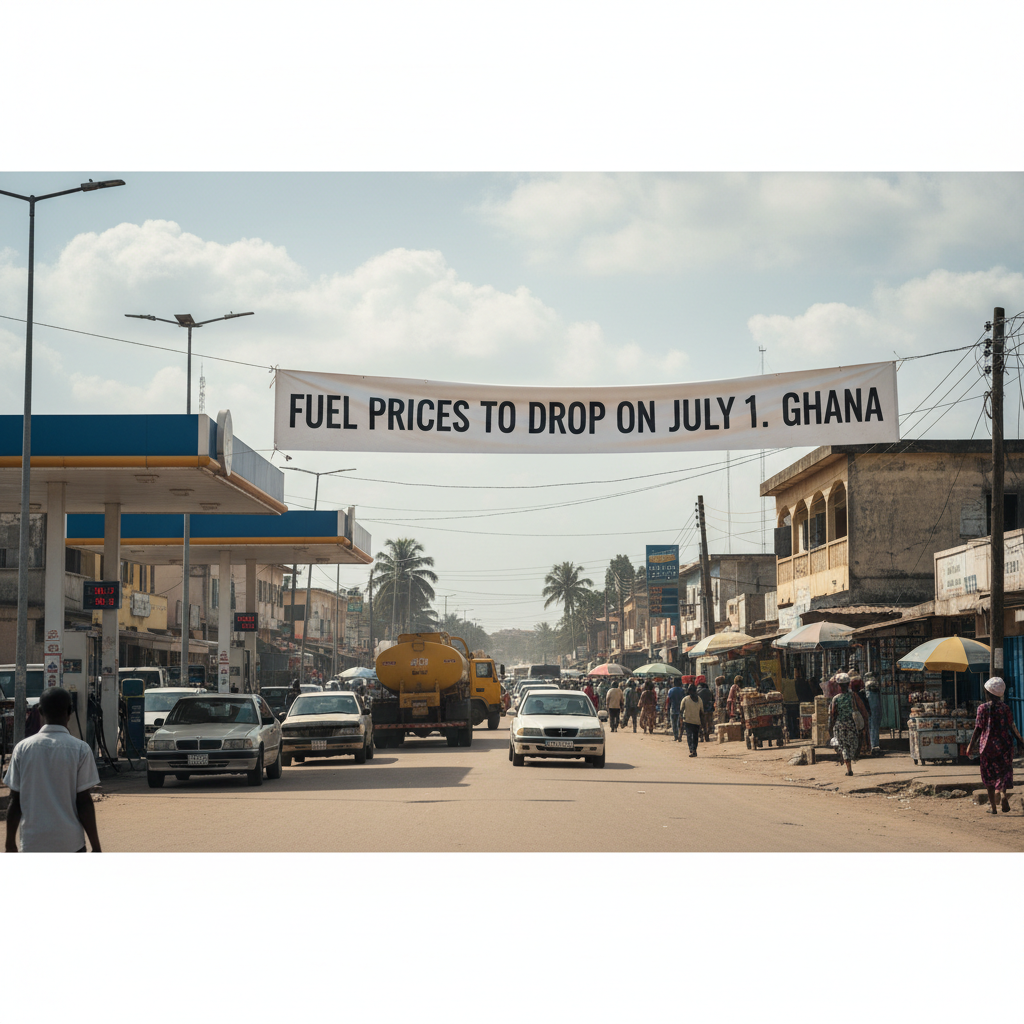
Ghanaian motorists and consumers will experience lower fuel prices starting July 1, 2026. This reduction stems from a significant decrease in global crude oil prices and a marginal strengthening of the Ghana cedi against the US dollar.
Global crude oil prices have fallen by 19.69%, from $97.32 to $78.16 per barrel. Alongside this, the cedi appreciated by 3.14%, moving from $1:GHS11.8035 to $1:GHS11.4333. These combined factors will lead to reduced pump prices for petrol, diesel, and LPG in the first pricing window of July.
This expected decline offers relief to households and businesses facing high operational costs. Fuel prices directly affect transport fares and the cost of goods and services. A sustained reduction could help temper inflation, impacting the broader Ghanaian economy. Data consistently shows a strong correlation between international oil prices, the cedi’s performance, and domestic petroleum product costs.
The Chamber of Petroleum Consumers (COPEC) provided these projections. Executive Secretary Duncan Amoah stated that their analysis indicates substantial price drops. COPEC urged Oil Marketing Companies (OMCs) to implement these reductions promptly. He emphasized the importance of easing the burden on consumers.
COPEC predicts petrol will sell at an average of GHS 13.36 per litre, down from GHS 14.24 per litre. Prices will likely range between GHS 12.69 and GHS 14.03 per litre. Diesel is projected to drop to about GHS 14.10 per litre from GHS 16.26 per litre. Its expected range is GHS 13.39 to GHS 14.80 per litre. LPG is also predicted to fall to an average of GHS 10.05 per kilogram, ranging from GHS 9.54 to GHS 10.55 per kilogram. Final prices may vary by Oil Marketing Company within a ±5% margin.
The Chamber also commended the government for allocating part of its Jubilee crude oil share to local refineries. This move could reduce Ghana's reliance on imported refined products. Less reliance on imports would ease pressure on the local currency. This strategy aims to stabilize domestic fuel supply and pricing.
Oil Marketing Companies will likely adjust their prices in line with these projections. Consumers should monitor pump prices at different stations. Policy makers will observe how these changes impact inflation and public sentiment. Further cedi stability or global crude oil price changes will influence future pricing windows.