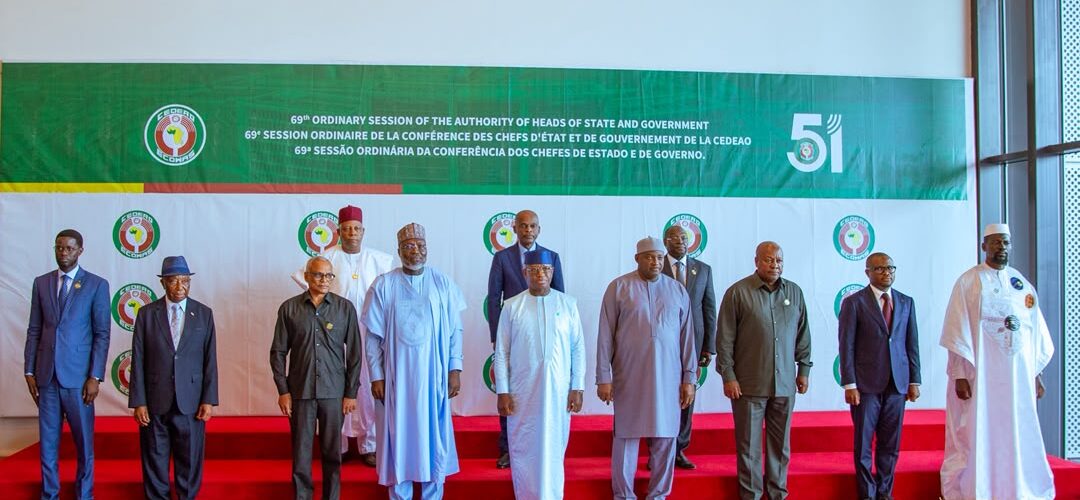
Heads of State and Government of the Economic Community of West African States (ECOWAS) have endorsed the legal and institutional framework for the Nigeria-Morocco African Atlantic Gas Pipeline. This action marks a major step towards realizing one of Africa’s largest energy infrastructure projects. The endorsement followed an intergovernmental agreement signed during an ECOWAS Summit in Freetown on Sunday.
This agreement provides broader regional political support for the proposed 6,800-kilometre pipeline. It will transport Nigerian natural gas along Africa’s Atlantic coast to Morocco. The pipeline also has the potential to supply European markets. This project, initiated by Morocco’s King Mohammed VI and former Nigerian President Muhammadu Buhari in 2016, is now seen as a regional integration initiative.
The pipeline project fits into Ghana's broader economic story by potentially diversifying regional energy sources. Ghana, like many West African nations, faces energy shortages and high production costs. Access to natural gas from this pipeline could drive economic growth and industrialization. This initiative aligns with regional efforts to improve energy security and foster intra-African trade.
The project is being jointly developed by Morocco’s National Office of Hydrocarbons and Mines (ONHYM) and the Nigerian National Petroleum Company Limited (NNPC Ltd.). Nigerian President Bola Ahmed Tinubu continues to back the initiative. Officials state the project forms part of King Mohammed VI’s vision for African economic integration through strategic infrastructure.
The endorsement means the project can advance to its next phase of implementation and financing. A dedicated project company will be established in Casablanca. A Pipeline Higher Authority will be headquartered in Abuja to oversee regulatory, operational, and financial matters. These bodies will coordinate engagement among participating governments, energy companies, and financial institutions.
Major technical, environmental, and engineering studies have already been completed. This allows preparations to advance towards implementation and financing. The pipeline is expected to pass through 13 countries along Africa’s Atlantic coastline. It will then link with the existing Maghreb-Europe Gas Pipeline network in Morocco.
The pipeline is projected to transport about 30 billion cubic metres of natural gas annually. Up to 15 billion cubic metres could be destined for Morocco and European markets. The remaining gas would serve participating West African countries. The project is estimated to cost about US$25 billion.
Initial sections could become operational during the early years of the next decade. This timeline depends on financing, regulatory approvals, and completion of technical preparations. Observers believe the pipeline could significantly strengthen energy security across West Africa. It would improve access to natural gas for electricity generation and industrial development.
Many countries along the route still face energy shortages. They also experience high production costs. Expanded access to natural gas is a potentially important driver of economic growth. Supporters argue the project could promote industrialisation, create jobs, and encourage domestic gas resource development. It connects producing countries to a regional transmission network.
The Morocco-Nigeria partnership remains central to the initiative. It combines Nigeria’s vast natural gas reserves with Morocco’s strategic location and infrastructure expertise. The project is part of a wider Atlantic development strategy championed by King Mohammed VI. This strategy aims to strengthen trade, transport, and energy links across Africa’s Atlantic corridor. It also seeks to improve access to international markets.
With the endorsement of the intergovernmental agreement in Freetown, the African Atlantic Gas Pipeline has moved beyond its original bilateral framework. It is now emerging as a regional West African development project. This project has significant implications for energy security, economic integration, and industrial growth across the continent.