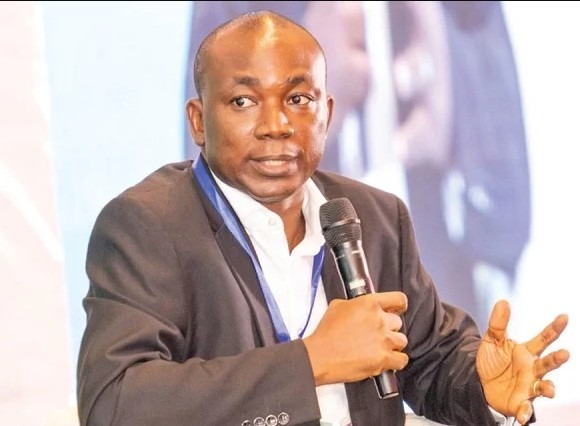
Professor Godfred Bokpin, a distinguished economist and Professor of Finance, has issued a stark warning: continued inefficiencies within the Electricity Company of Ghana (ECG) and other state-owned enterprises (SOEs) could force Ghana back to the International Monetary Fund (IMF) for another financial intervention. This assessment underscores the persistent fiscal challenges facing the nation.
Professor Bokpin highlighted that Ghana has lost a significant portion of its economic output, specifically between 2.5% and 3.2% of its Gross Domestic Product (GDP), over the past 15 to 20 years. These substantial losses are directly attributable to the operational shortcomings of SOEs, including major entities like ECG and the Ghana Cocoa Board (COCOBOD). Such inefficiencies drain public resources and hinder national development.
This situation fits into a broader narrative of Ghana's economic management, where state enterprises frequently require government bailouts. The energy sector, in particular, consistently places immense pressure on Ghana’s finances. Extra-budgetary allocations to cover shortfalls in this sector sometimes exceed the combined budgets of the Ministries of Health, Food and Agriculture, and Education, diverting critical funds from essential public services.
Professor Bokpin stated, “If we go back to business as usual, it is just a matter of time and we have to resort to the IMF and the World Bank for another level of intervention.” He emphasized that Ghana cannot afford to revert to old practices after years of fiscal strain caused by these systemic inefficiencies. The current IMF-supported programme has, however, improved transparency regarding the extent of losses in the energy sector.
Addressing the high level of losses across electricity generation, transmission, and distribution will require substantial investment. Professor Bokpin noted that there is no way to reduce these losses without significant capital injection. He urged the government to carefully determine how to finance these necessary investments without diverting scarce public funds from other critical sectors of the economy.
The finance expert also acknowledged some positive developments stemming from the IMF-supported programme. He pointed out that the programme has enhanced transparency in the energy sector, particularly concerning the scale of losses and the movement of funds. The cash waterfall mechanism, for instance, is now functioning more effectively, a direct credit to the IMF's intervention.
Professor Bokpin called on policymakers to leverage the ongoing reform process to tackle the deep-seated structural challenges within ECG and other SOEs. He stressed the importance of implementing reforms that improve efficiency, reduce operational losses, and decrease these companies' reliance on government financial support. This approach would prevent a cycle of repeated financial interventions.
He also advocated for broader consultation and greater transparency regarding proposed reforms, especially those involving private-sector participation. A return to previous approaches, he warned, would only exacerbate Ghana’s fiscal difficulties and inevitably lead to another request for external financial assistance. The focus must remain on sustainable, long-term solutions for these vital state assets.