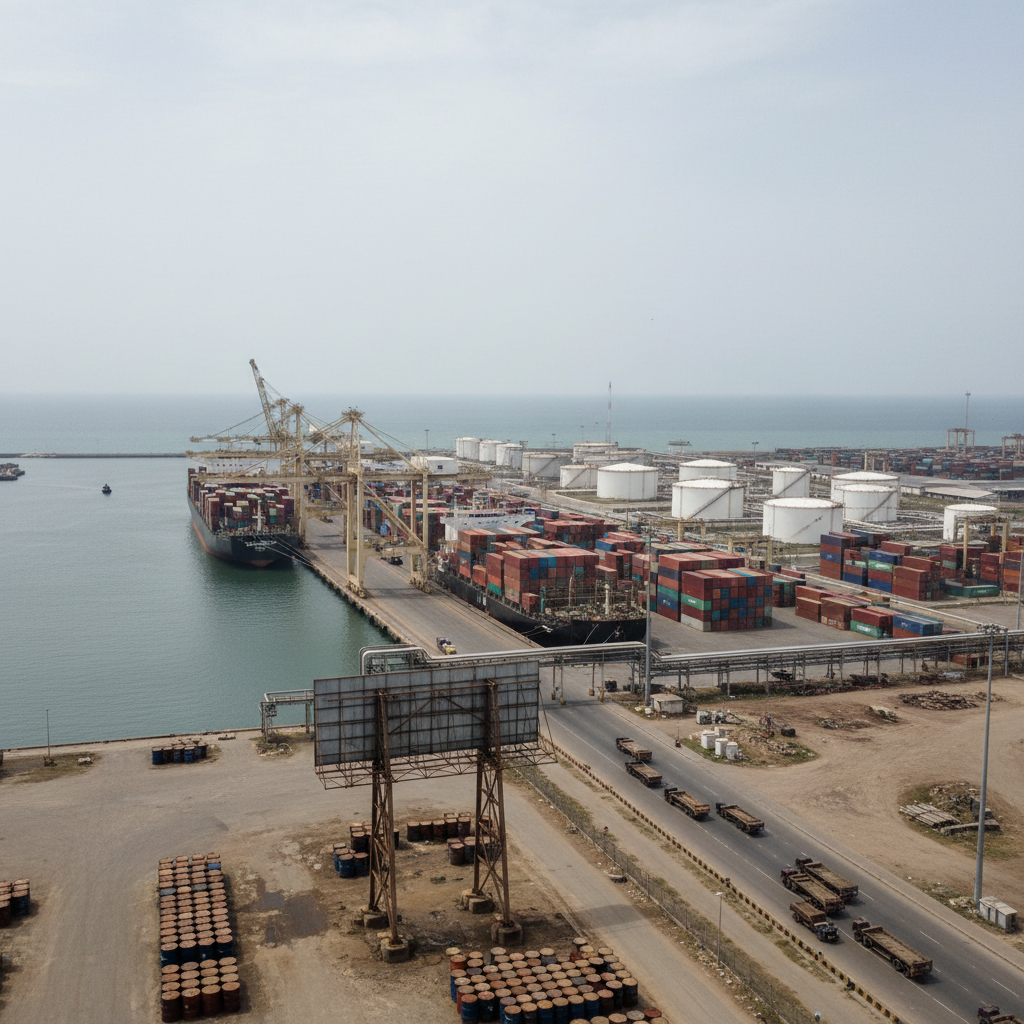
Ghana's fuel market remains highly vulnerable to price swings due to renewed tensions between the United States and Iran. Dr. Riverson Oppong, CEO of COMAC, stated that this geopolitical uncertainty threatens the stability of fuel prices. Ghana, an importer of refined petroleum products, faces significant economic repercussions from this global unpredictability.
These renewed confrontations have revived fears about disrupted global oil supplies. Markets are reacting to military and diplomatic developments, raising concerns for crude oil prices. This volatility affects fuel-importing nations like Ghana, making stable planning difficult for businesses and consumers.
This ongoing situation is a critical factor in Ghana's broader economic stability. Fuel price fluctuations directly impact inflation, transport costs, and industrial operations. Prior trends show that even minor international oil market shifts can significantly affect local pricing and consumer spending power. Past periods of high global oil prices have led to increased cost-of-living burdens for Ghanaian citizens.
Dr. Oppong, speaking on JoyNews’ PM Express Business Edition, emphasized the persistent uncertainty. He said, "Personally, I wasn't shocked to hear the turnaround of the peace deal because we’ve lived within this uncertainty for the past months." He highlighted that this instability dangerously exposes Ghana's downstream petroleum sector to sharp price swings on the international market.
The volatility significantly impacts the entire fuel supply chain. Oil Marketing Companies (OMCs) and Bulk Distribution Companies (BDCs) struggle with managing fluctuating costs. Falling prices are particularly challenging for these companies. Dr. Oppong explained, "As far as revenue is concerned, it is a bit easier when prices are moving up, but when prices are going down, it is a bit deadly, not only to the OMCs but to the BDCs as well."
A major challenge arises when companies purchase fuel at higher prices. If international prices then drop before the products reach the market, these companies incur losses. Dr. Oppong noted that hedging, a strategy to reduce financial risk, is often impractical for Ghana's retail fuel business. This means businesses have fewer tools to protect themselves from price shocks.
Consequently, Ghanaian consumers will likely continue to experience unpredictable fuel price changes at the pump. Decision-makers and market watchers will closely monitor Middle East developments for any signs of de-escalation. The Bank of Ghana will also consider these external pressures when shaping monetary policy. Businesses reliant on transportation face continued operational cost uncertainty.
Until there is greater certainty in the geopolitical landscape, fuel marketers will operate in an environment of constant risk. This ongoing instability implies continued influence on fuel pricing in Ghana. It will also squeeze industry profit margins and complicate long-term business planning across the downstream petroleum sector.