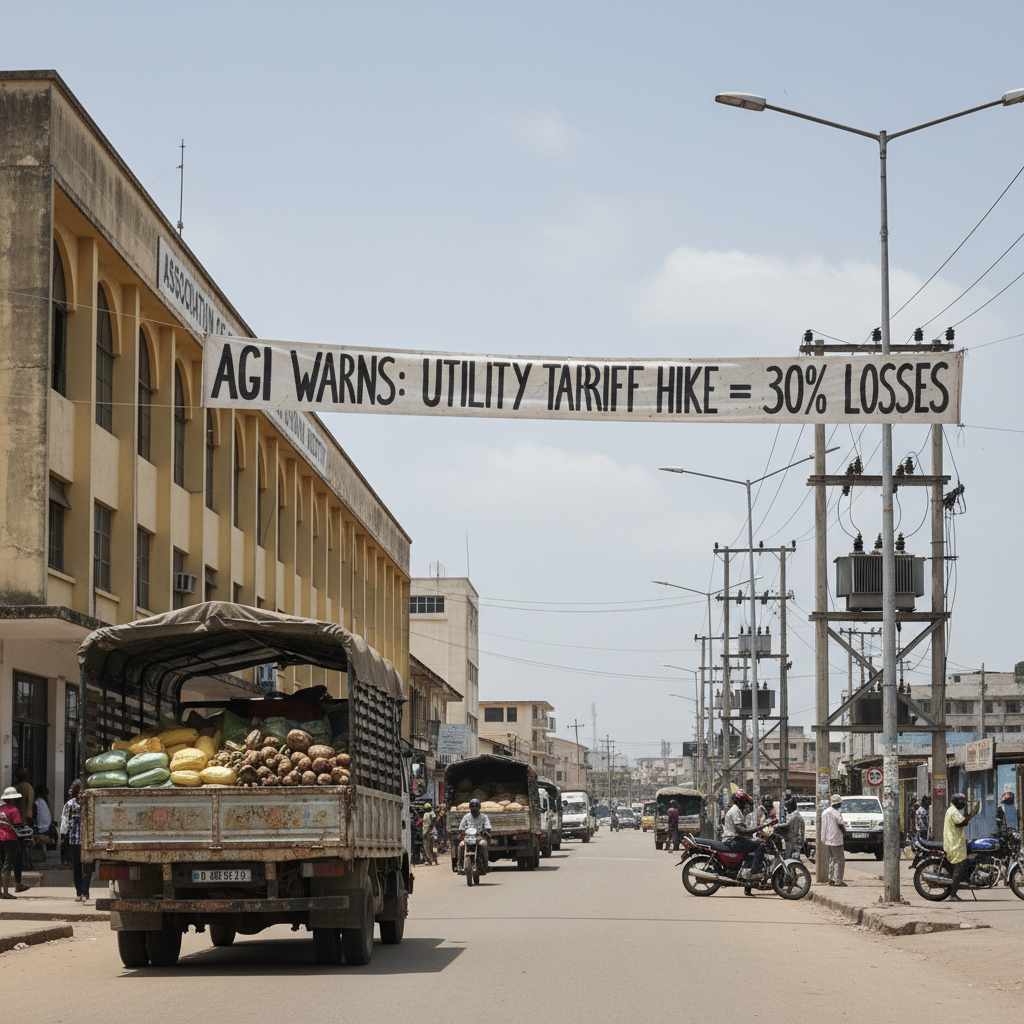
The Association of Ghana Industries (AGI) has vocally opposed newly announced utility tariff increases. The AGI warns that utility providers are passing on operational inefficiencies and losses to consumers. These losses constitute about 30% of their operational challenges.
This opposition comes after the Public Utilities Regulatory Commission (PURC) announced a 3.49% increase in electricity tariffs and a 0.85% increase in water tariffs. These adjustments will take effect from July 1, 2026. Businesses, especially manufacturers who rely heavily on stable power, are significantly affected by these cumulative price hikes.
These tariff increases fit into a broader pattern of rising operational costs for Ghanaian businesses. The economic indicators traditionally used to justify tariff reviews do not support these increments. Earlier tariff adjustments throughout the year have already placed enormous pressure on industry planning and cost predictability. This trend could stifle industrial growth and make Ghana less competitive for manufacturing investments.
Tsonam Cleanse Akpeloo, Dean of the Greater Accra Regional Branch of AGI, questioned the rationale for the latest increases. He stated, “Our view is that the utility companies should rather be focusing on tackling the losses. We are fully aware that these losses constitute about 30 per cent of the challenges they have to deal with.” Mr. Akpeloo highlighted that electricity costs make up approximately 30% of total production costs for many manufacturers. This makes any tariff increase a significant burden for the sector.
The continuous tariff adjustments create uncertainty for businesses needing long-term financial planning. They also undermine the government’s flagship 24-hour economy initiative. This initiative aims to boost productivity, employment, and economic growth by encouraging businesses to operate around the clock. Higher electricity costs work against this goal, especially for nighttime operations. Regulators and utility providers must prioritize efficiency improvements and loss reduction measures. This will prevent additional cost burdens on Ghanaian consumers and businesses.