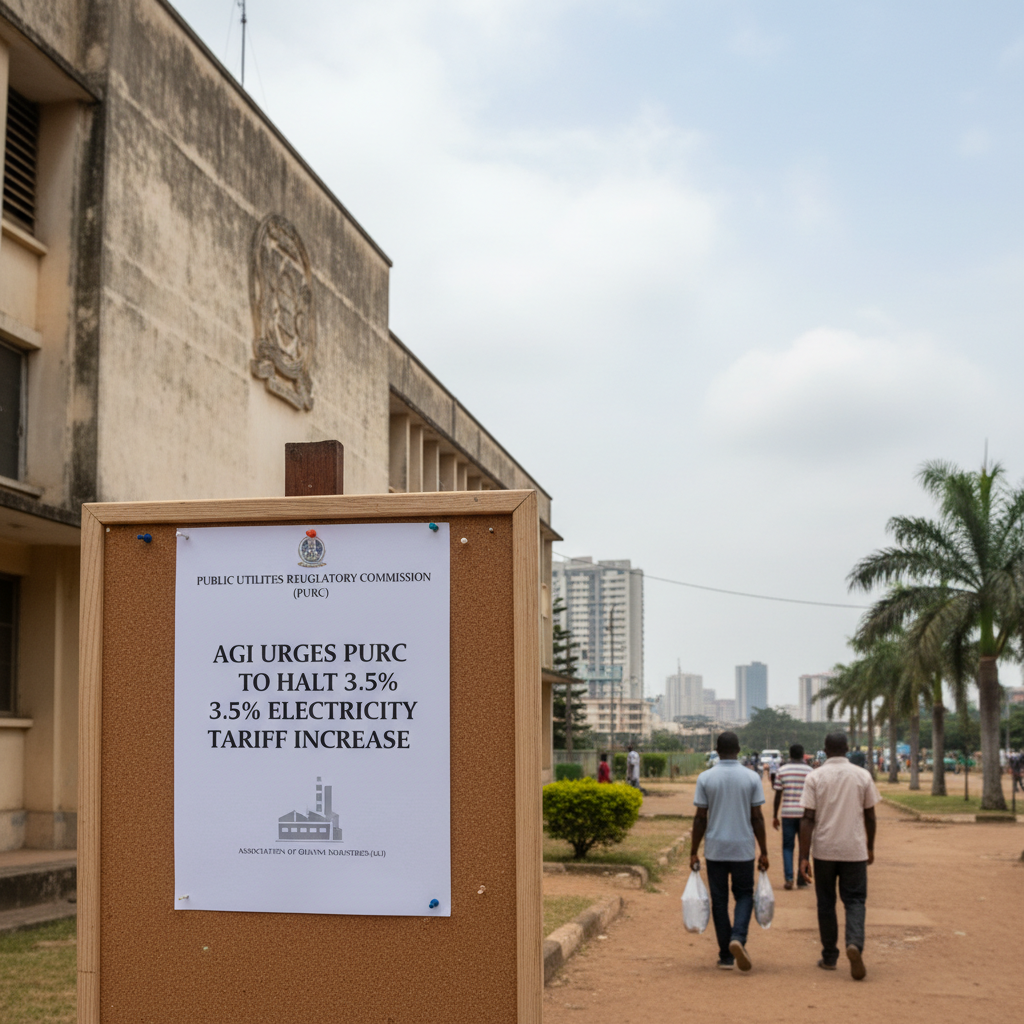
The Association of Ghana Industries (AGI) urges the Public Utilities Regulatory Commission (PURC) to suspend its new 3.5% electricity tariff increase. AGI argues that falling global oil prices should ease electricity generation costs. This proposal comes as manufacturers brace for potentially higher production expenses.
Eric Defoe, Chairman of AGI’s Economic Affairs Committee, stated the timing for the adjustment is incorrect. He warned that the true impact on manufacturers could exceed the announced increase. Mr. Defoe explained that while 3.5% appears modest, its effect on overall production costs could cumulatively reach between 5% and 10%. He referenced the recent drop in global oil prices following the end of the US-Iran situation.
This request from AGI fits into Ghana's broader economic discussions about utility pricing and industrial competitiveness. Businesses often grapple with high operating costs, impacting investment and job creation. Prior tariff adjustments have sparked similar debates about balancing consumer affordability with industry viability. Ghana's commitment to industrial growth relies on a stable and predictable cost environment.
Mr. Defoe maintained that fuel prices are a component of the tariff adjustment formula. He stressed the need to reassess these prices before implementing any increase. He noted, “If that’s going to go down, and at this time we are increasing tariffs, maybe they should wait a little bit more.” The AGI believes the PURC should not feel forced to implement an increase merely due to a quarterly review.
The AGI's call has implications for Ghana's energy sector and manufacturing industry. Decision-makers must weigh the PURC's mandate to ensure cost recovery for utilities against the economic health of industries. Market watchers will observe how the PURC responds, considering the current stability in other economic indicators. These include a stable exchange rate, reduced inflation, and lower interest rates. The outcome will influence manufacturers' operational costs and their ability to remain competitive.
Manufacturers currently pay various levies on fuel meant to support the energy sector and address legacy debts. Mr. Defoe questioned why consumers should bear additional electricity costs given these existing contributions. He highlighted that the timing of the tariff hike was wrong. He suggested the PURC should have waited for global geopolitical tensions to subside. The AGI continues to advocate for a more holistic view of economic factors in tariff decisions.