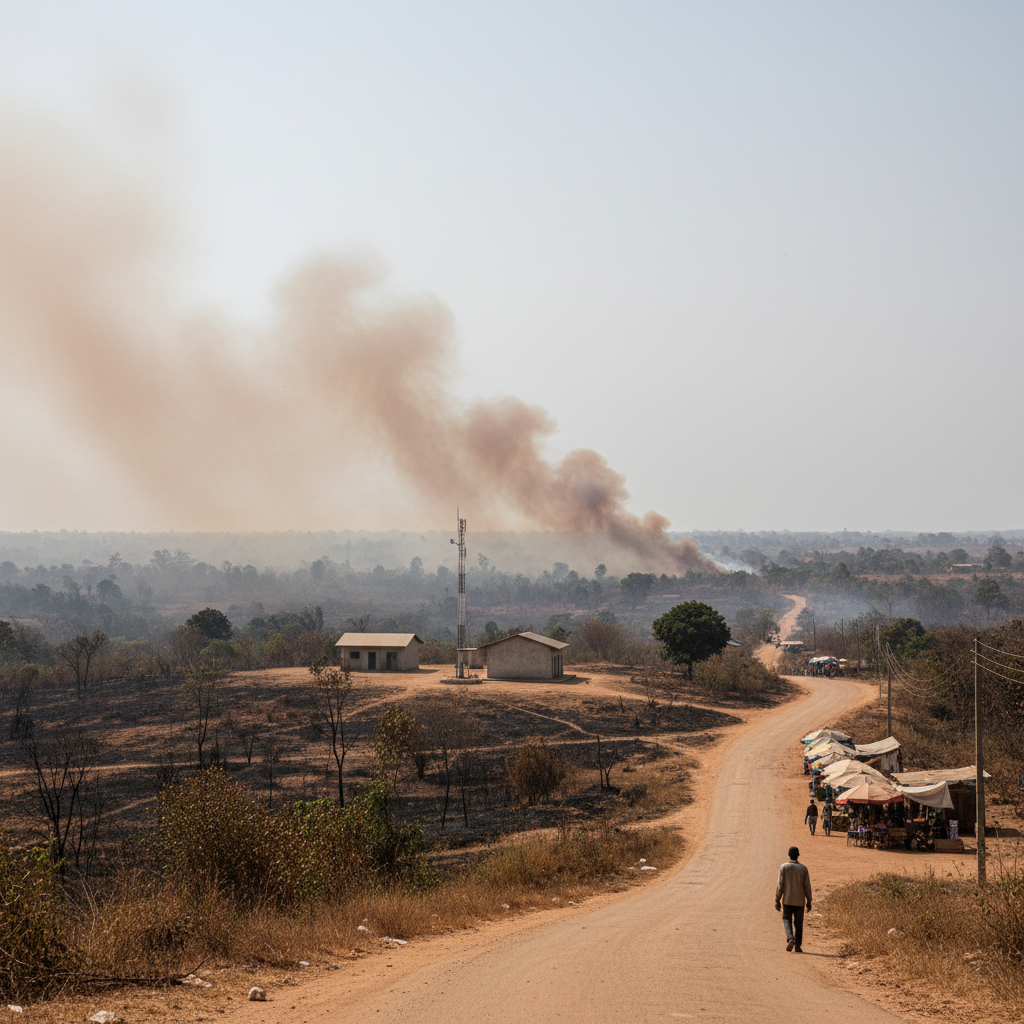
A significant wildfire in central Spain has stabilised, according to Interior Minister Fernando Grande-Marlaska. This development allowed authorities to lift all evacuation and shelter-in-place orders in Avila province. Some restrictions remain in parts of the Madrid area, indicating continued vigilance.
Despite this reprieve, rising temperatures across Spain and France are creating new wildfire threats. Spain's weather agency, AEMET, expects temperatures to reach 40 degrees Celsius in at least six regions. These regions are currently under an orange alert, the second-highest warning level.
The broader context shows Europe as the world's fastest-warming continent. Record-breaking heatwaves this year have intensified drought conditions, making wildfires spread faster. Human-driven climate change is a key factor in these more frequent and intense heatwaves.
Minister Grande-Marlaska had previously warned of "three tough days" due to strong winds and high temperatures. His later statement confirmed the lifting of evacuation orders in Avila, providing a temporary relief for affected communities.
The implications are clear: authorities remain on high alert for new outbreaks. Firefighters are wary of the predicted temperature increases and higher wind speeds. The EU's emergency response centre also warns of heightened wildfire risk in Greece, Italy, and Central Europe in the coming weeks.
In France, temperatures in the southwest, an area already hit by devastating fires, are expected to peak at 42 degrees Celsius. Meteo France forecasts dry winds in the afternoon, which could further fuel existing blazes. Firefighters near Bordeaux managed to keep a major fire stable overnight, and tramway services have resumed near the airport.
However, officials caution that the wildfire situation is far from over. The municipality of Lege-Cap-Ferret reported several flare-ups, though firefighters successfully stabilised them. Firefighter commander Matthieu Jomain emphasised the need for continued vigilance given the forecast weather conditions.
The environmental impact has been severe. A wildfire in the Landes area west of Bordeaux, a popular tourist destination, has devastated 42,000 hectares of mainly pine trees. Approximately 220,000 people, including holidaymakers and local residents, were evacuated from the Cap Ferret peninsula.
While the situation improved in central provinces, a fire in eastern Castellon, Spain, remains out of control. This blaze has burned over 10,000 hectares and forced about 10,000 residents from their homes. The fire's perimeter is estimated at 75.5 kilometres as it entered its fifth day.
The devastation extends to wildlife. Drone footage from El Tiemblo, in Spain's Avila province, showed charred deer carcasses in a forest burnt to ashes. This highlights the profound impact on natural ecosystems and local communities.
From Thursday onwards, danger levels in southwestern France are expected to decrease due to thunderstorms, lower temperatures, and increased humidity. However, the risk will remain high in the southeast. Authorities continue to monitor the situation closely across both countries.