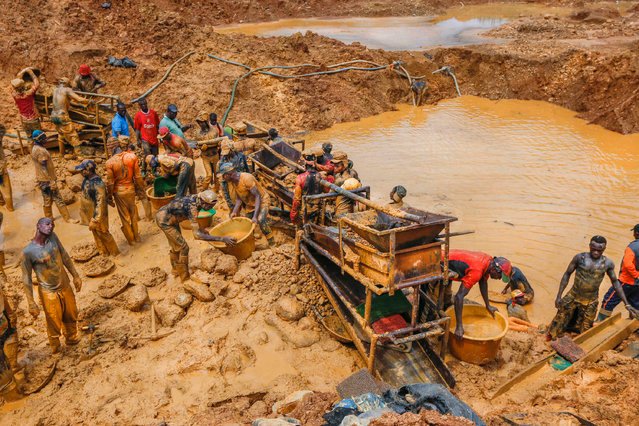
Nearly 60% of Ghana's water bodies are now polluted, primarily due to widespread illegal mining activities, known locally as galamsey. This alarming finding comes from recent research conducted by the Water Research Institute of the Council for Scientific and Industrial Research (CSIR-WRI).
The extensive pollution poses a severe threat to Ghana's water security, public health, and the livelihoods of millions. Some affected rivers may prove difficult to restore, even if all galamsey operations were to cease immediately. The contamination impacts drinking water sources, agricultural irrigation, and aquatic ecosystems across the nation.
This environmental crisis deepens concerns about Ghana's long-term sustainable development goals and economic stability. The nation relies heavily on its surface water for agriculture, food production, and direct consumption. Persistent pollution undermines these critical sectors, potentially leading to increased healthcare costs and reduced agricultural output, which are vital for Ghana's economy.
Dr. Franklin Obiri-Nyarko, a research scientist at the CSIR-Water Research Institute, confirmed the severity of the situation. He told Starr News that while agricultural runoff and industrial discharges also contribute to pollution, illegal mining remains the dominant factor. Dr. Obiri-Nyarko stressed that addressing the problem sustainably requires tackling the source of the pollution directly.
The implications are far-reaching, suggesting a potential long-term denial of benefits from these water bodies for communities. Natural recovery is not a viable option due to the extensive damage, necessitating immediate and significant intervention. Decision-makers must now consider robust remediation strategies and stricter enforcement against illegal mining to safeguard Ghana's vital water resources.
The CSIR-WRI research highlights that surface waters are hydrologically connected to groundwater aquifers. This means pollution in rivers and streams will eventually contaminate underground water sources as well. This further complicates future water supply challenges for both urban and rural populations.
Ghana's economy, heavily reliant on sectors like agriculture, faces direct risks from this water degradation. Farmers depend on clean water for irrigation, and contaminated sources can reduce crop yields and quality. This could impact food security and export revenues, affecting the broader national economy.
The call for intensified efforts against illegal mining is not new, but the CSIR's data provides a stark quantitative measure of the problem's scale. Previous government initiatives like 'Operation Vanguard' and 'Operation Halt' have struggled to permanently curb galamsey activities. The ongoing pollution suggests these efforts have not been sufficient to protect the nation's water infrastructure.
The cost of remediating polluted water bodies can be astronomical, diverting public funds from other essential development projects. Investing in sustainable solutions now could prevent far greater economic and social costs in the future. This includes technological interventions for water treatment and comprehensive land reclamation efforts.
Protecting Ghana's water resources is crucial for public health, as contaminated water can lead to waterborne diseases. The economic impact extends to healthcare systems, which would bear the burden of treating affected citizens. A healthy population is fundamental to a productive workforce and sustained economic growth.
The findings underscore the urgent need for a multi-faceted approach involving government, local communities, and law enforcement. Without decisive action to stop illegal mining at its source, Ghana risks irreversible damage to its natural capital and long-term economic prospects. The nation's future prosperity is inextricably linked to the health of its water bodies.